


The Best Wood Chipper for Michigan Properties
How to choose the right wood chipper for Michigan's wooded acreage, hardwoods, conifers and year-round property maintenance
Michigan is a heavily forested state, with nearly 20 million acres of forest covering more than half of its land area. Much of that forest is privately owned, putting tree and woodlot management directly in the hands of Michigan landowners.
For anyone managing wooded acreage, that can mean a steady supply of branches and woody debris from trail clearing, pruning, storm cleanup, tree removal and ongoing property maintenance.
A capable wood chipper can turn that material into wood chips that can be reused for trails, landscaping, mulch and other projects around your property.
But what's the best wood chipper for a Michigan property?
The answer depends on your property, the trees you're managing, the tractor or equipment you already own, and the size and volume of material you regularly need to process. If you're considering a PTO wood chipper, your tractor's PTO horsepower should be the starting point.
In this guide, we'll look at the types of material Michigan landowners commonly encounter, whether a PTO or gas-powered wood chipper makes more sense, which features matter and how to choose a chipper that fits the way you manage your land.
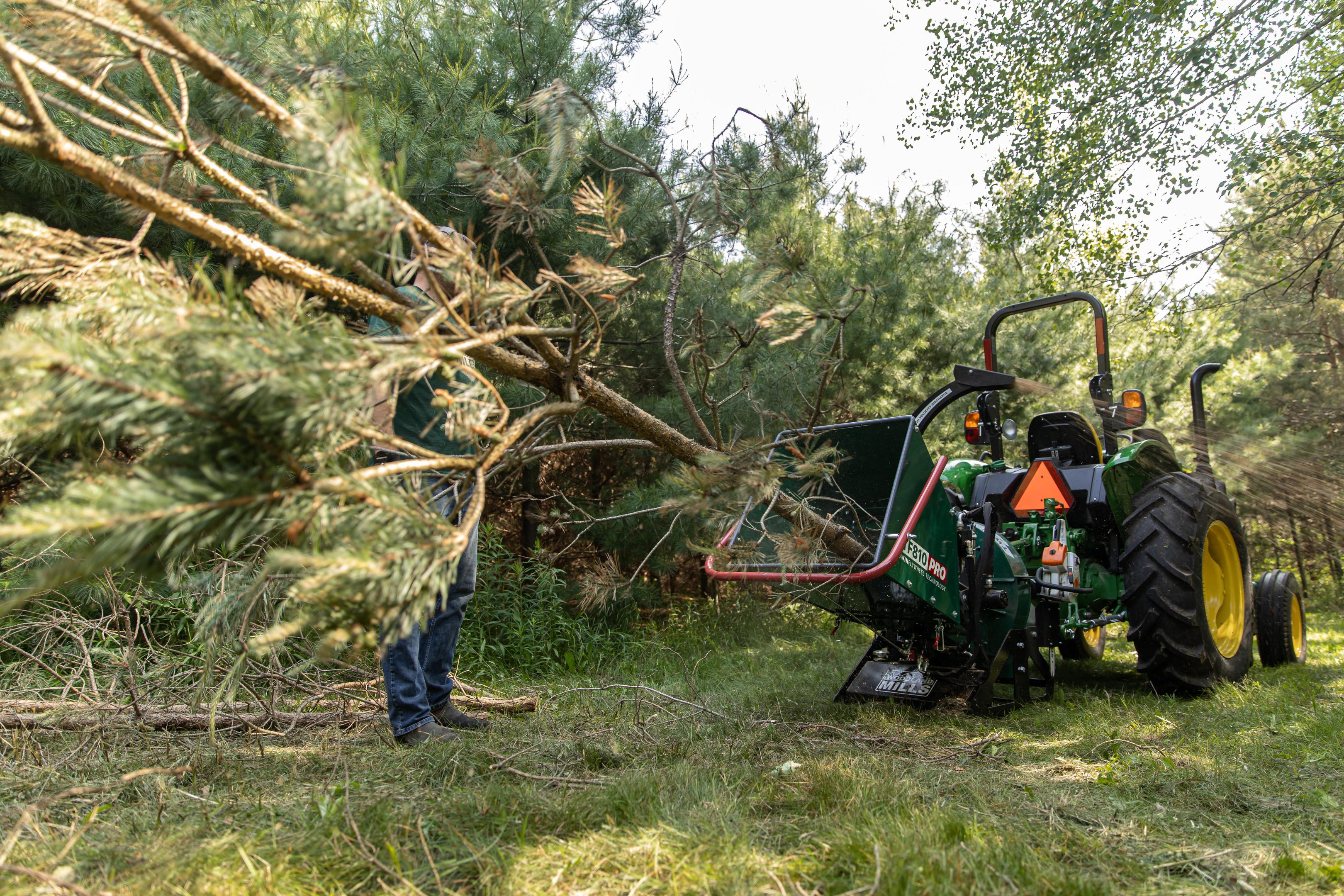
Why do Michigan landowners use wood chippers?
Michigan's forests contain a diverse mix of hardwood and softwood species, including maple, oak, beech, aspen, birch, pine and spruce. For landowners, that can mean dealing with everything from dense hardwood limbs to lightweight, green coniferous branches.
A wood chipper can be particularly useful if you regularly:
-
- Maintain trails through wooded acreage
-
- Prune trees and remove low or unwanted branches
- Clean up fallen branches and storm debris
- Thin overgrown areas or remove unwanted saplings
- Process branches left behind after tree removal
- Manage brush along fields, driveways and property boundaries
Instead of accumulating brush piles or hauling woody debris away, a wood chipper turns that material into a resource you can use elsewhere on the property.
Wood chips can be used for walking and ATV trails, landscaping, surface mulch and other appropriate applications around rural acreage.
Not every Michigan property needs its own chipper. If you're dealing with a one-time cleanup project, renting may make sense. But if branches and woody debris are a recurring part of maintaining your property, owning a chipper gives you the flexibility to process material as the work happens.
What types of tree debris do Michigan landowners typically deal with?
One of the reasons there isn't a single "best wood chipper" for every Michigan property is the diversity of the state's forests.
Hardwood branches: Maple, oak, beech and other hardwoods are common across Michigan. Dense hardwood limbs can place greater demands on a chipper, particularly as branch diameter increases.
If hardwood branches make up a large part of what you'll be processing, consider branch diameter, material volume and hydraulic infeed when choosing between chippers that are compatible with your tractor's PTO horsepower.
Pine, spruce and other coniferous material: Coniferous branches create a different challenge. Fresh pine and spruce branches can be lightweight, wet and covered in needles, making airflow and discharge performance particularly important.
A chipper designed to move lightweight green material effectively can reduce buildup and keep material moving through the discharge stream.
Storm and property-maintenance debris: Wind, snow and storms can leave landowners with fallen limbs and damaged trees to clean up. Routine trail maintenance, pruning and clearing can create similar piles of mixed material.
If your chipper will primarily be used for property cleanup, think about the typical branches you'll encounter rather than simply choosing based on the largest branch you might need to chip.
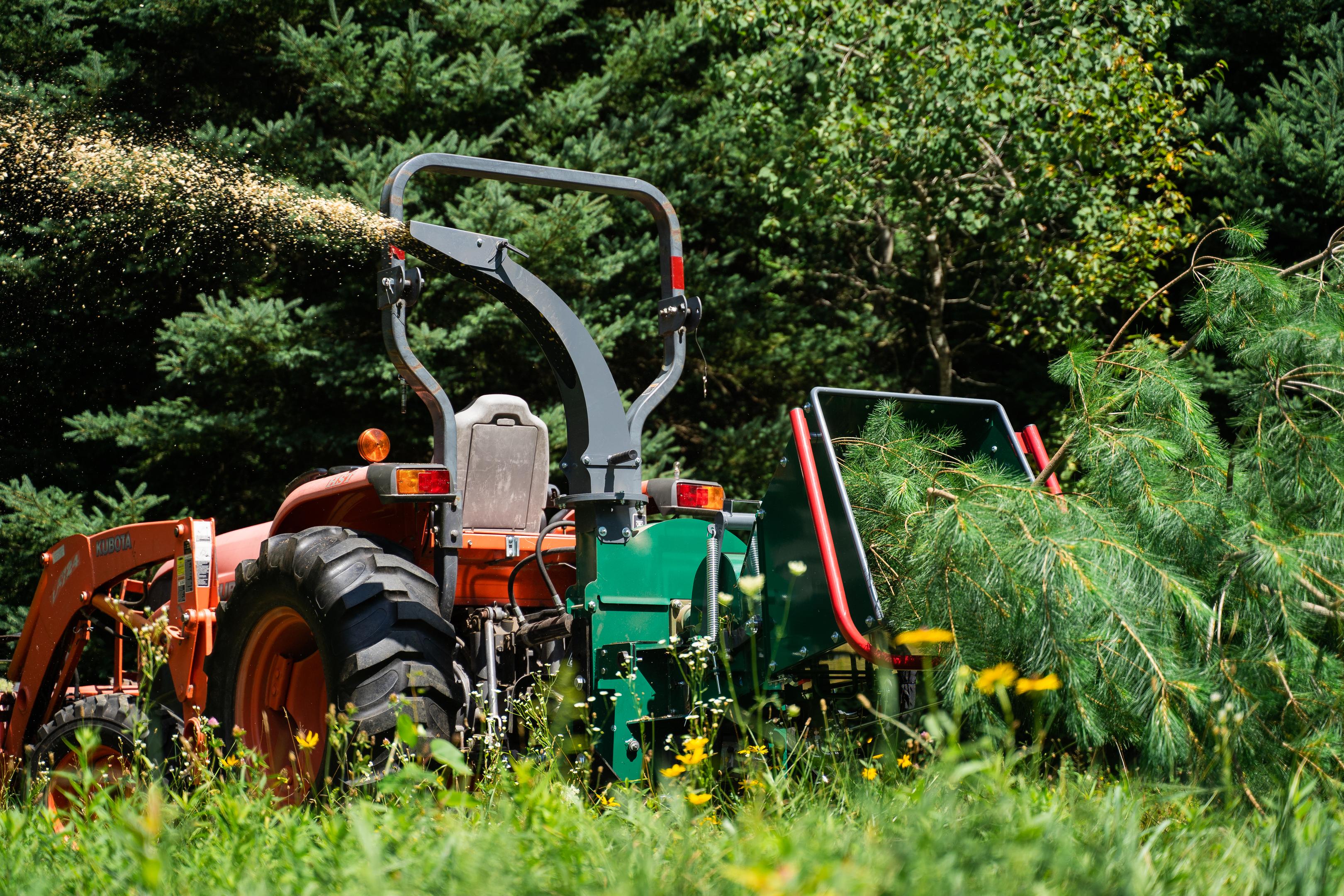
Should I choose a PTO or gas-powered wood chipper for my Michigan property?
For many rural landowners, the decision comes down to two main categories: a PTO wood chipper or a gas-powered wood chipper.
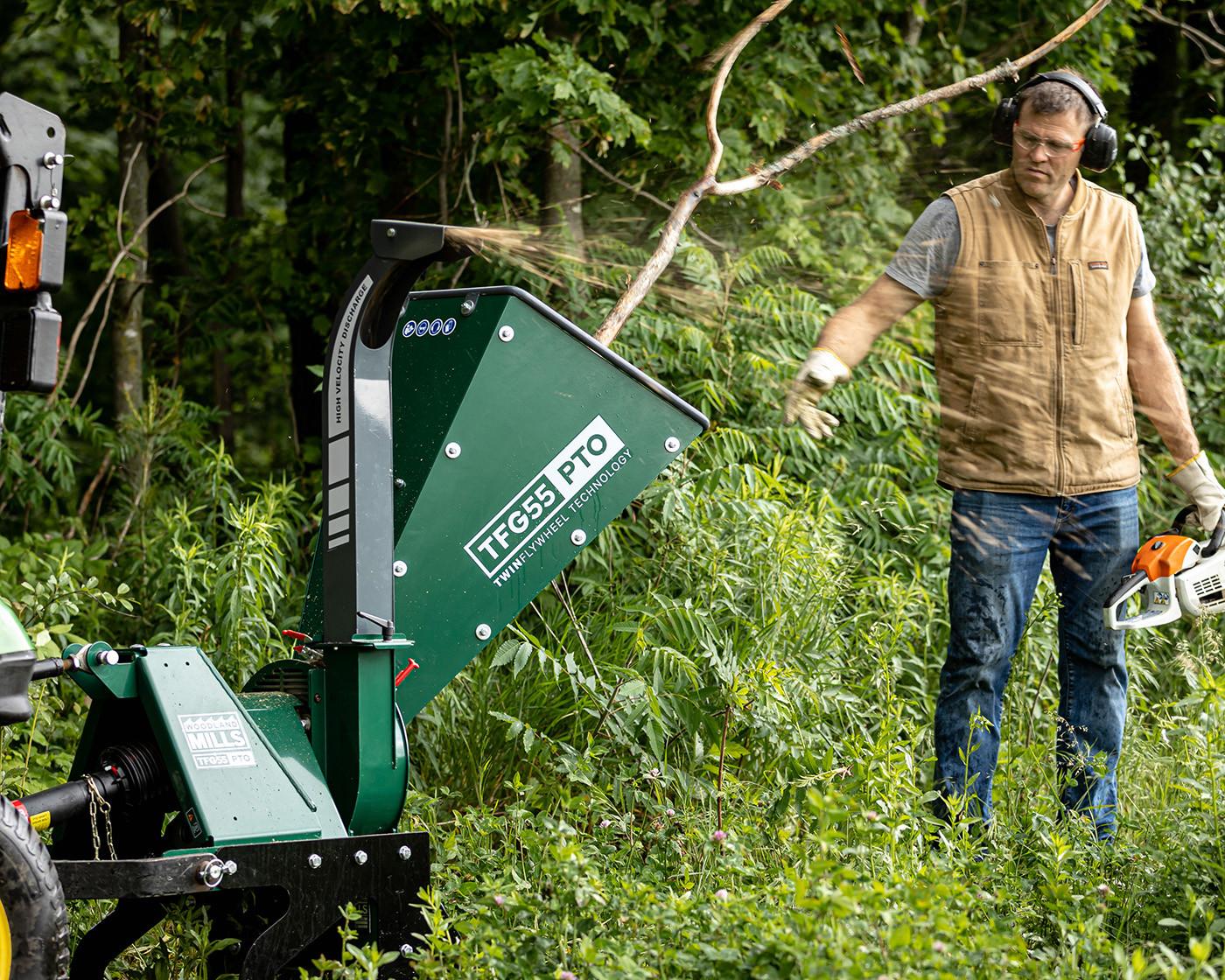
Gas-powered wood chippers: Gas-powered wood chippers have their own engine, so they don't require a tractor for power.
That makes them a practical option for Michigan landowners who don't own a PTO-compatible tractor or who prioritize portability around their property. A towable gas chipper can be moved behind an appropriate vehicle to different work areas and stored without tying up a tractor.
Gas-powered models are generally better suited to smaller-diameter branches than larger PTO chippers, so consider the material you expect to process most often.
PTO wood chippers: PTO wood chippers use the power generated by a compatible tractor through its PTO.
For Michigan acreage owners who already have a tractor, this can provide access to larger chipping capacities without adding another engine to maintain.
When selecting a PTO wood chipper, start with your tractor's PTO horsepower. We recommend matching the chipper to the tractor's available PTO HP first, which determines the Woodland Mills chipper models that are appropriate for your tractor.
It's important to check PTO horsepower rather than simply looking at the tractor's engine horsepower, as the two ratings are different. Once you've identified the chippers that match your available PTO HP, you can compare their chipping capacities and features against the material you regularly need to process.
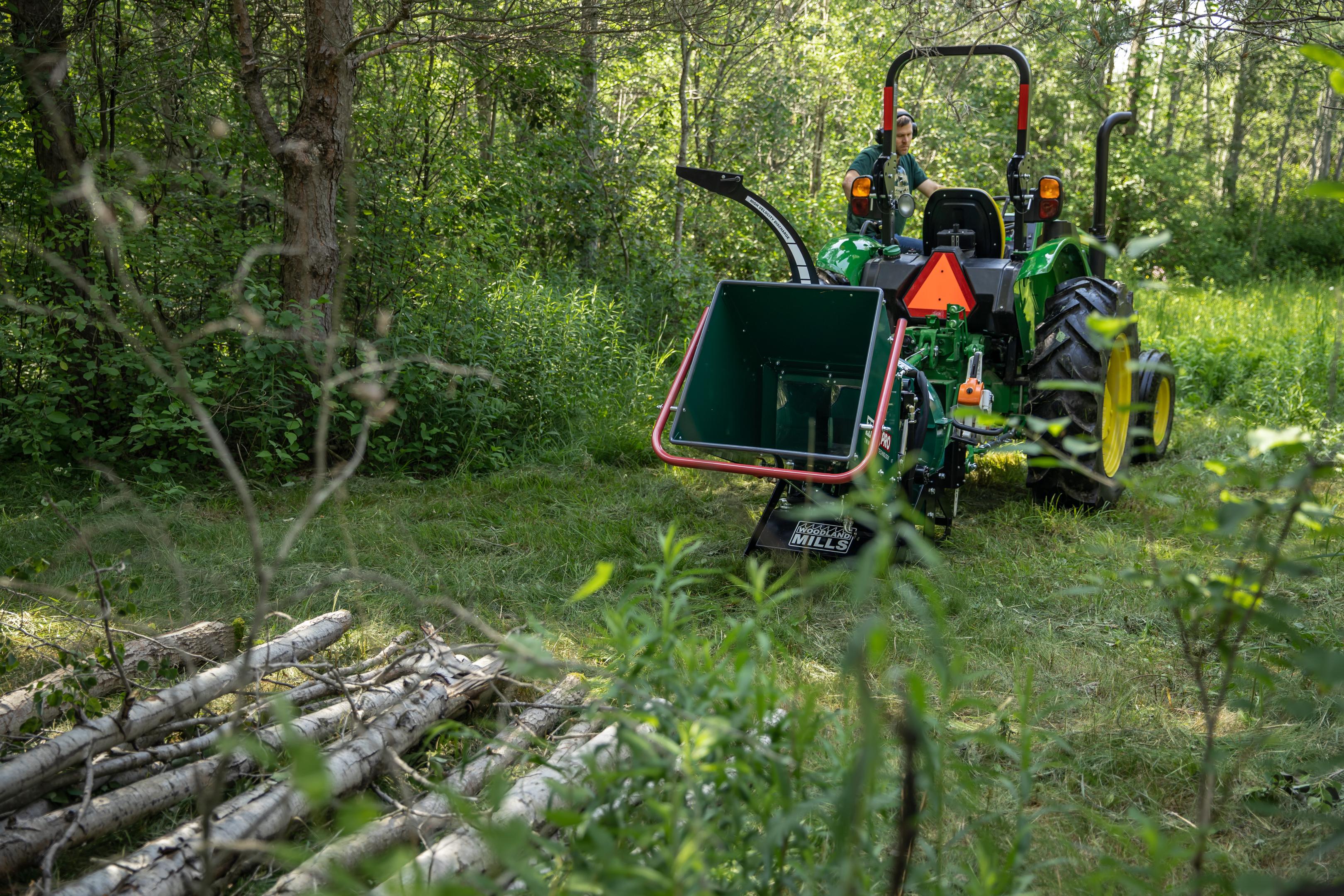
The biggest chipper isn't automatically the best chipper. Start with your tractor's PTO horsepower, then choose from the compatible models based on your typical branch diameter, workload and property needs.
Other options such as electric chippers and chipper shredders can make sense for smaller residential properties and lighter garden debris, but they generally serve a different use case than the larger woody material encountered during acreage and woodlot maintenance.
What wood chipper features matter for Michigan hardwoods and wooded acreage?
Michigan landowners can encounter a broad range of woody material, so the right chipper isn't just about maximum branch diameter. Tractor compatibility comes first for a PTO chipper, followed by chipping capacity, infeed and discharge performance.
PTO horsepower and tractor compatibility
If you're buying a PTO wood chipper, your tractor's PTO horsepower should be the first specification you check.
Every PTO chipper is designed to operate within a particular PTO horsepower range. Matching the chipper to the available PTO HP helps ensure you're choosing a machine appropriate for the power your tractor can deliver.
Once you know your PTO horsepower, you can narrow down the compatible chipper models and then decide which capacity and features best match the work you do.
Chipping capacity
Once you've identified the chippers that are compatible with your tractor, consider the diameter of material you regularly expect to process.
A higher-capacity machine can process larger branches, but chipping capacity shouldn't be considered independently of your tractor. Your available PTO horsepower determines which chipper models you should be considering in the first place.
From there, look at your typical material. For landowners regularly processing larger branches, a 6" or 8" PTO wood chipper may provide useful additional capacity if it's properly matched to the tractor powering it.
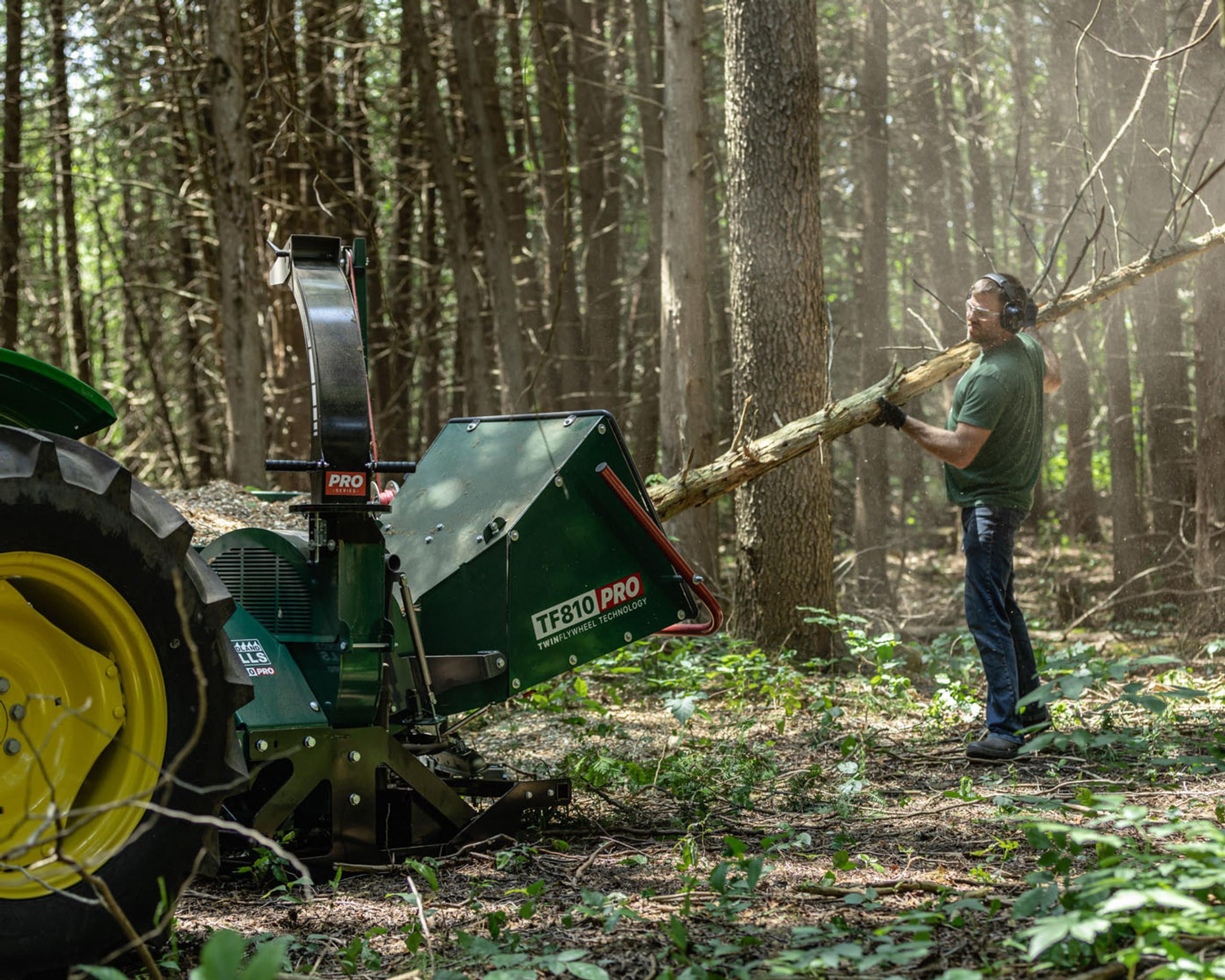
Hydraulic infeed
Hydraulic infeed rollers grip branches and draw material toward the flywheel at a controlled rate, reducing the amount of manual feeding required from the operator.
This can be particularly useful when processing larger, branched or irregular material. Forward, neutral and reverse controls also provide greater control over how material enters the chipper.
Always follow the operating and safety procedures specified for your particular wood chipper.
Twin Flywheel technology
Airflow becomes particularly important when processing lightweight, wet, leafy and coniferous material.
On a typical single-flywheel wood chipper, the same flywheel performs both the chipping and throwing functions. Because the discharge paddles rotate at the same speed as the chipping flywheel, the amount of airflow the system can generate is limited by the speed required for chipping.
Woodland Mills PRO Series Twin Flywheel chippers separate those two functions. The primary flywheel is dedicated to chipping the material, while a second, faster-spinning flywheel is dedicated to generating airflow and discharging the chips.
This allows the discharge flywheel to operate at a higher speed without changing the speed of the chipping flywheel.
The result is increased airflow through the chipper, helping carry lightweight, wet, leafy and coniferous material through the chip stream and throw chips farther from the discharge chute.
For Michigan landowners processing a mix of hardwood limbs, green branches and coniferous material, that additional airflow can be particularly useful.
What's the best wood chipper for my Michigan property?
If you already own a tractor, start by finding its PTO horsepower. That will help determine which PTO chipper models are appropriate for your setup. From there, consider your typical branch size, volume of material and how you use your property.
Here are three Woodland Mills options for different types of Michigan landowners.
The Woodland Mills TF68 PRO
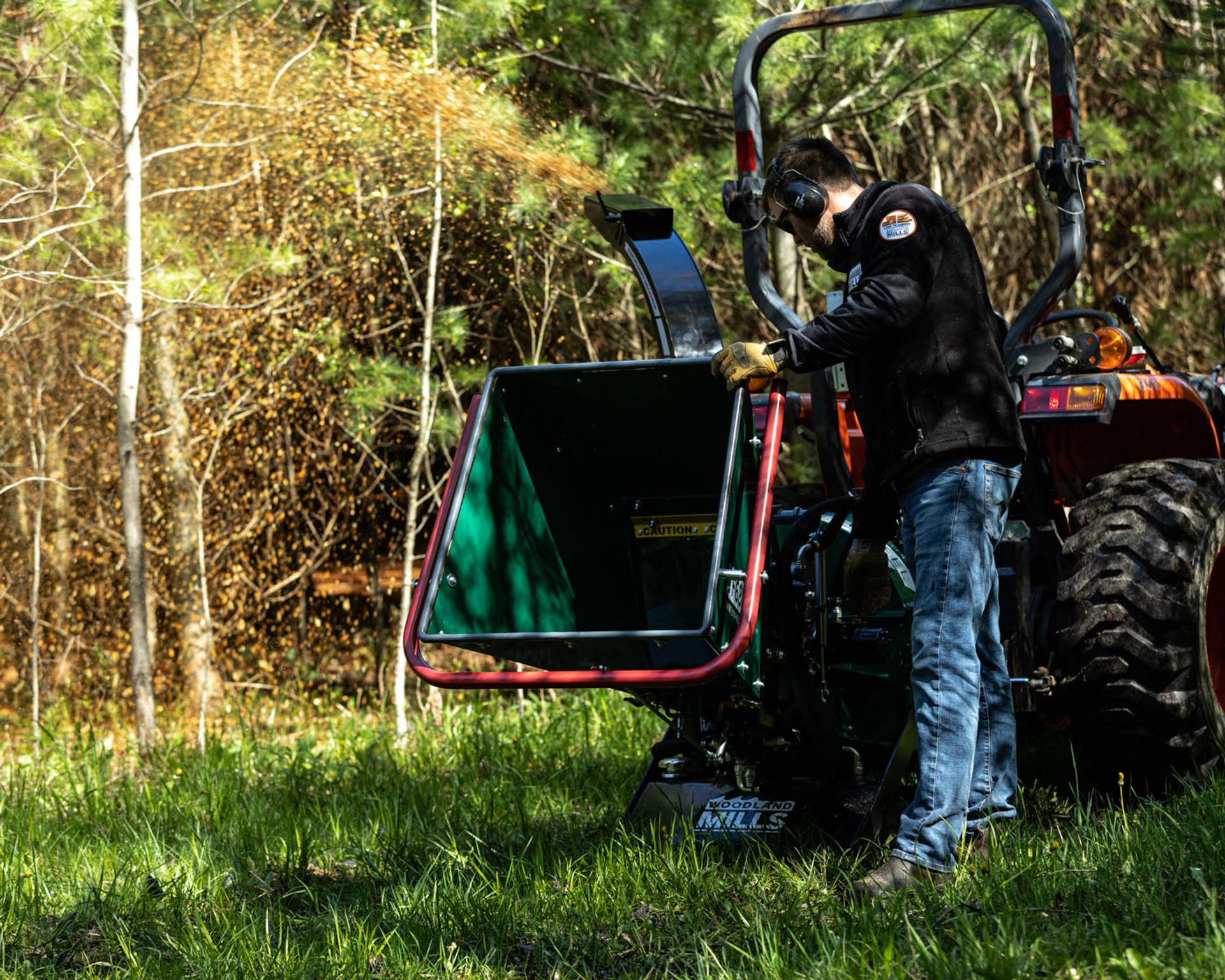
A versatile PTO option for tractor-owning acreage and woodlot owners
The TF68 PRO offers up to 6" chipping capacity and is designed for tractors producing 20–50 HP at the PTO.
That makes it a strong fit for landowners with a compatible tractor who regularly deal with tree pruning, trail clearing, storm debris and general woodlot maintenance.
Its Twin Flywheel system also provides increased airflow for processing green, leafy and lightweight material.
Key Features:
-
- Up to 6" chipping capacity
- Designed for 20–50 PTO HP
- Hydraulic infeed
- Twin Flywheel technology
The Woodland Mills TF810 PRO
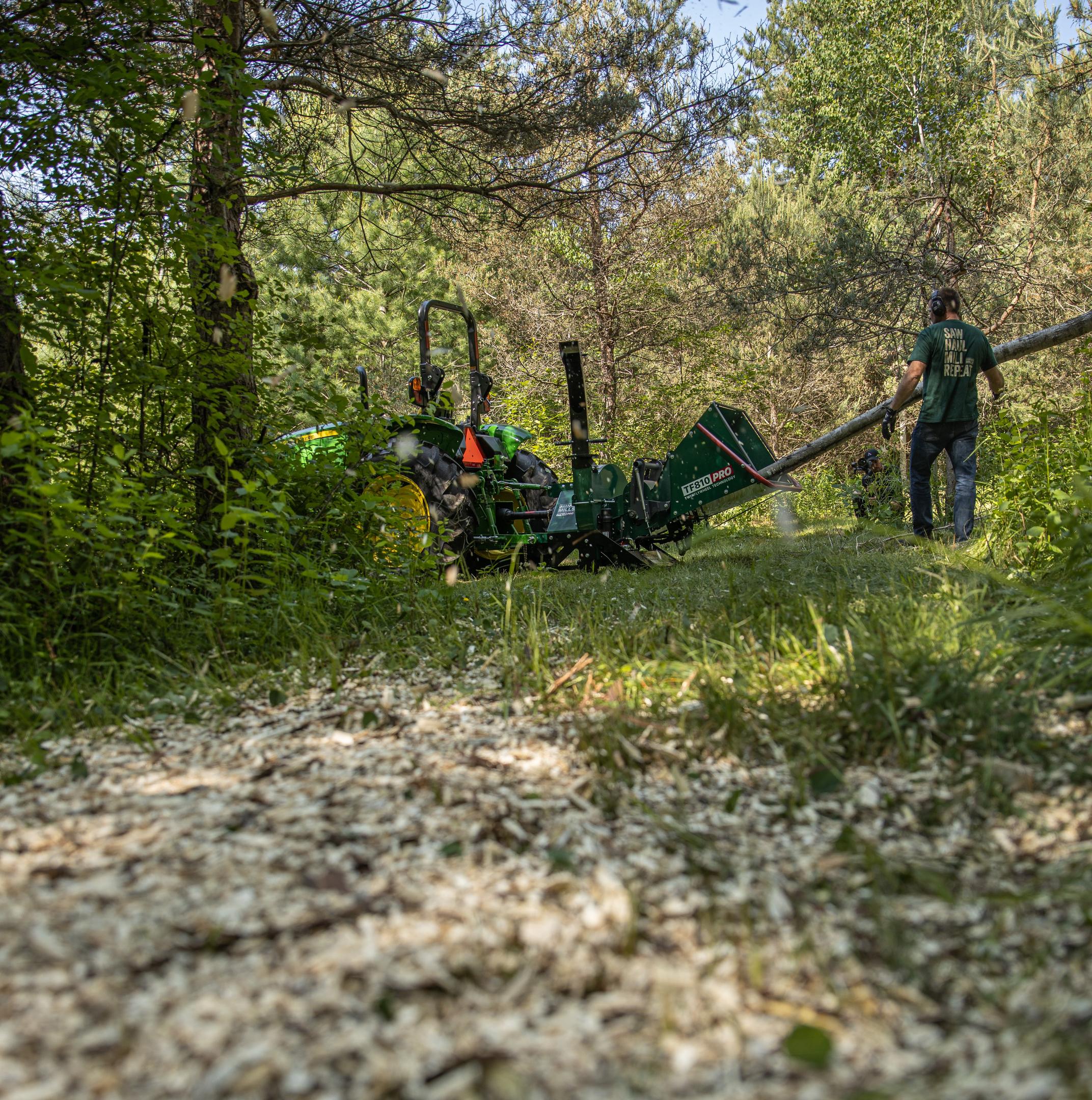
For larger tractors and higher-volume woodlot or property maintenance
For landowners with a tractor that falls within the TF810 PRO's recommended PTO horsepower range and more demanding workloads, the TF810 PRO provides up to 8" chipping capacity.
The additional capacity makes it better suited to larger material and higher-volume work where processing efficiency is a priority.
Like the TF68 PRO, it uses Twin Flywheel technology to separate the chipping and discharge functions and generate increased airflow through the chip stream.
Key Features:
-
- Up to 8" chipping capacity
- Designed for larger tractors
- Hydraulic infeed
- Twin Flywheel technology
The Woodland Mills TFG55 GAS
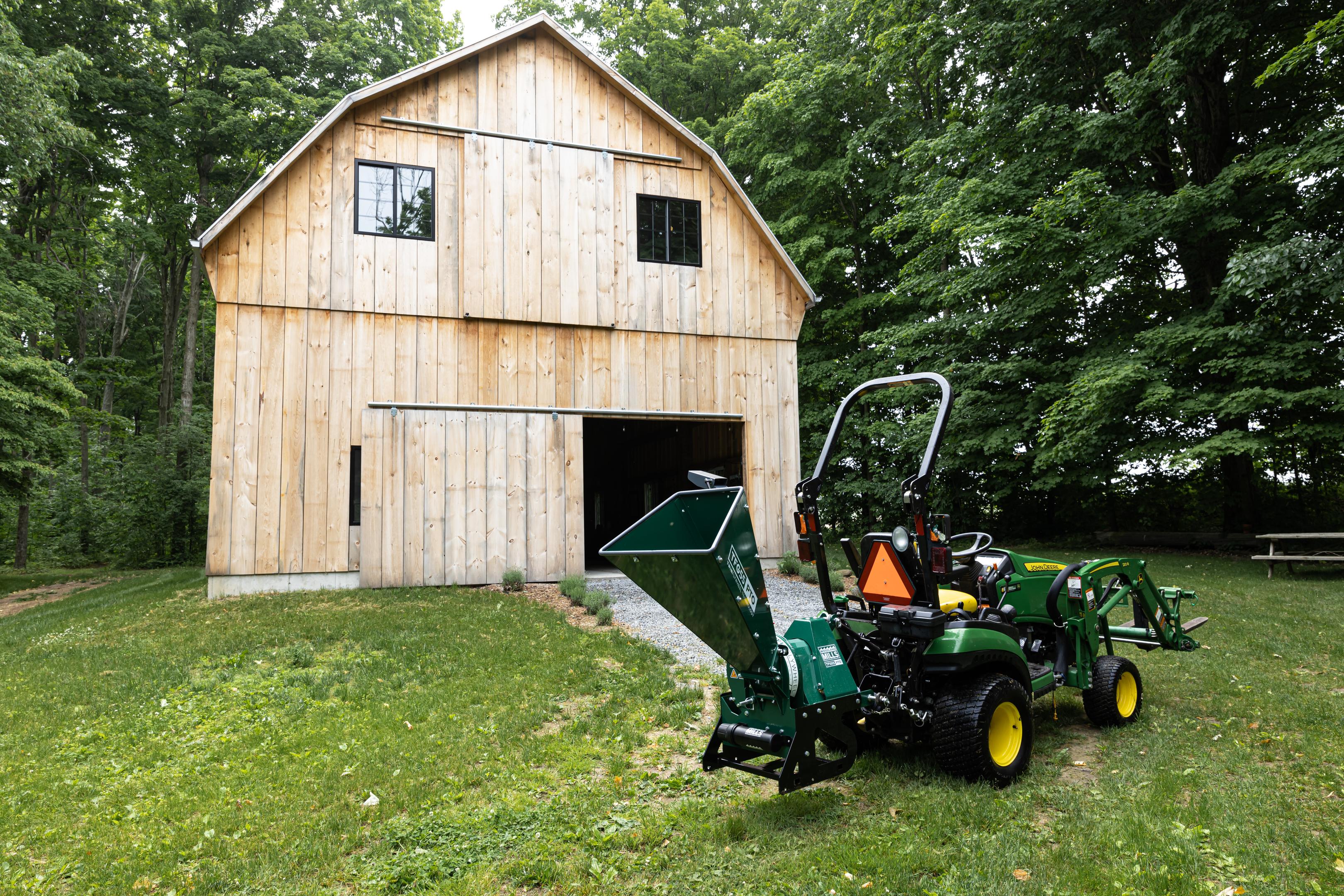
For properties without a PTO tractor or where portability is the priority
Not every Michigan landowner has a tractor.
The TFG55 GAS provides a self-powered alternative for landowners who need to process smaller branches or move a chipper around their property without relying on PTO power.
It can process material up to 3" in diameter and can be towed behind an appropriate vehicle, making it well suited to routine property cleanup and work in areas where bringing a tractor may not be practical.
Key Features:
-
- Up to 3" chipping capacity
- Gas-powered engine
- Towable design
- Twin Flywheel technology
Which wood chipper fits the way I use my Michigan property?
For PTO chippers, tractor PTO horsepower is the first filter. Once you know which models are compatible with your tractor, the type of work you do can help narrow the choice further.
| Property or Use | What to Consider |
| Wooded recreational or hunting property | Mobility, trail access and processing fallen limbs or clearing debris |
| Smaller acreage without a tractor | Gas-powered portability and typical branch diameter |
| Acreage with a compact or utility tractor | Available PTO horsepower first, followed by chipping capacity and workload |
| Larger woodlot or farm | PTO horsepower, higher capacity, hydraulic infeed and volume of material |
| Mixed hardwood and conifer property | Tractor compatibility, capacity, hydraulic feeding and discharge airflow |
| Regular storm or tree cleanup | Ability to process mixed green, leafy and woody material |
The amount of forest on your property matters, but acreage alone doesn't determine which chipper you need. A heavily wooded 10-acre property may generate considerably more branches and tree debris than a much larger property made up primarily of open fields.
Tips for chipping branches from Michigan trees
Whether you're cleaning up after a storm or spending a weekend maintaining trails, a few basic practices can help keep your chipping productive:
-
-
Inspect your chipper before use and make sure the blades and other wear components are maintained according to the manufacturer's recommendations.
-
Inspect branches for wire, nails, stones and other foreign objects before feeding them into the chipper.
-
Match branch diameter to your machine's rated capacity rather than forcing oversized material through the chipper.
-
Awkward forks or excessively wide branches may need to be trimmed so they feed properly through the infeed chute.
-
Position the discharge chute before you start. If you're creating chips for a trail or landscaping project, you may be able to discharge them close to where they'll eventually be used.
-
If you're creating larger volumes of chips, consider how you'll move them around the property. A tractor bucket or ATV trailer can make material handling considerably easier.
-
Follow the operating and safety procedures in your wood chipper's manual, particularly when working with frozen, irregular or difficult material.
-
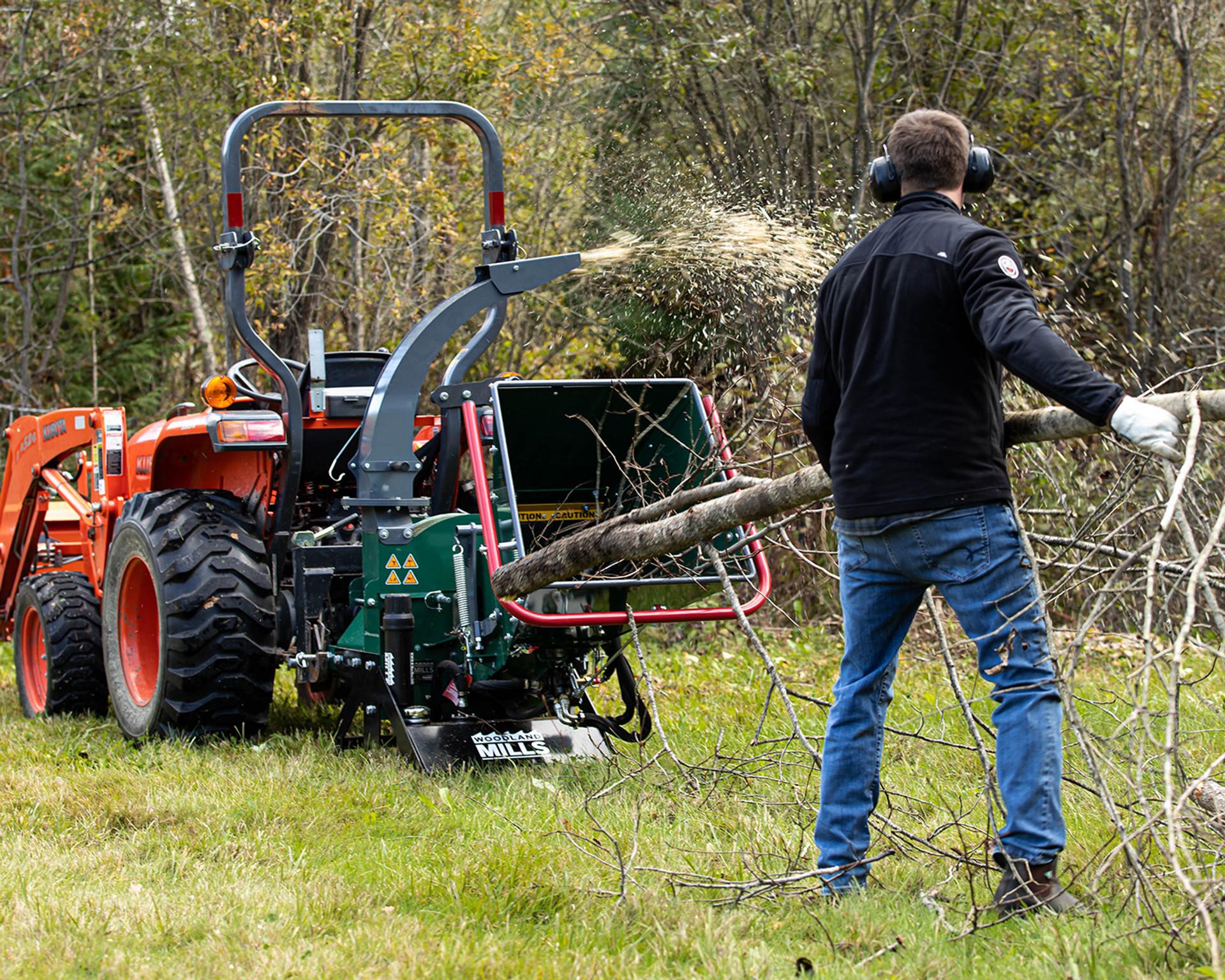
What can Michigan landowners do with their wood chips?
Once the branches are processed, the chips don't necessarily need to leave your property.
-
-
Depending on the wood species, chip size and application, wood chips can be used for:
-
Building and resurfacing walking or ATV trails
-
Surface mulch around trees and shrubs
-
Landscaping
-
Covering muddy or high-traffic areas
-
Adding appropriate woody material to compost
-
Other land-management projects around your property
-
For Michigan landowners managing wooded acreage, that creates a useful cycle: material removed during trail clearing, pruning and tree maintenance can become material used to maintain other parts of the same property.
Woodland Mills in Michigan
Michigan is already home to a large community of Woodland Mills owners.
We've shipped more than 24,000 products to over 5,000 Michigan customers, with more than 500 verified five-star reviews from customers across the state.
We engineer and manufacture our equipment and sell it directly to our customers. That gives us a direct line of contact with the people using our products, from helping them choose equipment that fits their property to supporting them long after the sale.
It's a relationship we value, and just the way we like it.
Resources for Michigan forest landowners
Managing wooded acreage involves more than choosing equipment.
Michigan landowners can access forestry education, woodland-management guidance and professional assistance through organizations and resources including the Michigan Department of Natural Resources, Michigan State University Extension and the Michigan Forest Association.
If you're developing a broader plan for your property, these resources can help with topics like forest health, wildlife habitat, tree selection, timber management and long-term woodland stewardship.
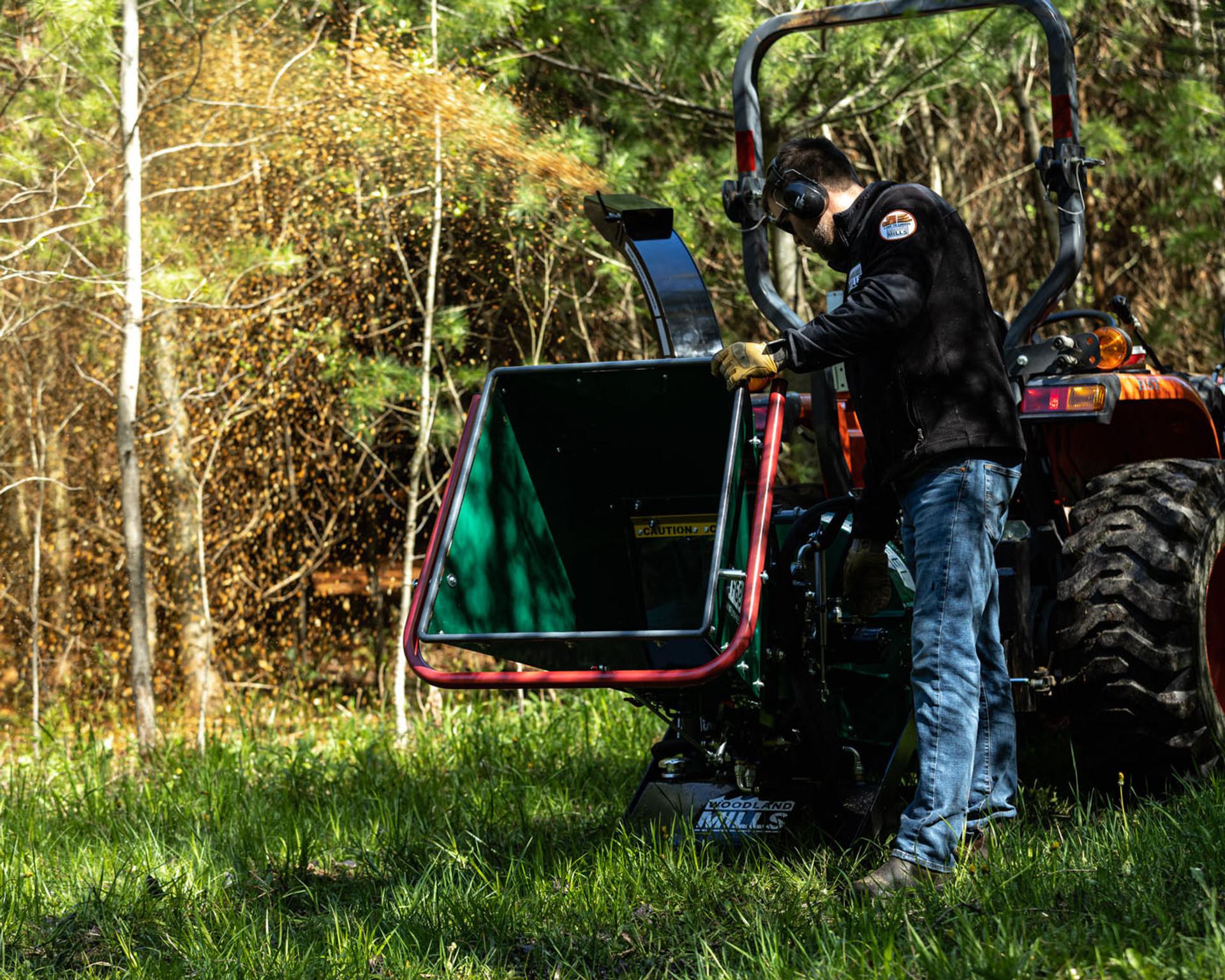
FAQs: Choosing a wood chipper in Michigan
Q: What size wood chipper do I need for my Michigan property?
For a PTO wood chipper, start with your tractor. We always recommend matching the chipper to your tractor's PTO horsepower first. This ensures your tractor can properly power the chipper and helps narrow down which models are the right fit for your setup.
From there, consider the size and volume of the branches you typically need to process. A higher-capacity chipper can handle larger material, but your tractor's available PTO horsepower ultimately determines which chipper models you should be considering.
Check your tractor's PTO horsepower — not just its engine horsepower — and compare it with the recommended PTO HP range for the chipper. Then choose from the compatible models based on your typical branch size, workload and property needs.
Q: Is a PTO wood chipper better than a gas wood chipper?
Neither is inherently better.
A PTO wood chipper can provide greater chipping capacity by using the power of a compatible tractor, making it a good option for many tractor-owning acreage and woodlot owners.
A gas-powered wood chipper has its own engine and doesn't require a tractor, making it useful where portability or independent operation is more important.
Q: What is the best wood chipper for Michigan hardwoods?
For a PTO chipper, start by matching the machine to your tractor's PTO horsepower. Once you've identified compatible models, consider the diameter and volume of the hardwood branches you regularly process and whether features like hydraulic infeed would make larger or irregular material easier to handle.
The best chipper isn't determined by tree species alone. Tractor compatibility comes first, followed by branch diameter, material volume and how frequently you'll use the machine.
Q: Can a wood chipper handle green pine and spruce branches?
Yes, provided the material falls within the chipper's rated capacity.
Green coniferous branches can be lightweight, wet and covered in needles, which makes discharge airflow important. Woodland Mills PRO Series Twin Flywheel chippers use a separate, faster-spinning discharge flywheel to generate increased airflow and help move this type of material through the chip stream.
Q: Do I need to own a wood chipper for wooded acreage?
Not necessarily.
If you only need a chipper for a single cleanup project, renting may make more sense. If trail clearing, pruning, storm cleanup and tree maintenance regularly produce woody debris on your property, ownership gives you the flexibility to process that material as the work occurs.
Q: Where can Michigan landowners get help managing their woods?
Michigan has several resources for private forest landowners, including the Michigan Department of Natural Resources, Michigan State University Extension and forestry organizations that can provide education or connect landowners with professional forestry assistance.
Equipment can help you do the work, but a long-term woodland management plan can help determine what work should be done and why.
SHOP WOOD CHIPPERS
WC46 4" PTO
The WC46 chipper has a chipping diameter up to 4". It's designed for tractors with 15-30 HP at PTO and features an auto-hydraulic infeed system and 360-degree swivel discharge.
WC68 6" PTO
The WC68 chipper has a chipping diameter up to 6". It's designed for tractors with 20-50 HP at PTO and features an auto-hydraulic infeed system and 360-degree swivel discharge.
WC88 8" PTO
The WC88 chipper has a chipping diameter up to 8". It's designed for tractors with 35-100+ HP at PTO and features heavy-duty construction and an auto-hydraulic infeed system.
TF810 PRO PTO
The TF810 PRO chipper features our patented Twin Flywheel Technology. Designed for tractors with 35-100+ HP at PTO, it has a chipping diameter up to 8" and auto-hydraulic infeed system.
Join the Woodland Mills Community Facebook group. Search advice and insights from over 65,000 knowledgeable, supportive members.
- Pre-purchase considerations
- Sawmill set-up support
- Project inspiration photos and videos
- Community troubleshooting support