


Tips for Building a Sawmill Shed
Plan on doing a stick build or a timber frame structure for your mill shed? These tips can help you out
A sawmill shed is a great structure to build to protect your portable sawmill.
Most sawyers will make them from their own lumber made on their mill, and use them to house all their tools. It's best to design your sawmill shed so that it's easy to load logs and unload lumber, as well as being easy to navigate.
So what's the best way of building a sawmill shed? What style of roof do you pick? Do you make it from post and beams or do a timber frame structure? Let's get into it so you can make the best sawmill shed for your portable sawmill.
What type of sawmill shed you want to build?
There are many, many different kinds of sawmill sheds, and your best option will depend on personal preference, availability of materials as well as the amount of time and effort you want to spend.
In general your sawmill shed should have the following features:
-
-
Enough room for your portable sawmill, with clear walkways on all sides of the machine
-
Clearance and/or a way to load logs onto your sawmill track and unload lumber, such as a log deck
-
A place to stores tools, blades, equipment and anything else you might need while milling
-
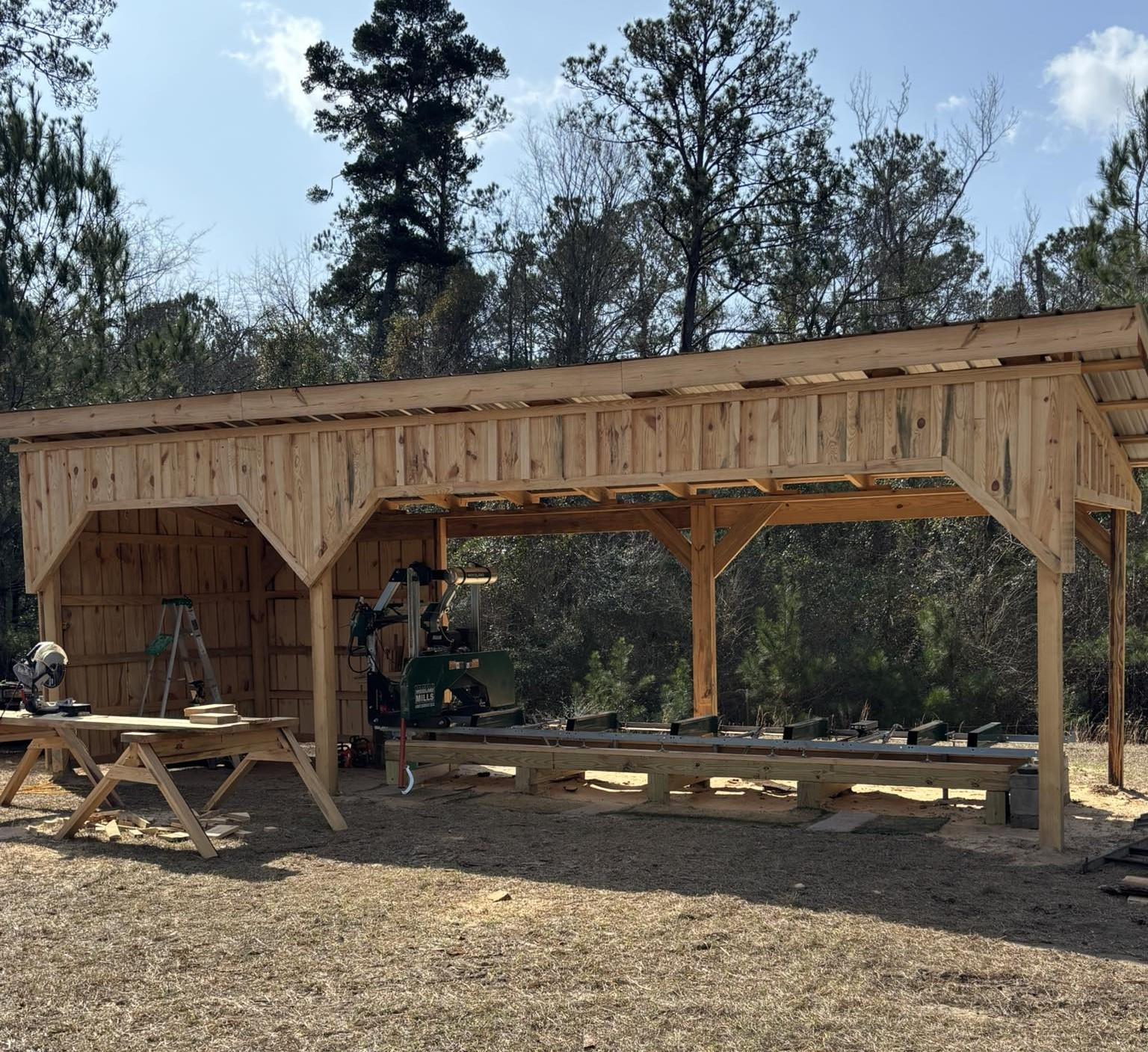
Image courtesy of Justin L. from the Woodland Mills Product Owners and Community Facebook Group.
With that in mind, some popular styles of sawmill sheds are:
-
-
Timber Frame Structure: This involves milling cants into your own posts and beams, and usually has a gable roof. These sheds are typically very strong, capable of easily withstanding storm winds and inclement weather, while giving you options for the type of siding you want to to do, whether you want to have one side or more open, have barn doors or something else. Check here for more info on timber frame sawmill sheds.
-
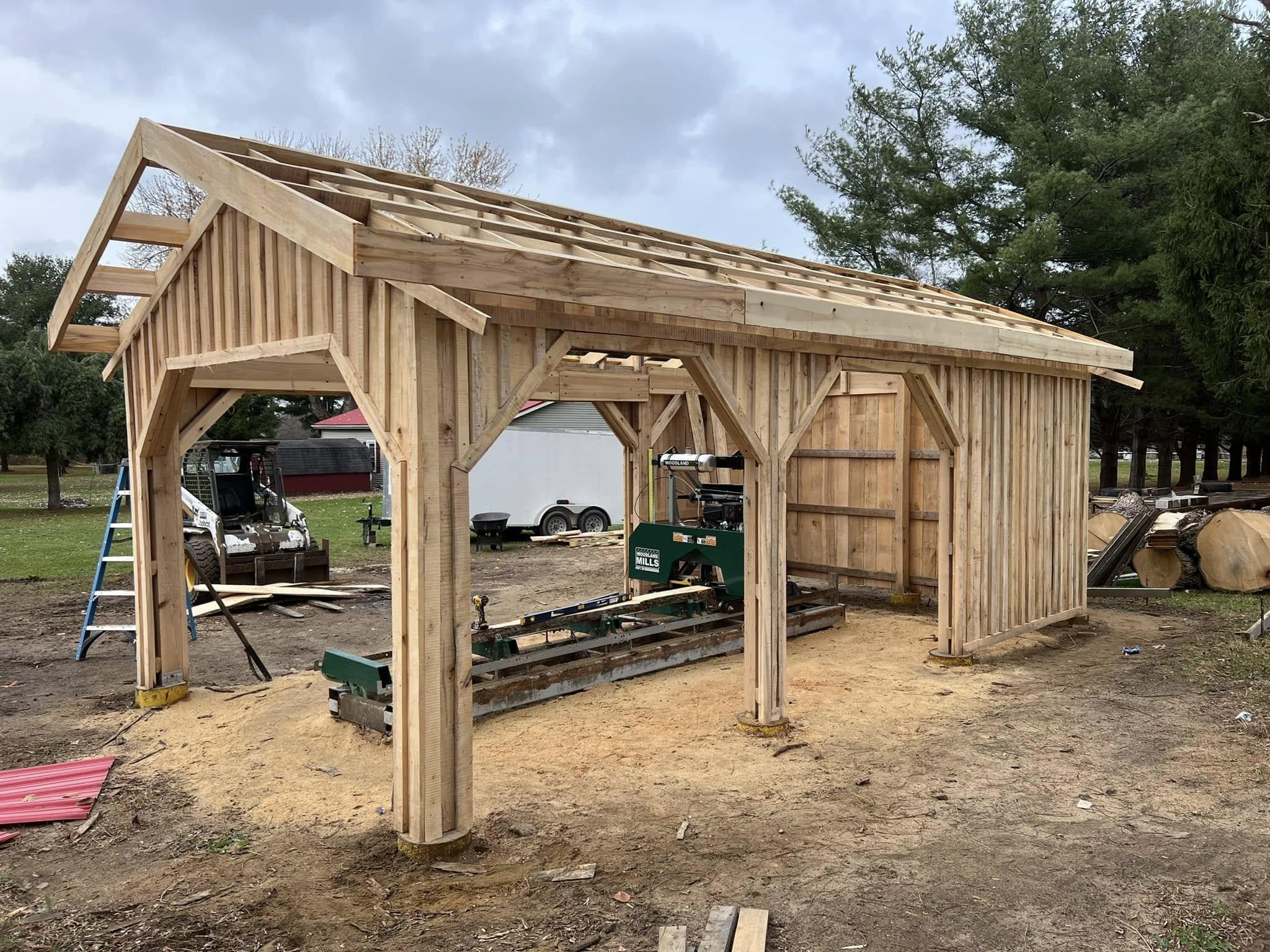
Image courtesy of David S. from the Woodland Mills Product Owners and Community Facebook Group.
-
-
Lean-To Shed: A simpler, stick-built structure. Many sawyers will build lean-to sawmill sheds if they want their sawmill structure to butt up against an existing barn or outbuilding. Can be made from simple 2x4s milled on your own sawmill. Easy, fast and with plenty of resources to take advantage of to build your own.
-
Simple Roof Covering: Some sawyers build full sawmill sheds that cover the length of their mill, while others build simple covers designed to protect just the saw head, with the rest of the track exposed. The saw head is the most valuable part of the sawmill, and the track can easily be cleaned before each use. This is a great idea if you want a quick shelter to protect your sawmill.
-
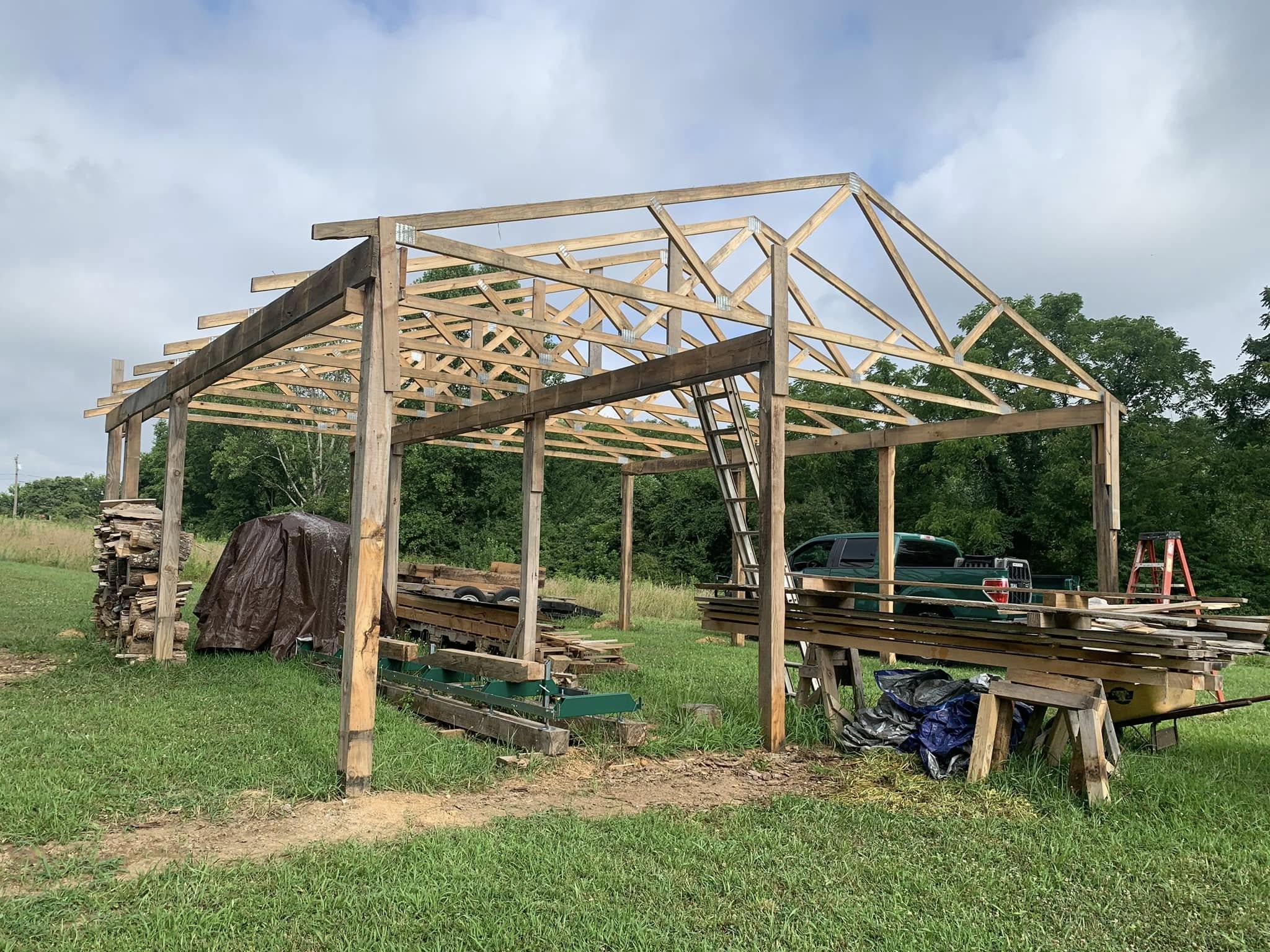
Image courtesy of Dalton S. from the Woodland Mills Product Owners and Community Facebook Group.
-
-
Barn-Style Shelter: Barns are accessible structures, usually done with board and batten siding, that provide a lot of utility. Scaling the idea down for a sawmill shed is another popular idea, though one that requires a lot more milling. The benefit of a sawmill barn is having a wide open space that you can enclose to lock your portable sawmill away from weather, animals or prying eyes.
-
These are just a few ideas that cover a large span of practical setups that many sawyers employ to cover their sawmills. If you want to see more suggestions, check out the Woodland Mills Product Owners and Community Facebook Group for more advice, suggestions, inspiration and feedback.
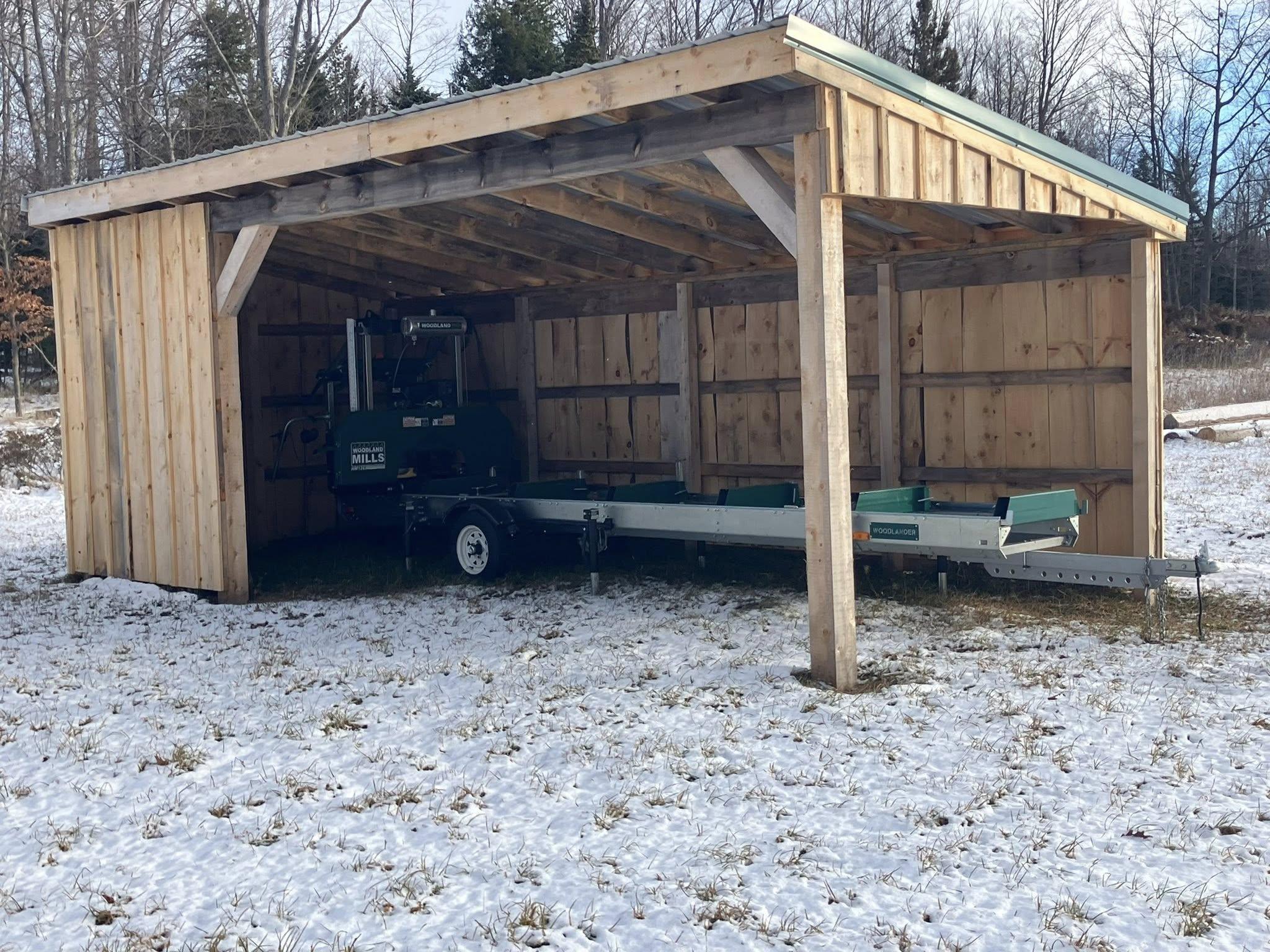
Image courtesy of Paul L. from the Woodland Mills Product Owners and Community Facebook Group.
What are some of the features I should build into my sawmill shed?
With your own wood and the ability to mill your own materials you have a lot of freedom to construct your sawmill shed however you like. Here are some common features sawyers add when constructing their sheds:
-
-
Log Deck: A log deck is a common method for sawyers without forklifts or log loaders to maneuver logs from ground level up to their saw's bed. You want a log deck with a ramp that's easy to roll logs up. Some sawyers notch their ramps to prevent logs from rolling back down.
-
Modal Walls: Some sawyers build their sheds with a single open side, while others use barn or bay doors so that they have access to their mill from multiple angles, typically with a solid wall on the back side for hanging tools. This gives them more options for loading logs, especially if you're using a forklift or heavy machinery. When you're done milling for the day you can close the doors and close your shed back in.
-
Concrete Pad: While some sawyers build their shed with a dirt floor, others use a concrete pad as a base. It provides a level surface for your portable sawmill, plus it will remain stable and provide fewer tripping hazards.
-
Tool Storage: Keep common tools like cant hooks and wedges nearby to reduce the amount of trips you need to take back to your workshop or garage. Keep a toolbox nearby or setup a wall hangers to keep your tools at-hand and ready to use whenever you need.
-
Look at the features other sawyers build into their sawmill sheds and decide what makes sense for you. Do you want to use the rafters for storage? Does it make sense to close it in on three sides or just one? What species should you build with? These are all important questions to ask as you figure out your shed plan.
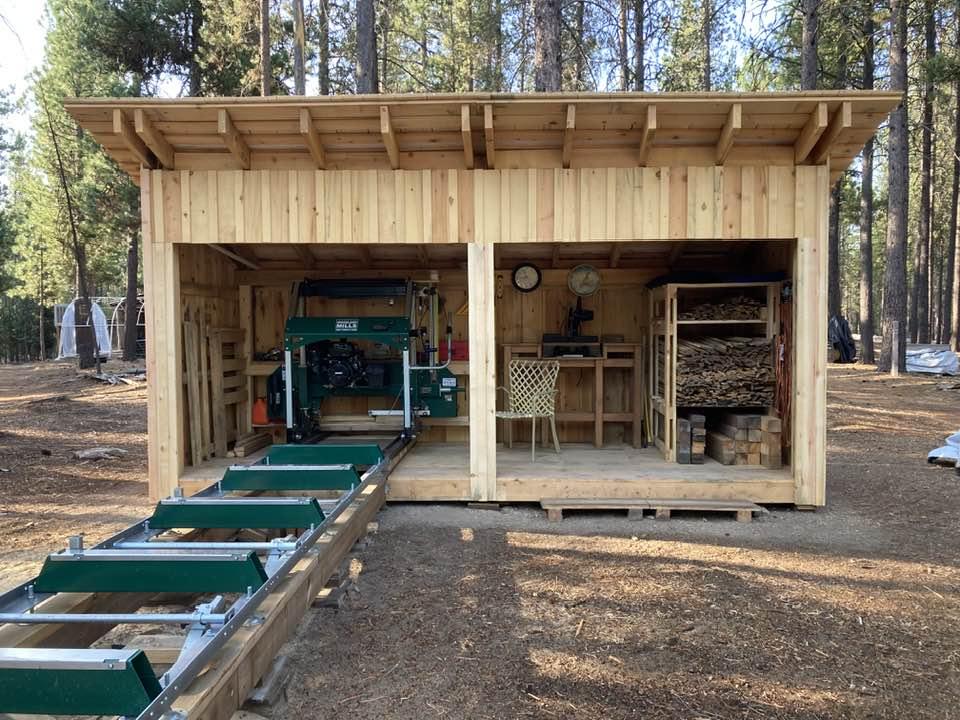
Image courtesy of Denny B. from the Woodland Mills Product Owners and Community Facebook Group.
What building materials should you use for a sawmill shed?
In all likelihood you'll use your portable sawmill to mill materials for your shed, but some sawyers build their sheds before their sawmills arrive. With this in mind, there are a few options you can consider for your construction materials:
-
-
Blend of raw and treated lumber: Anything that goes in the ground, such as your posts, should be pressure treated to prevent rot or moisture damage. But after that, there's no reason why you can't build the rest of the structure with green lumber. Some species like cedar are naturally rot resistant and will keep your structure standing for many years to come.
-
Pure DIY lumber build: Why pay for lumber when you've got a portable sawmill, after all, isn't that why you bought it in the first place? Pine timbers can make a sturdy sawmill shed that's easy to erect after you've got your mill, but hardwood species like oak or cedar work too. Your sawmill shed can be designed with utility first, or you can put your craftsmanship on display like some sawyers do with their shed projects.
-
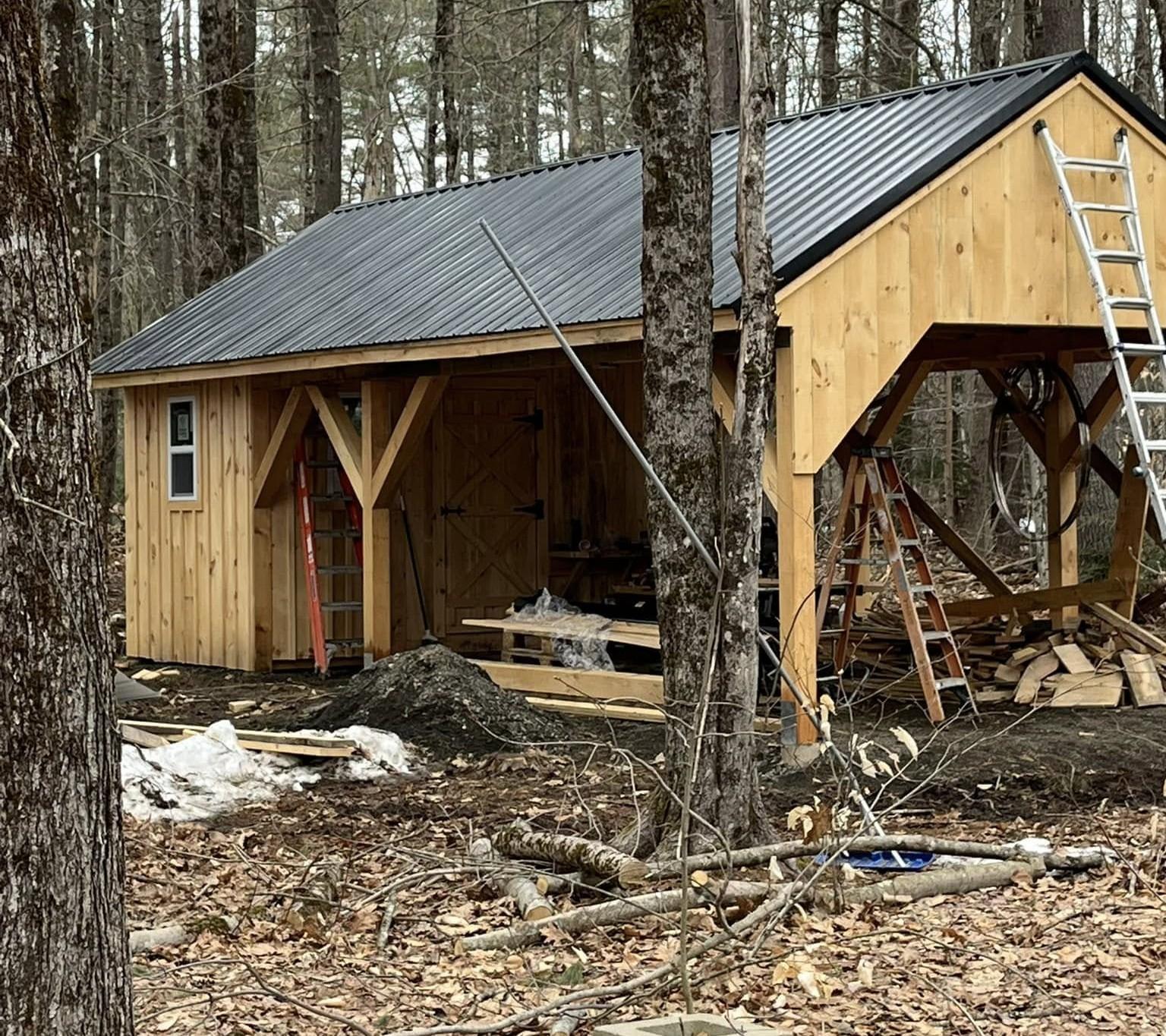
Image courtesy of Steve H. from the Woodland Mills Product Owners and Community Facebook Group.
Anything else I should know when building my sawmill shed?
Some other tips for building a sawmill shed include:
-
-
Plan for clear walkways and easy ways to dispose of sawdust. If you enclose your sawmill in such a way that it's difficult to sweep up and remove sawdust, you could get a buildup that makes it difficult to maneuver.
-
A tool rack or wall mount for cant hooks and other tools is a great way to ensure everything you need is in arm's reach.
-
Have a friend look over your plans and see if there's anything you've missed. They may be able to spot any mistakes or potential issues that could affect how you navigate the space, such as narrow walkways around your mill
-
Think about the height of your mill, and how much you want to raise it. A higher mill makes pushing it easier, but your log ramp will need to go higher. This is less of an issue if you're using a mechanical method of loading logs.
-
SHOP SAWMILLS
HM122
An entry-level sawmill packed with impressive features at a budget-friendly price. Designed for hobby sawyers or woodworkers looking for an economical solution to mill lumber.
HM126MAX
The original Woodland Mills portable sawmill. Trusted by hobbyists for years, now featuring a FULLCUT™ sawhead to maximize usable cut width.
HM130MAX®
A wide capacity sawmill that produces stunning high-value live-edge boards. Loaded with features including our FULLCUT™ sawhead, RapidChange® blade system, auto lube, and more.
HM136MAX™
The ultimate solution for cutting wide live edge slabs, perfect for tabletops, counters, benches, and more. Our unique FULLCUT™ sawhead design ensures your logs' widest assets are left intact.
Join the Woodland Mills Community Facebook group. Search advice and insights from over 65,000 knowledgeable, supportive members.
- Pre-purchase considerations
- Sawmill set-up support
- Project inspiration photos and videos
- Community troubleshooting support