


Woodworking Projects that Sell: Profiting from your Wood Projects
Here's how to make money from easy woodworking projects
There are many types of woodworking projects that sell for loads of money, from easy ones like slab charcuterie boards to more complicated chess boards or custom furniture. An easy woodworking project is a great starting point for those looking for quick wins and simple items to make.
But what’s the easiest way to make a return on your investment and find profitable woodworking projects? If you look in the Woodland Mills Product Owners and Community Facebook Group you’ll see thousands of woodworkers who create plenty of products they sell to their local community.
Woodworking projects sell for a wide range of prices, and you have to calculate the time invested to the projected profit. The costs of materials, tools, and time can significantly impact your overall profitability, so it's important to budget carefully. While intricate carvings or other high quality wood projects sell for thousands of dollars, sometimes it’s the easy and quick ones that can be the more profitable venture. Woodworking projects can suit different skill levels, making them accessible whether you are a beginner or an experienced woodworker.
So here’s a handful of easy wood projects for you to try and make money from. There’s real satisfaction in being able to create unique items that people want to buy.
Here are some easy woodworking projects that sell:
When coming up with wood crafts or projects to produce that will make you money, think over these ideas and see what sparks your interest:

Image courtesy of Karlos Amiegos from the Woodland Mills Product Owners and Community Facebook Group.
Cookies and Rounds
Wooden rounds, sometimes also known as cookies, are a very popular wood project because they can be produced incredibly quickly. Make a form to hold your log in place on your Woodland Mills Portable Sawmill and you can cut dozens of rounds from a log in minutes.
These have all sorts of uses, from making wooden signs to being used for painting. Take a stack of these to a craft fair and you can easily make $20-50 a piece depending on the species of wood.

Image courtesy of Michael W. from the Woodland Mills Product Owners and Community Facebook Group.
Charcuterie Boards
This is the bread and butter (and cheese and crackers) of the woodworking world. Any woodworking business worth its salt and jam will have made hundreds or even thousands of charcuterie boards.
Because there is such a wild range of styles, it can be hard to nail down a definitive price. A simple charcuterie board made of a slab of wood with no frills can cost as little as $100, while an impressive epoxy river board with multiple types of exotic wood can sell for hundreds or even thousands.
This can be a great way of getting rid of scrap wood too and experimenting with different styles, since they're fairly quick to make and customers tend to like unique pieces.

Image courtesy of Timothy D. from the Woodland Mills Product Owners and Community Facebook Group.
Cutting Boards
Cutting boards are bit different from charcuterie boards since they tend to get a bit more wear and tear, but that doesn't make them any less desirable.
Wooden cutting boards have a lot of natural beauty and aesthetic appeal, especially in a rustic kitchen. A seasoned woodworker can make a cutting board that isn't just functional but also pleasing to look at. Using strong materials and a beautiful finish can go a long way to making your cutting boards into extravagant wood products.
A simple wood board that's a few inches thick can sell for as little as $50, but nicer ones can get upwards of $100 to $500. The more you show off your woodworking skill the better the final product, though the less likely a customer is to actually use your cutting board when they get it home.

Image courtesy of Karlos Amiegos from the Woodland Mills Product Owners and Community Facebook Group.
Wooden Coasters
Want to turn your off-cuts or smaller logs into quick money? Make dozens or even hundreds of little coasters and with a lathe, or even just your portable sawmill, you can quickly make a lot of them fast. Give them a quick finish and a coat of varnish and you've got a lot of wood products super quickly.
If you attend craft shows or other markets you can bundle together 10 or so coasters together to sell for $30 a bundle. It helps get rid of excess lumber and can easily help recoup your investment.

Picture Frames
These can take a bit longer to make but a beautiful picture frame will sell itself. If you practice your hard carving skills and can put an intricate design on it then you can easily make $100+ from your frames. Larger frames for portraits or paintings can even sell for thousands of dollars.
Setting up a place to sell these near cottage country is great because many cottage owners love to have a place to keep their special pictures of their children or grandchildren and they get to enjoy the story of having bought it from a local woodworker out of local materials.

Image courtesy of Dave S. from the Woodland Mills Product Owners and Community Facebook Group.
Candle Holders
This is another great choice for using off cuts or material that might otherwise go to waste. Take your cuts to the lathe and smooth them out into a blank cylinder. Then you can use your best judgement and artistic eye to make whatever you like.
Or take your off cuts and drill a hole into them, it's as simple as that.
The great thing about candle holders is that each one can be totally unique, just be sure to use a finish that isn't going to scorch easily under hot wax.

Image courtesy of Harmon S. from the Woodland Mills Product Owners and Community Facebook Group.
Toy Boxes
Another great option to sell in cottage country, because what cottage owner wouldn't like the look of a rustic country toy box to store their kids or grandkids toys? Start by building a wooden crate and you're already halfway there.
You could also reuse your shipping crate from your Woodland Mills sawmill, like a lot of other sawyers have, since it's already the right shape.
Extra points for using aged, drier wood to give it a more antique look. If you happen to make wooden toys then you can couple them together for an awesome deal for your customers. The great thing about a vintage-style toy box is that it's the perfect blend of practicality and aesthetics.

Wardrobes
This is another large-scale piece, but like the vintage-style toy boxes, these pieces of custom furniture can sell for incredible amounts of money. Because there are so many styles of wardrobes you have a lot of options for creating a stylish solution to storing clothes.
You could go for a vintage look or go for a cleaner, more modern style that's a bit boxier and more modal, with separate shelves and spaces for shoes, scarves, hats or other accessories.
Selling your woodworking projects at crafts shows
Craft shows are a fantastic venue for woodworkers to display and sell their creations directly to customers. The most successful woodworking projects at these events are those that combine functionality with eye-catching design.
Wooden signs featuring inspirational quotes, cutting boards with unique grain patterns, and coat racks that double as stylish décor are always in high demand. Candle holders and serving trays, especially those with abstract designs or intricate carvings, can draw attention and set your booth apart.
When preparing for craft shows, it’s important to consider customer preferences. Think about what people buy for gifts or to add a personal touch to their homes. Displaying a variety of projects, from practical boards to decorative signs, allows you to appeal to a wider audience and increase your chances of making sales.
How to price your woodworking projects
Setting the right price for your woodworking projects is essential for building a sustainable woodworking business. Start by calculating the cost of materials, including high quality wood and any specialty finishes, as well as the time and skill level needed for each project. Research what similar projects are selling for at craft fairs and online marketplaces to ensure your prices are competitive.
Selling your woodworking projects can be done through multiple channels such as craft fairs, your own website, social media pages, or even word-of-mouth referrals. Having an online presence allows you to display your projects to a wider audience and makes it easier for customers to find and purchase your work.
By understanding market demand and adjusting your pricing and sales strategies accordingly, you can maximize your profits and grow your woodworking business.
How Can You Get More Value From Every Log?
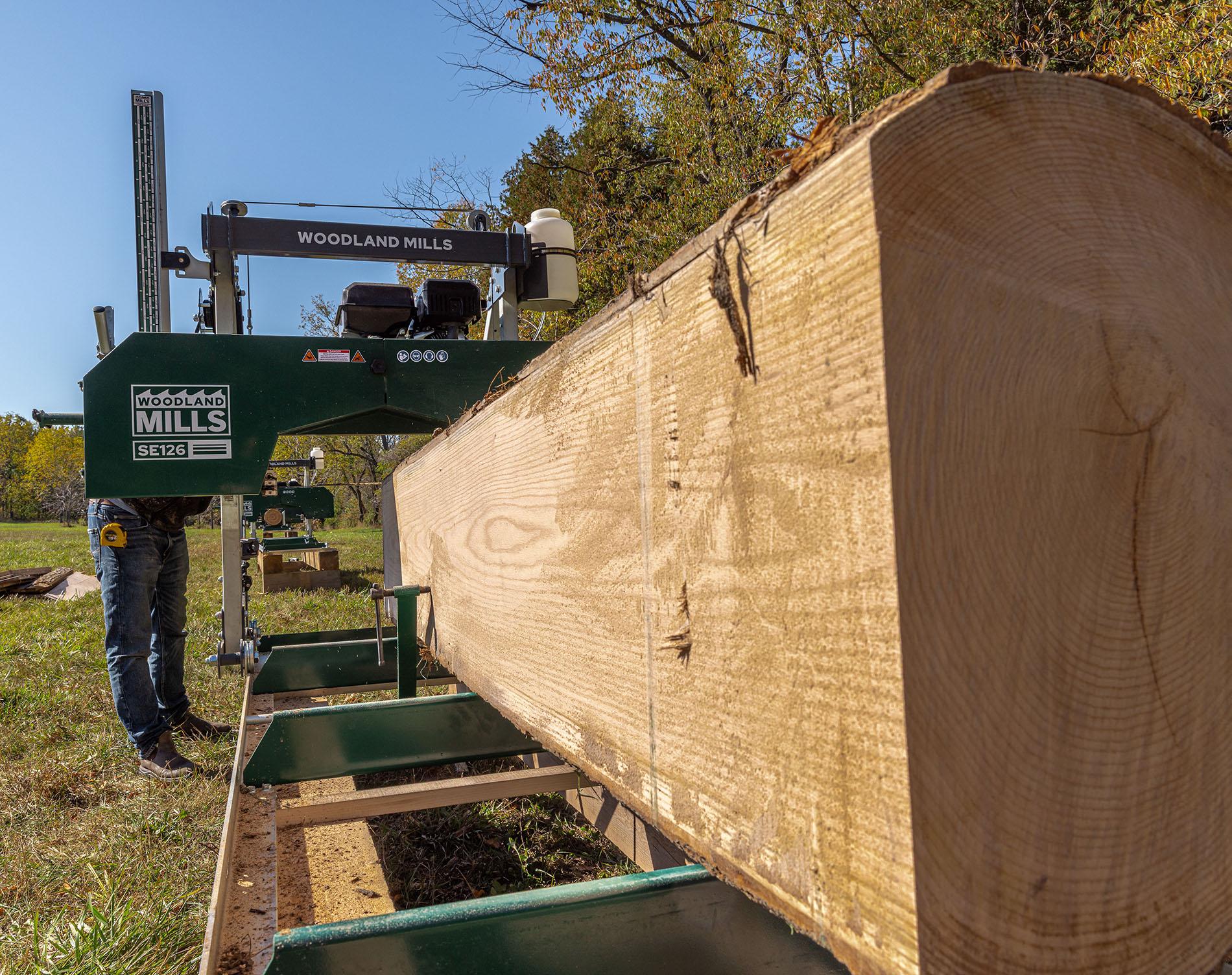
Profitability is not limited to the most valuable slab from the centre of a log. Planning products around the different parts of the tree can help reduce waste.
Wide, clear slabs may be reserved for tables and countertops. Straight boards can become shelves, frames or furniture components. Short boards and off-cuts may be suitable for coasters, candle holders, signs and other small products.
Every log has its place in some type of project.
Material that is unsuitable for woodworking may still have a use. Bark, branches and clean woody debris can be processed with a compatible Woodland Mills wood chipper, while suitable off-cuts can be kept for firewood.
This creates a product ladder in which different parts of the log serve different purposes, so nothing goes to waste and every part of the tree is used. It can also give customers a range of price points, from small craft-market purchases to custom furniture.
What are some other easy woodworking projects that are great for selling?
Looking for more suggestions on what to make next?
-
-
Birdhouses are popular woodworking projects that sell well.
-
Wooden cutting boards are easy to make, can be made from a variety of materials and are consistently among the top-selling kitchen items
-
Small luxury gift items like ring boxes are excellent for beginners in woodworking
-
Wooden planters and garden products appeal to homeowners
-
Floating shelves with hidden brackets are trendy in home decor
-
Wine racks are popular among wine enthusiasts for their functionality
-
What Are the Advantages of a Portable Sawmill for Woodworking?
A portable sawmill gives woodworkers greater control over their materials before a project reaches the workbench.
Instead of designing every product around the boards you can buy at the hardware store, you can mill lumber according to the dimensions, grain patterns and features you want. This is especially useful for producing live-edge slabs, unique cuts, table legs, mantels, beams and other material that may be expensive or difficult to purchase.
Advantages of milling your own woodworking lumber include:
-
-
Cutting custom thicknesses and widths for individual projects
-
Producing matching boards from the same log
-
Preserving live edges, figured grain and other distinctive features
-
Processing local tree species that may not be available from lumber retailers
-
Setting aside premium sections for furniture, signs and decorative pieces
-
Reusing waste and off-cuts to turn into coasters, frames and other saleable products
-
Portable sawmill models like the HM126MAX offer great opportunities for landowners and woodworkers looking for the right capacity, capability and budget for their projects, while the HM130MAX is an essential tool for those doing live-edge woodworking projects.
How Much Can an Independent Woodworker Do on Their Own?
An independent woodworker can handle a large portion of the process, especially when working with timber from their own property or logs sourced locally.
Depending on your equipment, experience and available space, you may be able to:
-
- Recover or purchase suitable logs
- Mill them into boards, slabs and turning blanks
- Stack and dry the lumber
- Plane and prepare the material
- Build and finish the final products
- Photograph, market and sell the work
- Reuse off-cuts for smaller products, firewood or wood chips
You do not need to begin with custom furniture or a large production shop. A manageable starting point may be one or two repeatable products, such as charcuterie boards, signs, coasters or simple benches. Producing several pieces in a batch can reduce setup time and help you understand the true cost of each item.
Consider the merits of equipment that lets you source your own wood, like log arches or ATV trailers for hauling fallen timbers out from the brush, or professional chainsaw chain sharpeners that keep your equipment in top shape. Think about what you need to handle each step of the process.
What Woodland Mills Equipment Is Most Helpful for a Woodworking Business?
The best equipment setup depends on the diameter of your logs, the dimensions of your products and the amount of material you expect to process.
Useful Woodland Mills equipment and accessories include:
-
-
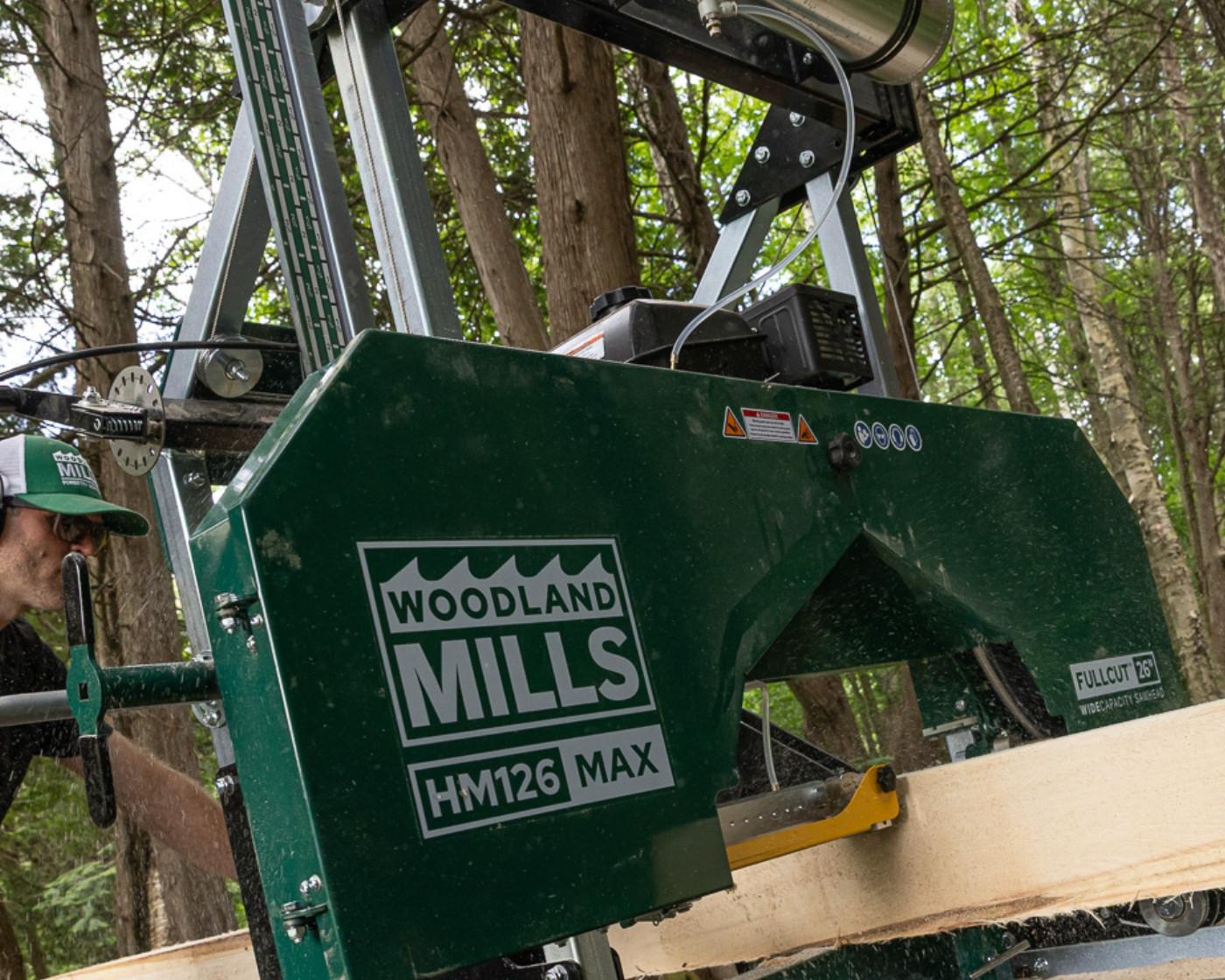
Portable Sawmill: Provides the foundation for turning logs into boards, slabs, beams and woodworking blanks. The HM122 can suit smaller logs and entry-level operations, while the HM126MAX provides additional capacity for a wide variety of woodworking and building projects. The HM136MAX may be better suited to woodworkers regularly producing wider slabs or processing larger logs
-
-
-
Cant Hooks and Log-Handling Tools: Help with rolling, positioning and controlling logs around the mill
-
Bandsaw Blade Sharpener and Tooth Setter: Allow higher-volume sawyers to maintain blades themselves rather than continually sending them away or replacing them. A system such as the RS30 PRO may be worth considering when milling becomes a regular part of the business
-
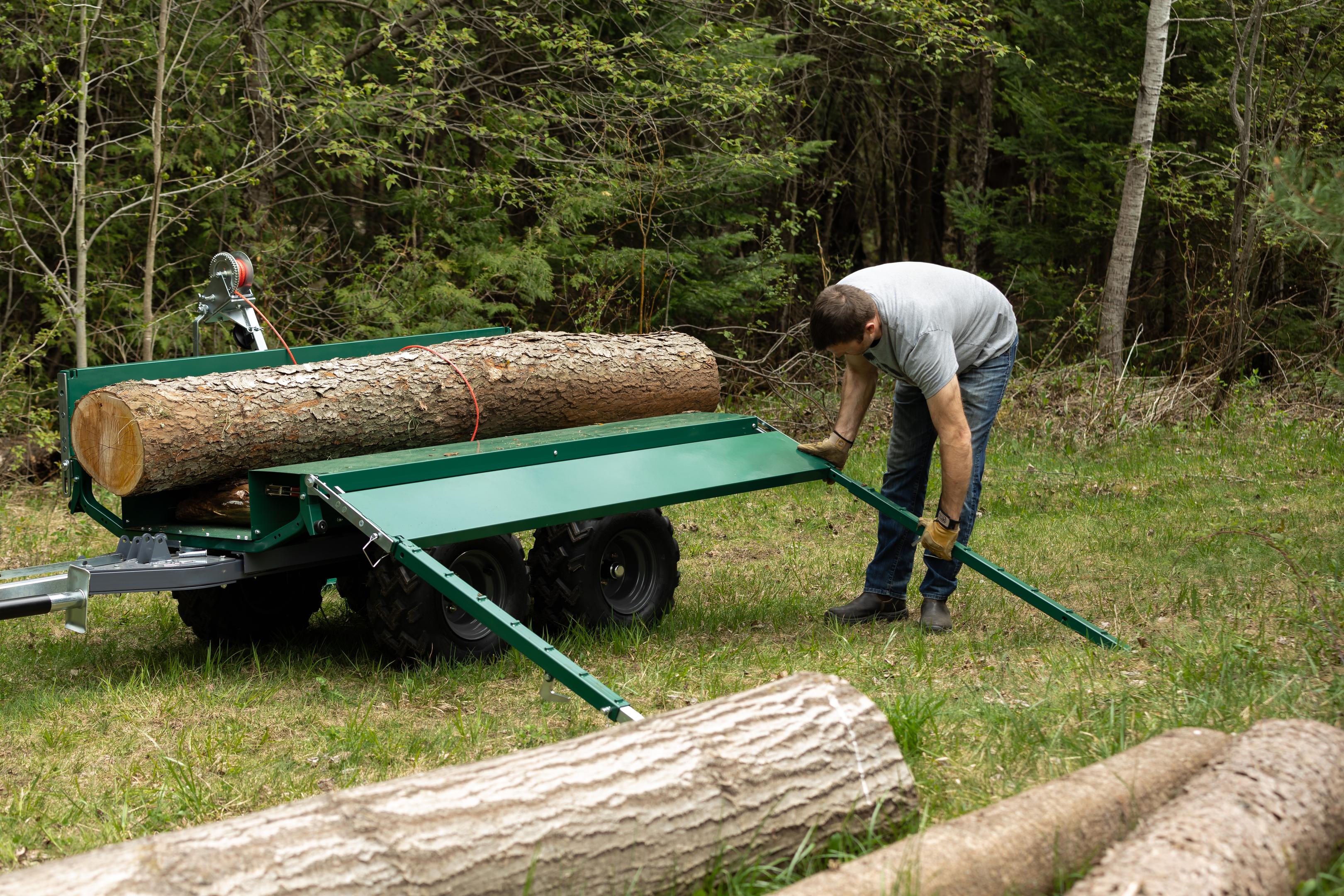
Multilander ATV Trailer: This trailer can transport logs, rough lumber, woodworking stock and finished products around an off-road property
-
You may not need every accessory when getting started. Consider where most of your time and physical effort are currently being spent. A track extension solves a different problem than a loading system, while blade-maintenance equipment becomes more valuable as your milling volume increases.
Which Portable Sawmill Is the Right Size for Your Woodworking Projects?
Choose a portable sawmill according to the largest logs you regularly process and the widest finished products you want to make. Log diameter and maximum cut width are both important, especially when milling live-edge slabs.
-
-
HM122: Handles logs up to 22 inches in diameter and cuts boards up to 20 inches wide, making it a practical entry-level option for smaller woodworking projects
-
HM126MAX: Offers a 26-inch log diameter and cut width for furniture stock, dimensional lumber and general woodworking
-
HM130MAX: Provides 30 inches of log and cutting capacity for wider slabs, tables, counters and higher-value live-edge products
-
HM136MAX: Delivers 36 inches of capacity for large logs, extra-wide slabs and demanding custom woodworking projects
-
Size your sawmill around your normal log supply while leaving some additional capacity for larger timber. Also consider log length, available workspace, loading equipment and whether a ground-mounted or trailer-mounted sawmill better fits your workflow.
What Equipment Setup Is Best for Your Woodworking Goals?
For a hobby woodworker making occasional projects, a smaller portable sawmill with basic log-handling tools may provide all the capacity required.
A side business producing cutting boards, signs, shelves and furniture may benefit from a higher-capacity sawmill, track extensions and a reliable way to load logs. Keeping spare blades available can also reduce interruptions.
Woodworkers regularly selling live-edge tables, wide slabs or custom lumber should consider the largest logs they expect to process, not just the trees currently available. Additional sawmill capacity can provide more freedom when selecting logs and deciding how they should be cut.
Before choosing equipment, consider:
-
-
What is the typical diameter and length of the logs available to me?
-
Do I want to produce boards, wide slabs or both?
-
How will I load and turn heavy logs?
-
How much space do I have for milling and drying lumber?
-
Will the mill remain in one location or travel to different properties?
-
How many blades am I likely to use during a typical season?
-
The right setup is not necessarily the largest one. It is the setup that matches your logs, workspace, production goals and available towing or loading equipment.
What Are the Cost Considerations for a Woodworking Business?
Woodworking can be done at a hobby level at your garage, or expanded to be a full-time business.
The cost of starting a woodworking business depends on how much of the process you plan to complete yourself. A woodworker purchasing dried lumber needs a different setup from someone who harvests logs, mills boards and prepares every piece from the tree onward.
For an efficient workflow, consider the equipment required at each stage:
-
-
Log and material handling: Cant hooks, chains, winches, ramps, trailers or lifting equipment may be required to recover logs and move heavy material safely
-
Milling equipment: A portable sawmill allows you to produce boards, slabs and custom dimensions, but the budget should also account for blades, fuel, maintenance and accessories
-
Lumber-drying equipment: Stickers, a level stacking area, protective covers, moisture meters and kiln equipment may be needed to prepare stable lumber
-
Stock preparation: A planer and jointer help produce flat, square and consistently sized boards before assembly
-
Cutting and shaping tools: Table saws, band saws, mitre saws, routers, drill presses and lathes support different types of products
-
-
-
Assembly and finishing equipment: Workbenches, clamps, hand tools, spray equipment and finishing areas are needed to turn prepared lumber into completed products
-
Other ongoing costs: Sanding materials, replacement blades and fuel are some of the ongoing costs you should consider when doing woodworking long term
-
You do not need to purchase everything at once. Start with the tools required to make a small number of repeatable products, then add equipment when it removes a bottleneck or allows you to take on more valuable work.
Why Do Woodworkers Trust Woodland Mills Portable Sawmills?
Woodland Mills portable sawmills are designed for landowners and woodworkers who want dependable equipment for producing their own lumber.
Customers regularly highlight the heavy-duty construction, thoughtful engineering and straightforward operation of their Woodland Mills equipment. Portable sawmills are also backed by a three-year warranty, giving owners added confidence as they develop their milling setup and take on new projects.
Excellent customer service is another important part of the ownership experience. Equipment ships promptly and directly to your driveway, replacement parts are readily available, and help is available when customers need assistance with equipment compatibility, assembly or maintenance.
Tom G., a Woodland Mills HM130MAX owner, says he's "really happy that I bought Woodland Mills. Great customer support and nice group of people. Thanks for making retirement fun."
Woodworkers can also find inspiration and practical experience through Woodland Mills customer reviews and the Woodland Mills Product Owners and Community Facebook Group. Members regularly share milling setups, finished furniture, craft-market products and ideas for making better use of locally harvested lumber.
FAQs: Woodworking With a Portable Sawmill
Q: Is a portable sawmill worth owning for a woodworking business?
A portable sawmill may be worthwhile when you have regular access to logs and expect to produce a continuing supply of lumber, slabs or woodworking blanks.
The financial value depends on your production volume, material costs and the products you sell. It can also provide value outside the business by supplying lumber for sheds, workshops, furniture and other personal projects.
Q: Can I use freshly milled lumber for woodworking projects?
Freshly milled lumber is usually considered green and will continue to lose moisture as it dries. Using it immediately for indoor furniture or projects requiring precise joinery may lead to shrinking, twisting or cracking.
Stack lumber with stickers to promote airflow and allow it to dry appropriately for its intended use. A moisture meter can help you determine whether the material is ready. Some rustic outdoor projects can accommodate green lumber, but furniture and cutting boards generally require more stable, properly dried stock.
Q: What size portable sawmill is best for making furniture and live-edge slabs?
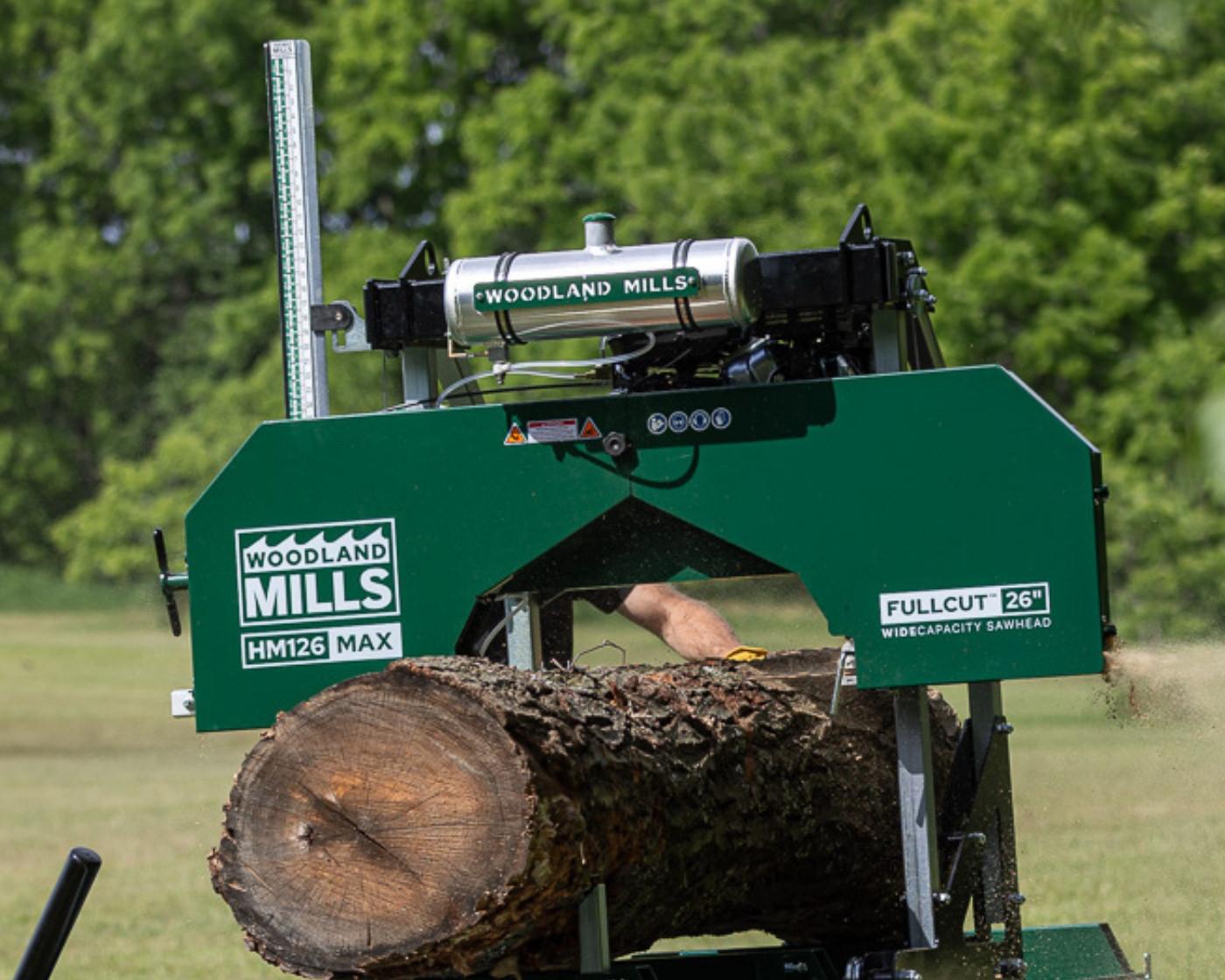
Choose a sawmill according to the diameter of your logs and the widest material you want to produce. A smaller mill like the HM122 may be sufficient for cutting boards, shelves and general furniture stock, while wider live-edge tables require greater log and cutting capacity, such as from the HM130MAX.
Remember that the maximum log diameter and maximum board width are different measurements. Consider the products you hope to make in the future as well as your current projects before selecting a mill.
SHOP SAWMILLS
HM122
An entry-level sawmill packed with impressive features at a budget-friendly price. Designed for hobby sawyers or woodworkers looking for an economical solution to mill lumber.
HM126MAX
The original Woodland Mills portable sawmill. Trusted by hobbyists for years, now featuring a FULLCUT® sawhead to maximize usable cut width.
HM130MAX®
A wide capacity sawmill that produces stunning high-value live-edge boards. Loaded with features including our FULLCUT® sawhead, RapidChange® blade system, auto lube, and more.
HM136MAX™
The ultimate solution for cutting wide live edge slabs, perfect for tabletops, counters, benches, and more. Our unique FULLCUT® sawhead design ensures your logs' widest assets are left intact.
Join the Woodland Mills Community Facebook group. Search advice and insights from over 65,000 knowledgeable, supportive members.
- Pre-purchase considerations
- Sawmill set-up support
- Project inspiration photos and videos
- Community troubleshooting support