


Cost of Logs: Whether to harvest logs on your own or purchase them
With unstable timber prices, many landowners may be tempted to source their own logs for sustainable lumber
Is it cheaper to harvest logs from your own property or purchase them whole?
It's a question many landowners grapple with as they look over their forested land, many of which have desirable tree species like soft maple, white oak or eastern white pine.
Whether you're looking for full round logs for transforming into dimensional lumber with a portable sawmill or rounds for log splitting, log prices are a key consideration for any landowner.
So what is the best method for acquiring logs, and what is easiest on property owners' pocket books on a budget? Let's get into the pros and cons of acquiring logs in different ways and see what's best for you.
Why do you need your own logs?
Landowners often need wood for various projects, whether it's to be processed into a consistent stream of firewood via a log splitter or for turning into dimensional lumber with a portable sawmill.
Purchasing wood from a store seems like an easy solution, but repeat trips can often become expensive. Quality of boards at the hardware store can often vary, and it may be easier to utilize the renewable resources of your land.
Landowners may also have desirable tree species like black walnut, hard maple or red oak which are used in beautiful woodworking projects that can fetch a lot of money.
Others may want to process dimensional lumber for building projects, such as building barns, sheds, decks or patios.
There's no limit to what can be done with wood, whether you're purchasing it wholesale or harvesting it from your own land.
Owning a woodlot vs an unmaintained forest
Different landowners have different setups, and while any forested land can be harvested, you should consider the traits of your land before setting up a forest management plan:
-
-
Woodlots: For business or hobby purposes, these are lots with rows of trees specifically designed for eventual harvesting, be it for firewood, turning into lumber, Christmas trees or something else
-
Private Forest: Unmaintained stretches of acreage that may feature trails, but the vast majority of it is unmanaged terrain home to various forest species
-
Public Forest: All over the world there are many government owned forests that are completely unmanaged. Check your local laws before harvesting from these properties
-
Advantages and disadvantages to harvesting vs buying logs
If you're planning on harvesting trees from your own land, you should ask the question of whether it's easier or cheaper to buy logs outright, purchase dimensional lumber or harvest and mill your own logs.
Advantages to Purchasing Logs:
-
-
Logs are often cheaper than finished lumber
-
Loggers can sell species that may not be available in your area
-
Cost is higher than self-harvesting but lower if you mill to finished dimensions yourself
-
Disadvantages to Purchasing Logs:
-
-
You're at the mercy of whatever species and size of logs are available in your area
-
Quality of logs is up to the logger and may vary
-
Advantages to Harvesting and Milling Your Own Logs:
-
-
You can harvest the best trees and logs from your property
-
You can keep and re-use tree waste like branches, bark and foliage
-
You can mill custom dimensions
-
Disadvantages to Harvesting and Milling Your Own Logs:
-
-
Time is the biggest determinant, as you're trading upfront cost for the time it takes to harvest and mill logs yourself
-
Upfront cost of equipment
-
Advantages to Buying Finished Lumber:
-
-
Lumber is ready to use immediately
-
You can pre-plan on common dimensions like 2x4 or 2x8s
-
Disadvantages to Buying Finished Lumber:
-
-
Cost per board is often much higher than milling your own logs or logs you've sourced from loggers
-
You may not always get consistent quality from boards purchased from the lumber yard
-
Lumber yards and hardware stores tend to mostly stock common dimension and species
-
|
| Overall Cost | Custom Dimensions | Access to Uncommon Species |
| Self-Harvesting | Low | Yes | Yes |
| Buying Logs | Medium | Yes | Yes |
| Buying Lumber | High | No | No |
What is the cost per log?
Consider this concept while thinking about the cost of a log when harvesting your own vs buying logs.
-
-
Harvesting your own logs: Your cost is your time plus the cost of your equipment. Technically it's free to mill your own logs, but your time is money so consider that when harvesting your own trees.
-
Purchasing logs: Logs can range anywhere from $50 to hundreds of dollars for common species, or thousands for exotic types like Black Walnut.
-
Purchasing Lumber: Boards at the hardware store come in a variety of prices and dimensions, but quality can also vary and you're unlikely to find uncommon dimensions or exotic species at the hardware store.
-
Measuring board feet
The price of a log, or a stack of boards, is often measured in board feet. This allows a landowner to measure based on the volume of a load of lumber, rather than just by the weight. This is also helpful for measuring the cost of boards that may be random lengths.
The formula for measuring board feet is:
-
-
The best formula for calculating board feet is to multiply the thickness x length x width then divide that by 12.
-
When calculating you would write it as: "(Length x Width X Thickness) ÷ 12 = Total Board Footage."
-
What is the price of kiln dried lumber?
Kiln dried lumber is wood that has had its moisture content reduced in a kiln. There are various different types of kilns, from solar kilns to dehumification kilns, but they all serve the same purpose of drawing moisture out from the wood.
Dried lumber is more desirable than wet, green wood because it will be ready to use, whereas you may have to wait for the wet lumber to dry first.
Kiln dried lumber often sells for up to a dollar or more per board foot. So if you're buying lumber, buying green wood can save you money if you own your own kiln, versus if you're selling wood you'll make more money by selling it dry.
Reducing the cost of milling your own logs
If you want to mill logs from your own trees, whether you're producing posts for raising a barn or flooring for your new kitchen, there are certain things you can do to reduce your costs for milling your own wood.
-
-
Use fallen logs, saving you time, and by extension money, from felling trees yourself
-
Bandsaw blade sharpeners like the RS30 PRO increase the longevity of your blades, meaning you don't have to buy them as frequently
-
Instead of buying logs, source logs from neighbors, friends or that have fallen on the roadside. Some cities and counties use dedicated organic waste dumps where people can come in and salvage materials
-
How to negotiate for better log prices
If you are interested in buying logs from other landowners, it's always good to find some ways to negotiate the best price:
-
-
Bulk Buying: Buying a larger quantity of logs often means the price per log goes down
-
Common Species: Pine and other softwood species are more desirable for building projects than woodworking, and come in at a lower price. Consider buying these species depending on the project
-
Trading Services: Own a stump grinder or wood chipper? Maybe you can offer a deal for a good price for logs in exchange for loaning or offering to coming in to use your own equipment
-
What Woodland Mills Equipment Can Help You Harvest and Retrieve Logs?
The cost of harvesting your own trees depends partly on how you plan to move each log from the stump to your landing, sawmill or firewood-processing area.
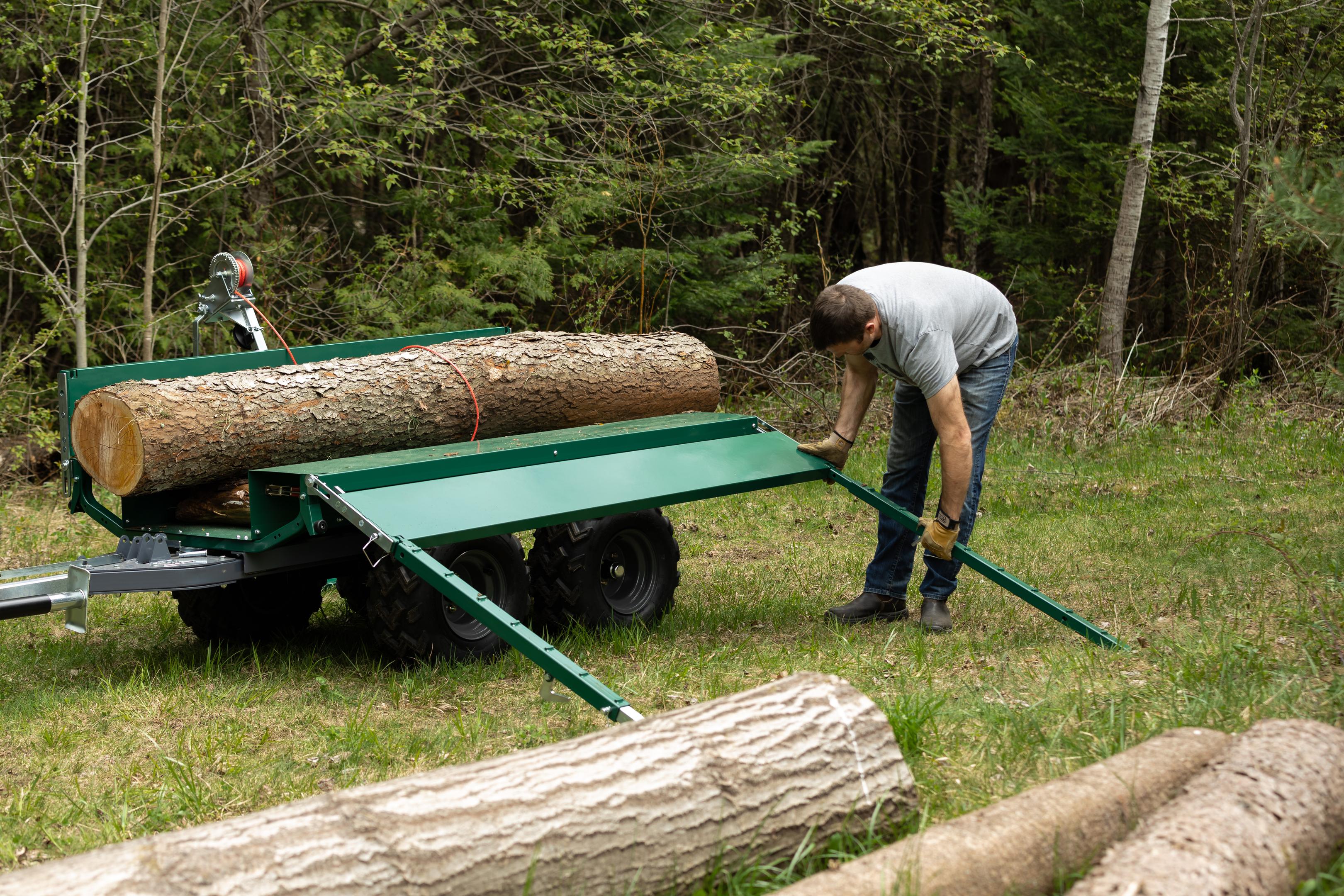
Dragging a log directly behind an ATV may be inexpensive, but the leading end can dig into the ground, collect dirt and catch on rocks or roots. The right equipment can improve control, reduce ground disturbance and help keep the log cleaner before milling.
Useful Woodland Mills equipment includes:
-
-
Loglander 28 Log Arch: Lifts the leading end of a log to reduce dragging and make it easier to tow behind a compatible ATV or UTV
-
TA30: Set up your tractor for log hauling with this reliable log skidding tool
-
LD20 Log Dolly: Supports the trailing end of a log when used with a log arch, allowing the entire stem to be lifted off the ground
-
Multilander ATV Trailer: Provides side and rear loading options for moving logs, firewood and other materials across off-road trails
-
FW66 Forestry Winch: Gives compatible compact and utility tractor owners a controlled way to extract logs from dense brush or difficult terrain
-
FW88 Forestry Winch: Provides greater pulling capacity for larger tractors, heavier timber and more demanding forestry work
-
Cant Hooks and Choker Chains: Help you roll, position and secure logs before winching, hauling or loading them
-
What Equipment Setup Is Best for Your Property?
The best setup depends on the equipment you already own, the size of your logs and the terrain between the stump and your processing area.
For ATV and UTV Owners
A Loglander 28 can be a practical option for moving individual logs along trails. Adding an LD20 Log Dolly supports the trailing end when keeping the entire log off the ground is important.
A Multilander may make more sense if you need to carry several shorter logs, firewood or loose material. It can also support other property-maintenance jobs, which may help justify the investment.
For Tractor Owners
A Woodland Mills forestry winch can pull logs from areas where driving the tractor would be difficult or disruptive. The tractor can remain on a trail or accessible landing while the cable reaches deeper into the woodlot.
Choose between the FW66 and FW88 according to your tractor’s PTO horsepower, three-point hitch category, lift capacity, weight and stability. Always check PTO horsepower rather than relying on total engine horsepower.
For Landowners Milling Lumber
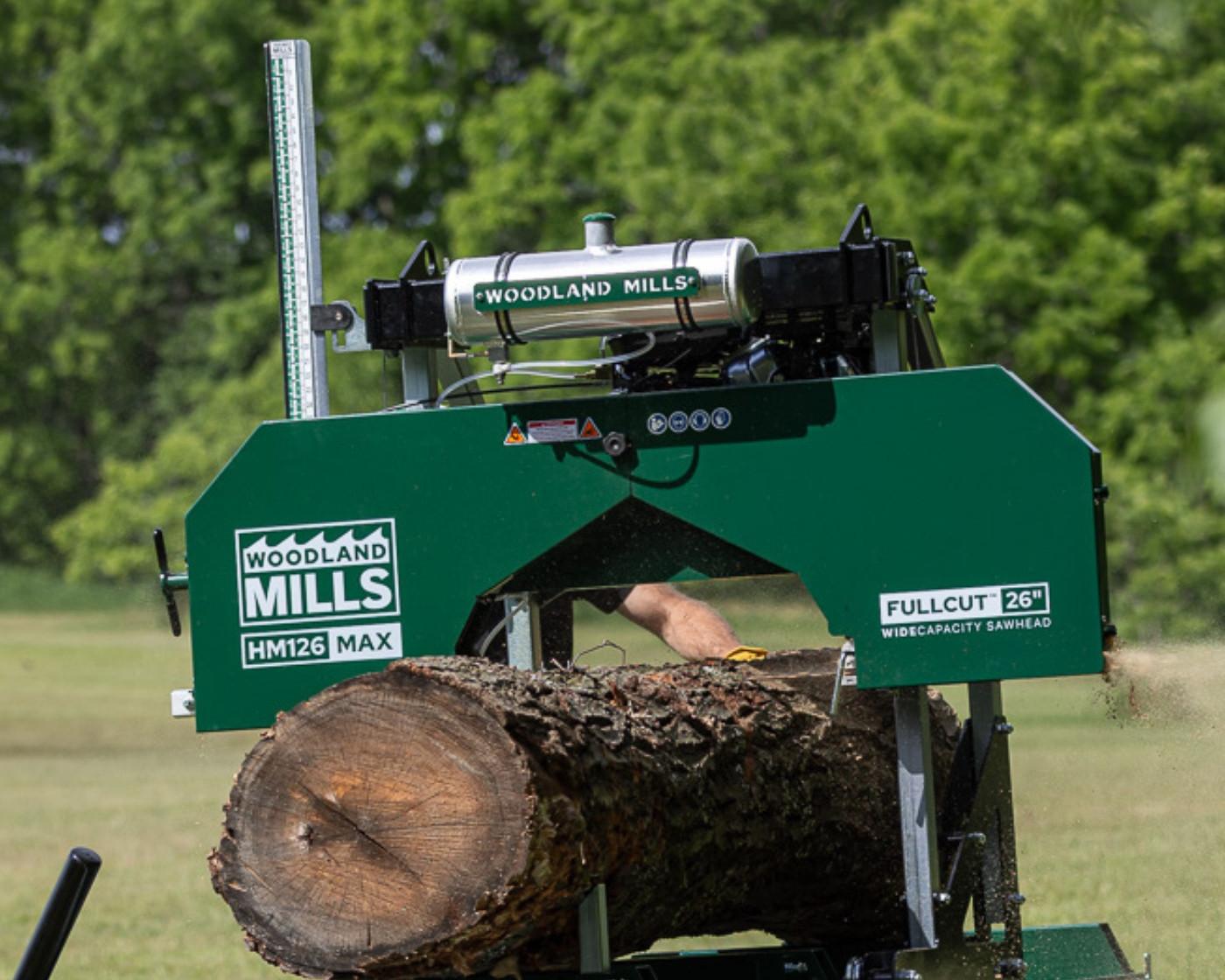
Once the logs reach the landing, a portable sawmill can convert them into boards, beams, posts and custom-sized lumber. A model such as the HM126MAX can support many common building and woodworking projects, but sawmill capacity should be matched to the diameter and length of the logs you expect to process.
What Is a Rough Equipment Budget for Harvesting Your Own Logs?
Equipment prices vary by country, product package, accessories, promotions, taxes and delivery costs. The following figures are broad planning estimates rather than current Woodland Mills prices.
-
-
Manual log-handling accessories: Individual pieces of equipment can cost upwards of a hundred dollars, including cant hooks, choker chains, straps and similar tools
-
-
-
Log arches and compact ATV trailers: These generally fall somewhere between about $1,000 to roughly $3,000
-
Higher-capacity off-road trailers: A more versatile trailer setup may require a budget of roughly $2,000 to $4,000
-
Tractor-mounted forestry winches: Depending on capacity and tractor requirements, expect to budget several thousand dollars
-
Portable sawmills: With equipment available at a broad range of prices, entry-level and mid-capacity sawmill equipment may start at just a few thousand dollars, while larger mills, trailer packages and accessories for serious, everyday sawyers can bring the total investment to around or above $10,000
-
These estimates do not include the tractor, ATV, chainsaw, fuel, protective equipment, replacement parts, storage or the value of your time. Cost considerations for equipment should also consider future use and how it can reduce your overall costs over time.
Why Do Landowners Trust Woodland Mills for Forestry Equipment?
Woodland Mills designs equipment for landowners who want to manage more of the harvesting, hauling and processing workflow themselves.
Customers regularly highlight rugged construction, thoughtful engineering, detailed assembly instructions and knowledgeable service in their reviews and testimonials. Woodland Mills works directly with customers when they are choosing compatible equipment, assembling a new machine, ordering replacement parts or maintaining it over time.
"Owned couple other company mills and Woodland is by far the best!" says HM130MAX owner Aaron H. "Installation was easy! Instructions were perfect and easy to understand! Quality is top notch! Thanks again!!"
The Woodland Mills Product Owners and Community Facebook Group also connects landowners who share tractor setups, logging methods, equipment experience and completed projects. That combination of capable equipment, direct support and an active owner community helps customers choose a setup suited to their land and long-term goals.
FAQs: Frequently Asked Questions
Q: How much should I pay for a desirable log like black walnut?
A: Black walnut logs can sell for thousands, but oftentimes are profitable because individual slabs or woodworking pieces made from them can sell for thousands themselves.
Like any tree species, you'll need to gauge the demand for your product and connect with an interested buyer. If you notice your product sits for too long, that may be a sign you're charging too much for it, or paid too much for the raw materials. Always look over your local market and see what people are willing to pay before making risky purchases or decisions.
Q: Is it worth it to own a portable sawmill for turning logs from my property into lumber?
A: Many landowners find portable sawmills incredibly useful, not just for turning your trees into dimensional lumber for building projects, but also blanks for woodworking or veneer for decorative projects.
There are plenty of uses for equipment that can transform your trees into custom dimensions, allowing you to create anything you can think of.
Q: What other equipment should I consider as a forested landowner?
A: Stump cleanup is a common need from landowners harvesting their own trees. A PTO-driven stump grinder like the WG28 PRO is popular among this crowd because of how quickly and easily it can remove stumps. It's an excellent landscaping tool that lets you prepare land for future use, reduce tripping hazards and improve the overall aesthetics of your property.
SHOP SAWMILLS
HM122
An entry-level sawmill packed with impressive features at a budget-friendly price. Designed for hobby sawyers or woodworkers looking for an economical solution to mill lumber.
HM126MAX
The original Woodland Mills portable sawmill. Trusted by hobbyists for years, now featuring a FULLCUT® sawhead to maximize usable cut width.
HM130MAX®
A wide capacity sawmill that produces stunning high-value live-edge boards. Loaded with features including our FULLCUT® sawhead, RapidChange® blade system, auto lube, and more.
HM136MAX™
The ultimate solution for cutting wide live edge slabs, perfect for tabletops, counters, benches, and more. Our unique FULLCUT® sawhead design ensures your logs' widest assets are left intact.
Join the Woodland Mills Community Facebook group. Search advice and insights from over 65,000 knowledgeable, supportive members.
- Pre-purchase considerations
- Sawmill set-up support
- Project inspiration photos and videos
- Community troubleshooting support