


Log Arch vs ATV Log Trailer: What's the Best Way to Haul Logs Off-Road?
What is the best method for hauling short or long logs around your property or off-road?
Pulling large logs out from the bush and to your sawmill or firewood setup shouldn't have to be difficult.
And with the right tools it isn't. But which equipment is best for transporting logs across a rural property or through difficult trails? That's going to depend on your setup. There are plenty of pros and cons to consider, such as your tow vehicle, budget, size, and how many logs you plan on hauling.
But here are some of the key considerations, so you can think about whether you need a log arch or ATV trailer for hauling logs off-road.
Why do I need a way of hauling logs?
Trees are a valuable resource for any landowner, whether they're acting as a habitat for forest species, beautifying the landscape or being harvested to be used for dimensional lumber or firewood.
Different landowners have different terrain and layouts of their properties. Woodlots are typically easier to drive vehicles through, while private forest owners often uneven terrain or unmaintained trails.
But everyone has the ability to locate, fell and harvest trees from their property with enough time and effort. Personal logging equipment like log arches and forestry winches are useful for individual landowners to be able to extract trees from wooded parts of their property, so they can be converted into useful materials for future projects.
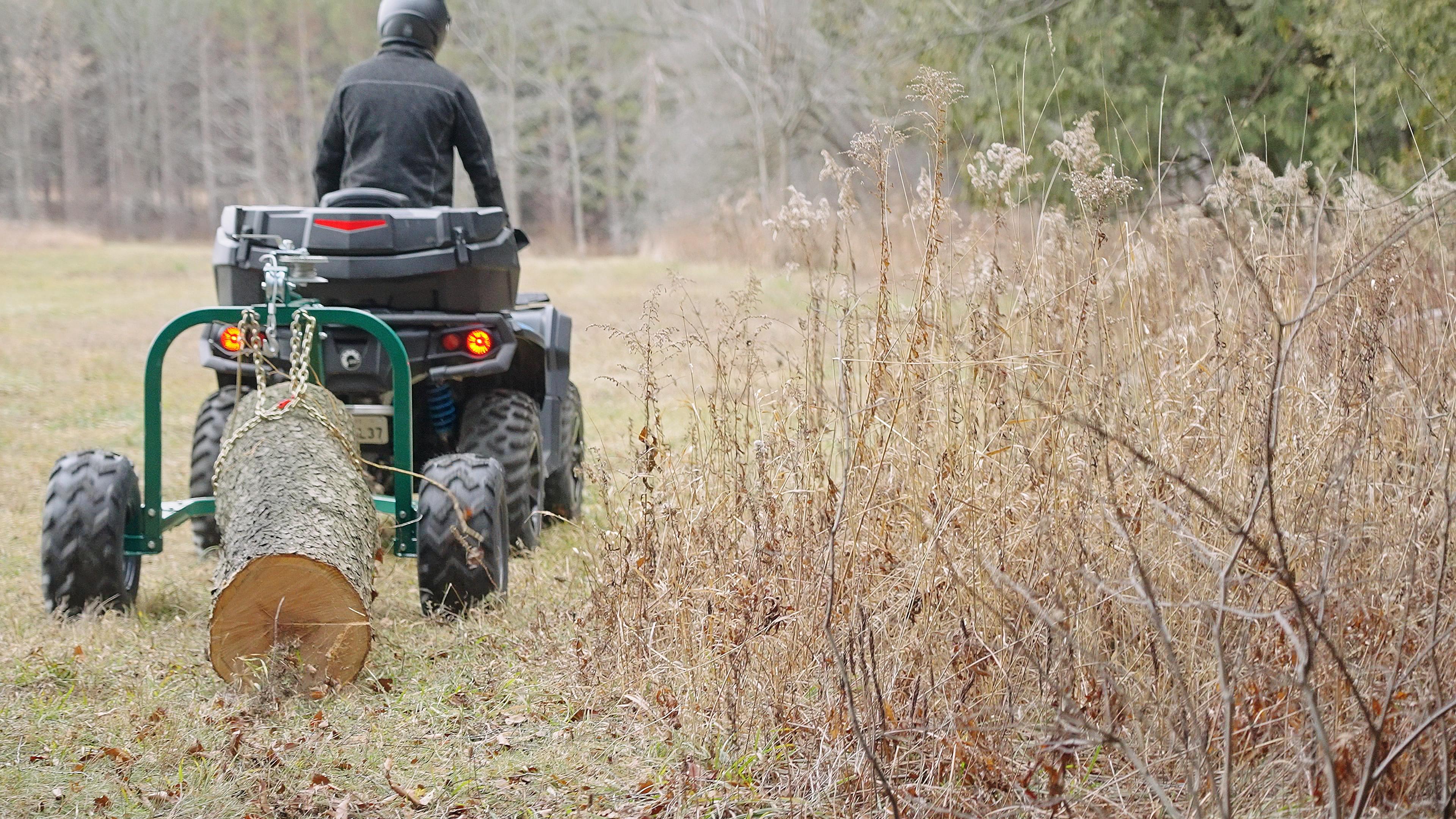
What is a log arch?
A log arch is a compact frame designed to lift and tow a log. Instead of dragging the full log directly across the ground, the arch supports the load so it can be towed behind your tow vehicle. That makes a log arch a simple, focused solution for moving logs out of the woods.
Woodland Mills offers four towable models for ATVs, UTVs, and small tractors:
-
-
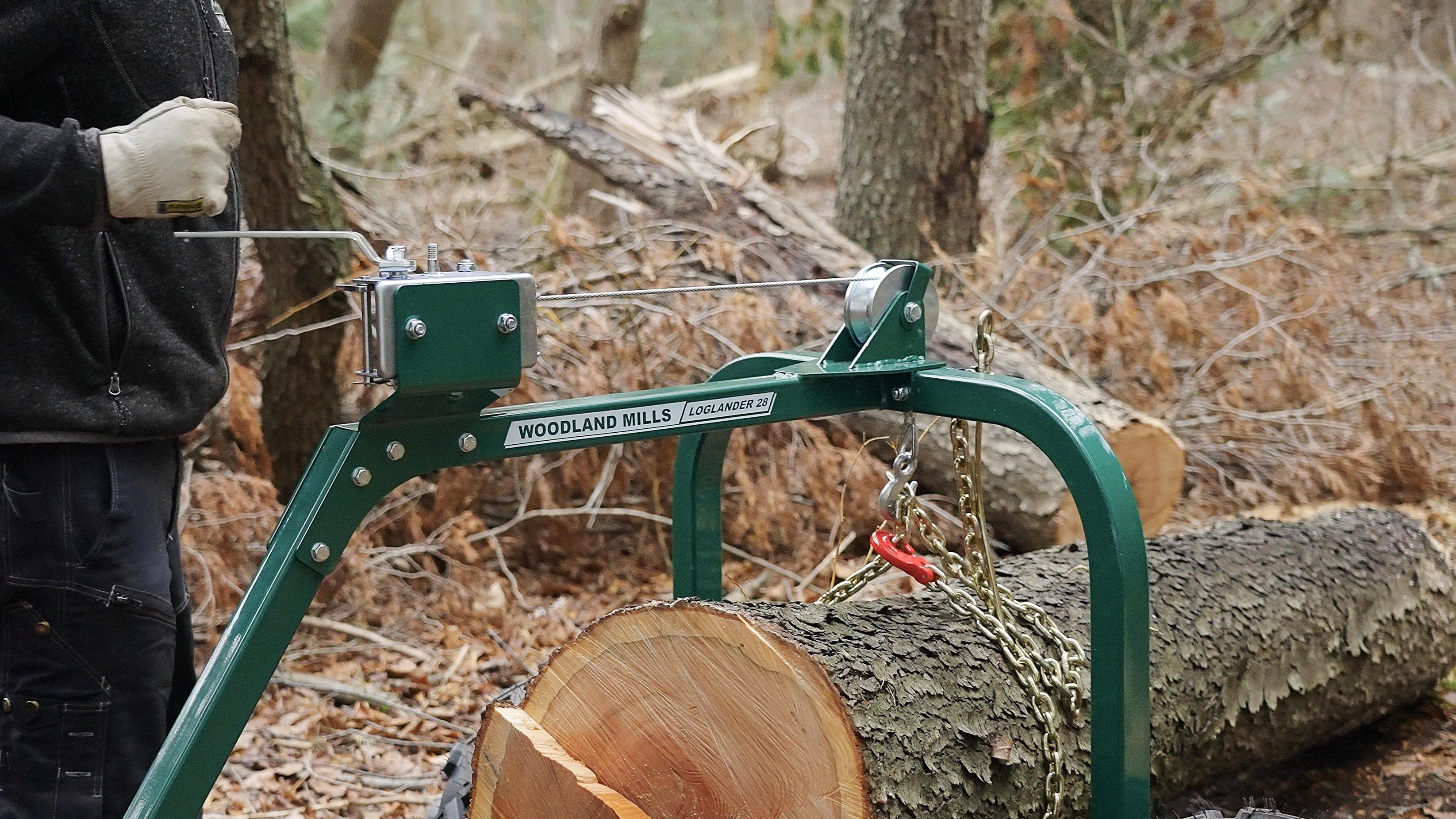
The Loglander 20 Log Arch is a ball-hitch equipped log arch that accepts logs up to 20 inches in diameter and has a 1,500-pound load capacity
-
The Loglander 28 Log Arch is a ball-hitch compatible log arch that handles logs up to 28 inches in diameter and has a 2,000-pound load capacity
-
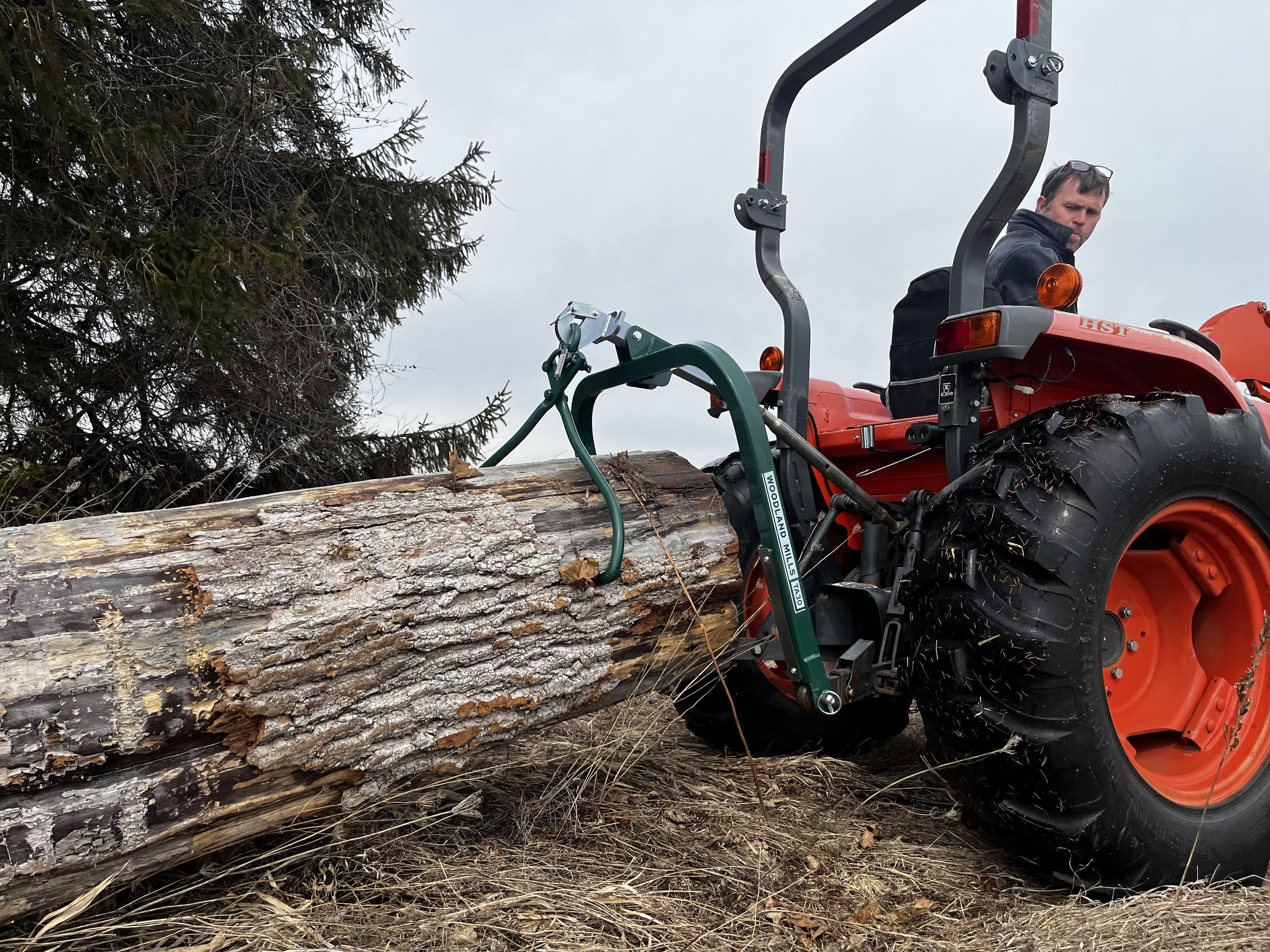
The TA24 Log Arch is a 3-point hitch-compatible log arch that can skid logs up to 24 inches in diameter and has 1,750-pound load capacity
-
The TA30 Log Arch is a 3-point hitch compatible log arch capable of hauling logs up to 30 inches in diameter and has up to 2,000-pound load capacity
-
Loglander Log Arch models include a two-speed manual winch and choker chain, so you have the main components needed to secure and lift a log. Their narrow, purpose-built design is especially useful when you are weaving through trees or working on a trail where a larger trailer would be harder to position.
Where a log arch works best
A log arch is a strong choice when:
-
-
You usually move one full-length log or several smaller logs at a time
-
Your access trails are narrow or winding with your ATV
-
You want a simple tool dedicated to log retrieval
-
You need to bring sawlogs from the felling area to a trail, landing, or portable sawmill using an ATV or tractor
-
Because the arch is compact, it is easier to back into position around a log than a large trailer. It also keeps the setup relatively light. The main tradeoff is specialization. A log arch is very good at moving logs, but it is not designed to carry loose firewood, soil, gravel, tools, or brush.
If you're concerned about dragging your logs through dirt or debris, you may want to consider the LD20 Log Dolly, an additional accessory that lifts and rolls the end of your log to haul it without dragging.
What Is an ATV Log Trailer?
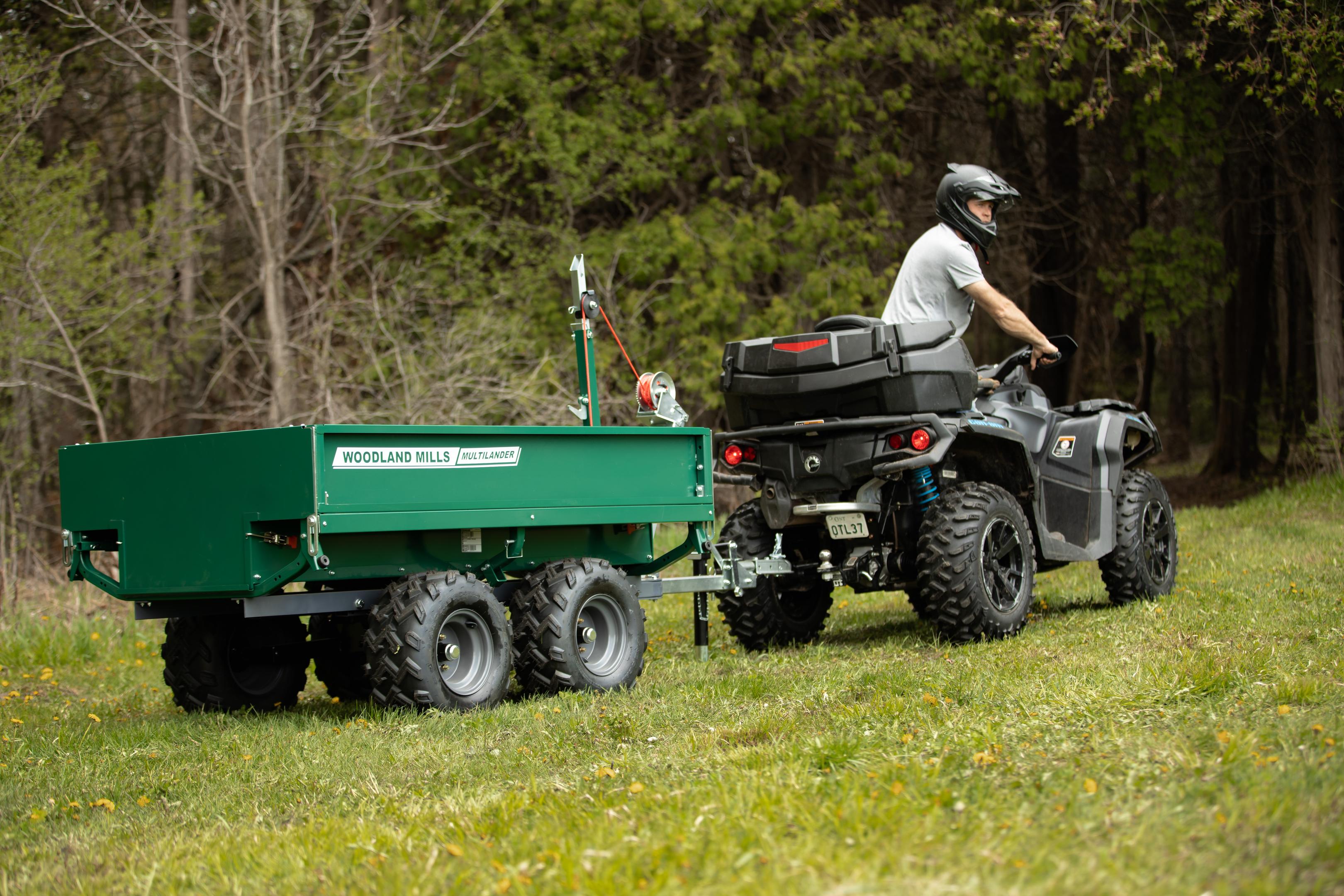
An ATV log trailer carries logs in or on a trailer rather than towing them behind an arch. For woodland property owners who need one piece of equipment to handle many jobs, an off-road utility trailer can be the more versatile option.
The Multilander Off-Road ATV Dump Trailer has a three-mode design that lets it work as a dump trailer, a side-loading log trailer, and a rear-loading trailer. Its folding side panels, included ramps, and onboard winch allow one person to easily roll logs into the box from the side, but it can also convert into dump mode for easy unloading of firewood, gravel or other loose cargo.
Capable of hauling logs, firewood, branches, topsoil, gravel, tools, and other materials around your property, its 2,000-pound overall payload capacity and large box make it a useful, multipurpose tool for various tasks around your property.
Meanwhile the Multilogger is a dedicated log hauling trailer, great for landowners who need to haul timbers but don't need the dumping features of the Multilander. Featuring the same 2,000 lb payload capacity of the Multilander, this model lets you pick a more streamlined set of features for a more affordable log hauling package.
Where an ATV log trailer works best
The Multilander is a strong choice when:
-
-
You want to haul several logs in one trip
-
You regularly move firewood, brush, soil, gravel, or equipment
-
You want a trailer that can load from the side or rear
-
Your trails have enough width and turning room
-
Its tandem walking beam suspension helps keep the tires in contact with uneven ground, while the pivoting hitch allows the trailer and tow vehicle to move more independently over rough terrain or unmaintained roads.
Which One Is Better for Your Forested Property or Woodlot?
The best answer depends on what you move most often. Here are a few options depending on your setup:
Choose a log arch for full-length sawlogs and tighter trails
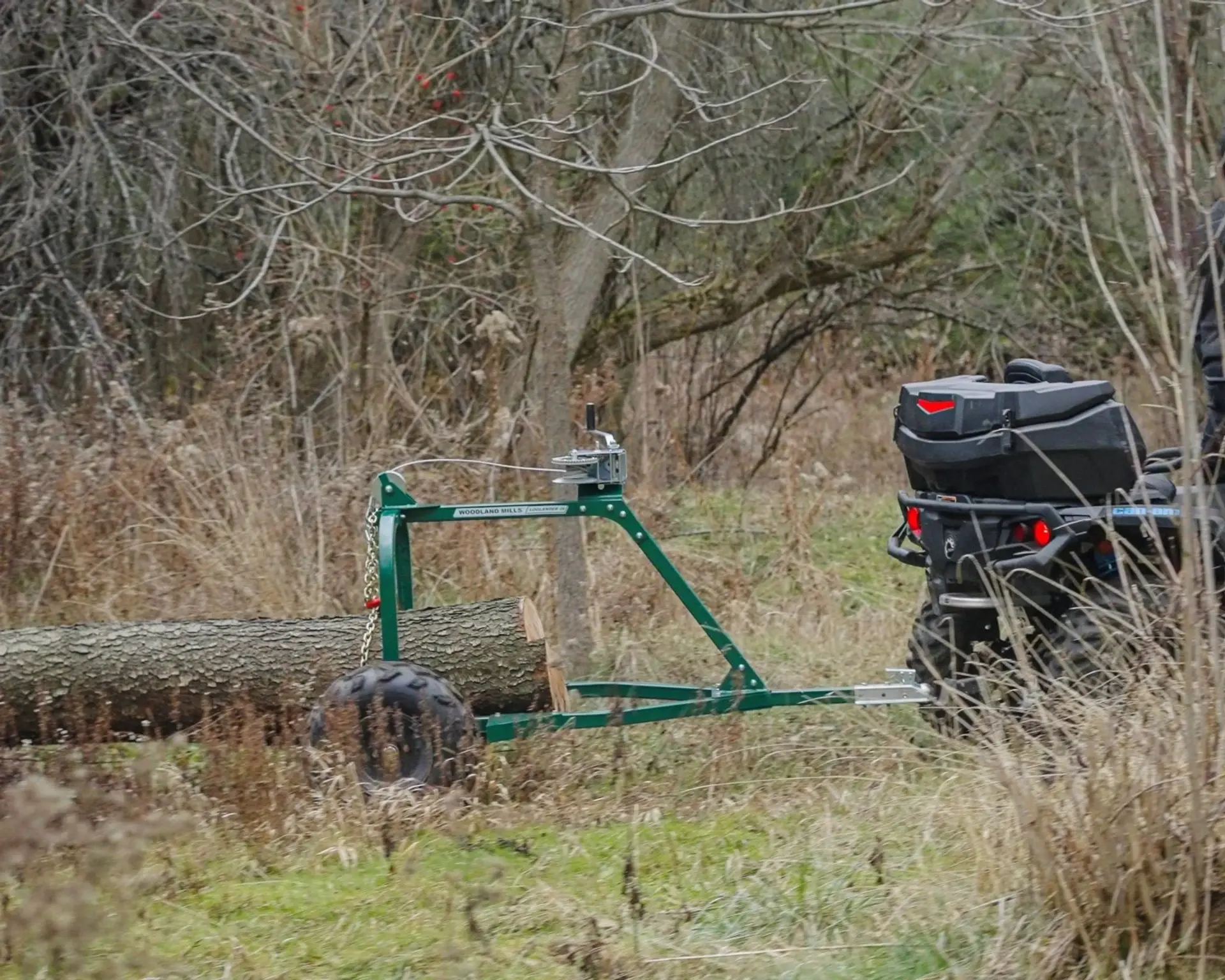
If your main goal is getting individual logs out of the forest, a Loglander is usually the more direct solution. It is lighter, more compact, and purpose-built for the job. Just attach the Loglander to your ATV and you can directly skid logs out from the brush, even in spaces with tightly packed foliage and unmaintained trails.
For a small sawmill operation, a log arch can be especially useful. You can retrieve one sawlog at a time and bring it to a landing or mill site without taking a full-size machine deep into the woodlot.
Tractor arches like the TA30 are likewise also useful for log hauling in places that can be navigated by a tractor, assisting with log transportation without needing to use an ATV.
Choose the Multilander for versatility and higher-volume property work
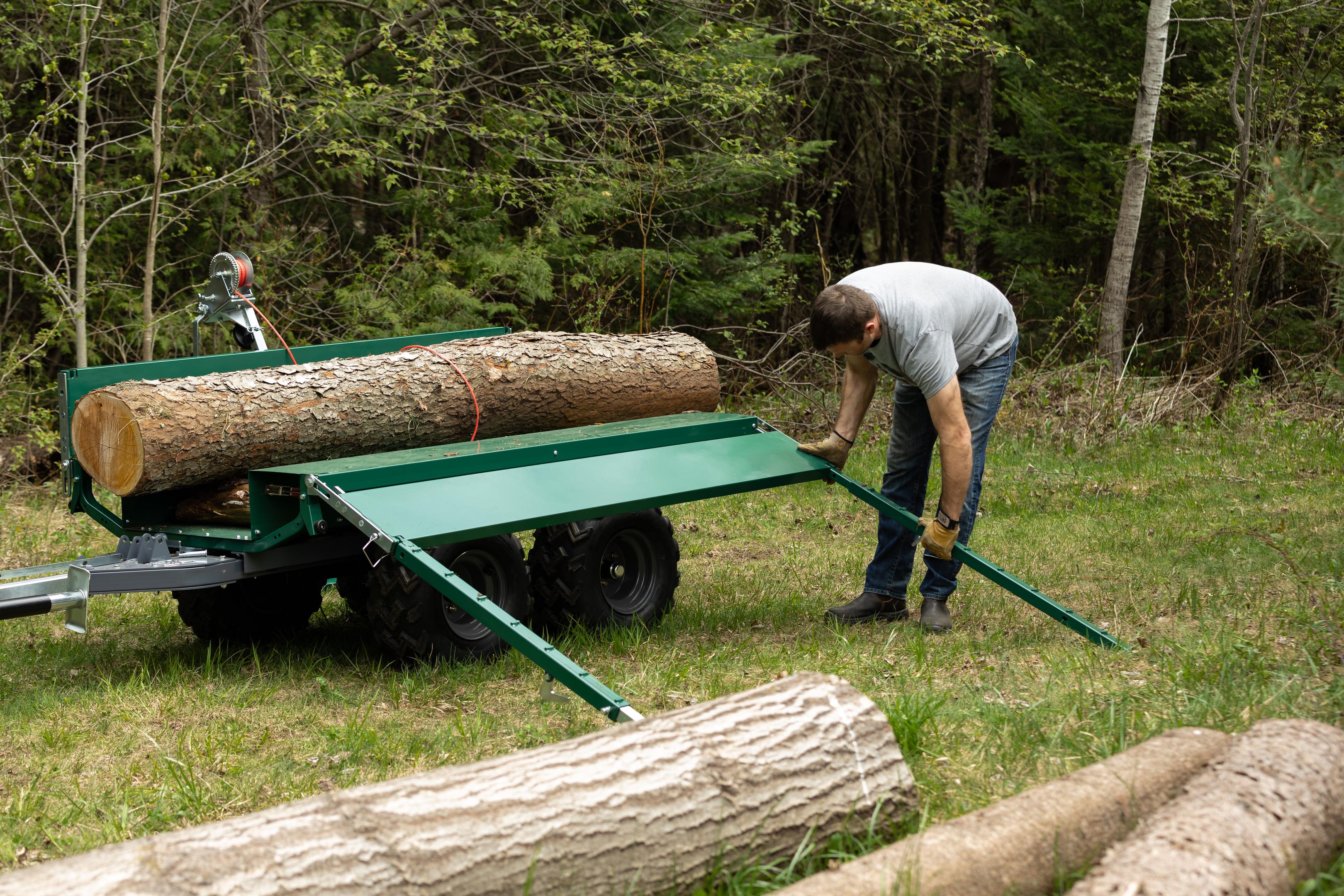
If your work rarely stops at moving sawlogs, the Multilander has earned its space on the properties of thousands of landowners for that very reason. It can move multiple shorter pieces, load from the side or rear, dump loose material, and handle everyday jobs throughout the year.
It is the better fit for someone who spends their day hauling more than just logs, but also firewood, loads of gravel, soil or other cargo. It's a high capacity option that offers versatility and capacity for hauling logs and so much more.
Choose the Multilogger for dedicated log hauling jobs
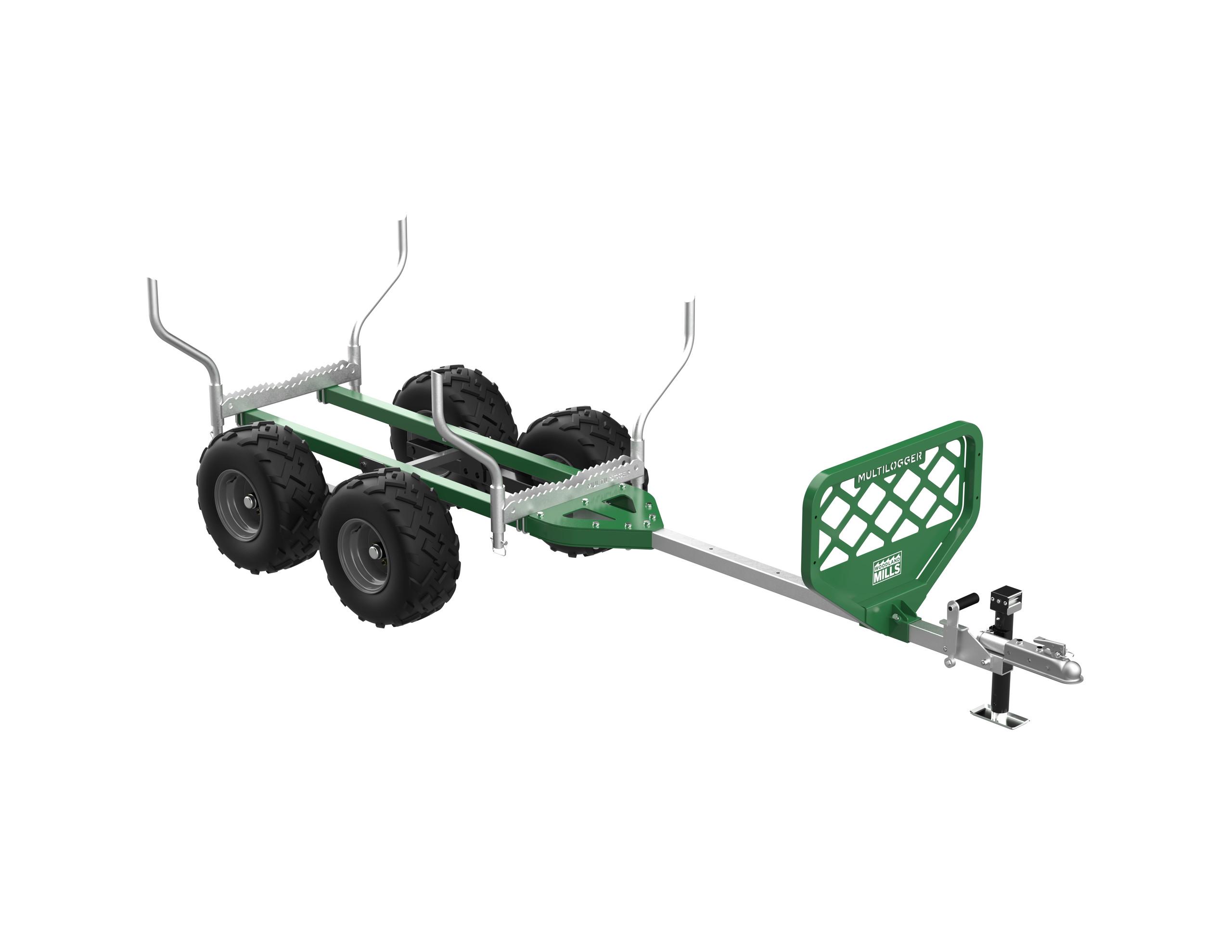
If you're only interested in hauling timbers, and want the best equipment for handling that specific task, the Multilogger offers an affordable solution.
Capable of handling up to 2,000 lbs, this streamlined setup is ideal for hauling multiple logs to and from your worksite. It also features the same tandem-beam suspension system as the Multilander, making it a great off-road tool for hauling logs on difficult rural trails. It's rugged stake-bed design prioritizes strength, reliability, and real-world usability, making it a great option for landowners who need a trailer solely for log hauling.
Is Dedicated Log-Hauling Equipment Necessary for a Landowner?
Whether you need a log arch or ATV trailer depends on your property, the logs you move and how often you do the work.
For an occasional small logs on level, accessible ground, you may be able to use equipment you already own or hire someone with the right machinery. Dedicated hauling equipment becomes more useful when log recovery is a recurring part of managing your woodlot.
A log arch or off-road trailer can help you:
-
-
Retrieve logs when and where the work happens
-
Reduce manual lifting and repositioning
-
Limit unnecessary contact between valuable sawlogs and the ground
-
Move material without taking a full-size tractor or truck deep into the bush
-
The right equipment improves your workflow, allowing you to get to the next part of the job quickly and easily. Logs can be moved from the felling area to a landing, portable sawmill, firewood-processing area or storage location with less repeated handling.
What are the Cost Considerations for Log Hauling Equipment?
Purchasing log-moving equipment is a significant decision, so it makes sense to compare the upfront cost with how often you expect to use it.
Consider the following questions:
-
-
How many logs do I expect to move each year?
-
-
-
How much would it cost to rent equipment or hire an operator?
-
Do I already own a compatible ATV, UTV or small tractor?
-
Will the equipment have other uses around my property?
-
Do I have enough room to store it properly?
-
There is no single answer for every property. Look beyond the purchase price and consider frequency of use, labour savings, equipment versatility, storage, maintenance and the convenience of having the tool available when you need it.
What Other Equipment Can Support a Log-Hauling Setup?
Moving a log out of the woods is often only one step in a larger process.
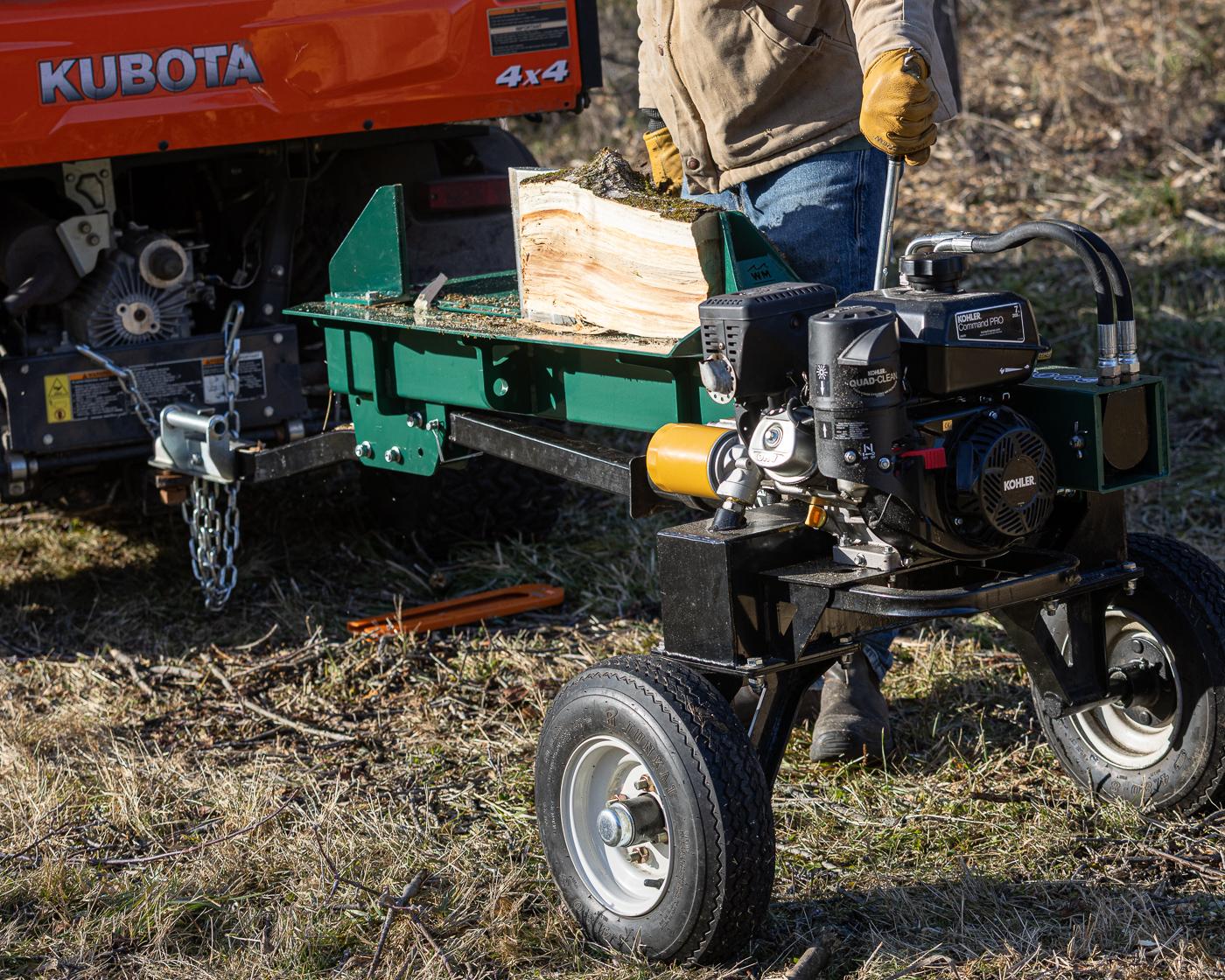
For firewood production, the LS218 two-way log splitter can process bucked rounds after they have been hauled out of the bush. A Multilander can then be used to move the split firewood to a drying or storage area.
Branches and treetops can be processed with a Woodland Mills wood chipper such as the TF810 PRO, helping you turn material that is unsuitable for lumber or firewood into useful wood chips.
The best equipment setup follows the complete path of the material: retrieving the log, transporting it, processing it and moving the finished lumber, firewood or chips to their next destination.
Why Choose Woodland Mills for Log-Moving Equipment?
Woodland Mills designs equipment for landowners who want practical tools they can operate and maintain themselves.
The Loglander and Multilander are engineered for off-road property work, with features intended for rough trails and uneven terrain. It's durable design and precision engineering ensures it will thrive in rugged use, and has been tested and proven by landowners around the world. Woodland Mills also sells directly to customers, cutting out the middlemen to keep costs affordable.
"Very proud to own this," says Brent D., the owner of a Loglander 20 Log Arch. "Heavy duty and built well. Woodland's customer service is outstanding, they answered all my questions promptly and everything shipped and arrived beautifully!"
For more information from existing Woodland Mills customers, check out the Woodland Mills Product Owners and Community, where dedicated landowners chat, share ideas and share log recovery methods, trail maintenance advice as well as their sawmill setups and projects.
FAQ: Frequently Asked Questions
Q: Is a log arch better than an ATV log trailer?
A: Neither is better for every job.
A log arch is generally the better option for retrieving individual full-length logs, working on narrow trails and reducing how much of the log contacts the ground. An ATV trailer is better suited to carrying multiple pieces and other materials around a property.
Q: Which Woodland Mills log arch should I choose?
A: The Loglander 20 is designed for logs up to 20 inches in diameter and has a 1,500-lb load capacity. The Loglander 28 accommodates logs up to 28 inches in diameter and has a 2,000-lb load capacity. If you wish to utilize a tractor for log hauling you have the choice between the 1750-lb capacity TA24 and the 2,000-lb capacity TA30.
Choose according to both log diameter and weight. Species, length and moisture content can cause two logs of the same diameter to weigh very different amounts, so consider whether you're going to be hauling freshly cut, wet logs or aged, dry timbers.
Q: How can I use a log arch without dragging and damaging the log?
A: A towable log arch lifts and supports the forward portion of the log, reducing the amount of material dragging across the ground. The trailing end may still contact the trail.
The amount of contact will depend on the log’s length, balance, lifting position and the terrain.
If you want to use a log arch but don't want the log to make any contact with the ground, consider the LD20 Log Dolly, which helps lift and roll the end of the log to prevent it from dragging.
Q: What is the best option for hauling firewood?
A: If the wood has already been bucked into rounds or split, the Multilander is generally the more useful option because it can carry multiple pieces in its dump box.
A Loglander is better suited to bringing full-length stems out of the woods before they are bucked and split.
Join the Woodland Mills Community Facebook group. Search advice and insights from over 65,000 knowledgeable, supportive members.
- Pre-purchase considerations
- Sawmill set-up support
- Project inspiration photos and videos
- Community troubleshooting support