


Simple Wood Chippers that are Easy to Use and Maintain
Looking for a simple machine that can turn your yard waste into wood chips? Here's a quick guide
Many landowners are looking for wood chippers, but don't require a complicated or high capacity machine.
Instead they're aiming to buy a simple wood chipper capable of transforming fallen branches into a pile of wood chips for quick and easy property maintenance.
But what type of wood chipper do you require? That depends on the needs of your land and the type of equipment you already own. In this guide we'll go over the features you need in a wood chipper and which model of Woodland Mills chipper makes sense for you.
Let's get into it.
What are the basics of wood chipping?
Wood chippers are simple machines that turn tree branches and tree debris into uniform wood chips that can be used for landscaping, to create mulch or for garden bedding.
The most common type of wood chipper is a disc chipper, which utilizes a flywheel which rotated within a flywheel housing. Wood material is fed into the feed mechanism via an infeed chute. For a wood chipper with hydraulic infeed rollers, the rollers grip the wood and draw it into the flywheel. For gravity-fed chippers, the material is directed straight to the flywheel.
When the branches make contact with the flywheel, sharp blades chip the material and pass the chip through to the discharge paddles. Chip throwing is then managed by those paddles on the back of the flywheel (or by a separate flywheel for Twin Flywheel chippers) and this directs the chips into the discharge chute, which throws chips in the direction it is aimed.
With a solid, efficient wood chipper you can easily turn a pile of branches and yard debris into a satisfying pile of wood chips in minutes.
What are the different types of chippers?
When it comes to wood chipping, there are different features you'll consider: infeed method, power source and the type of flywheel. Here's a quick explainer on each of these:
Infeed Systems
-
-
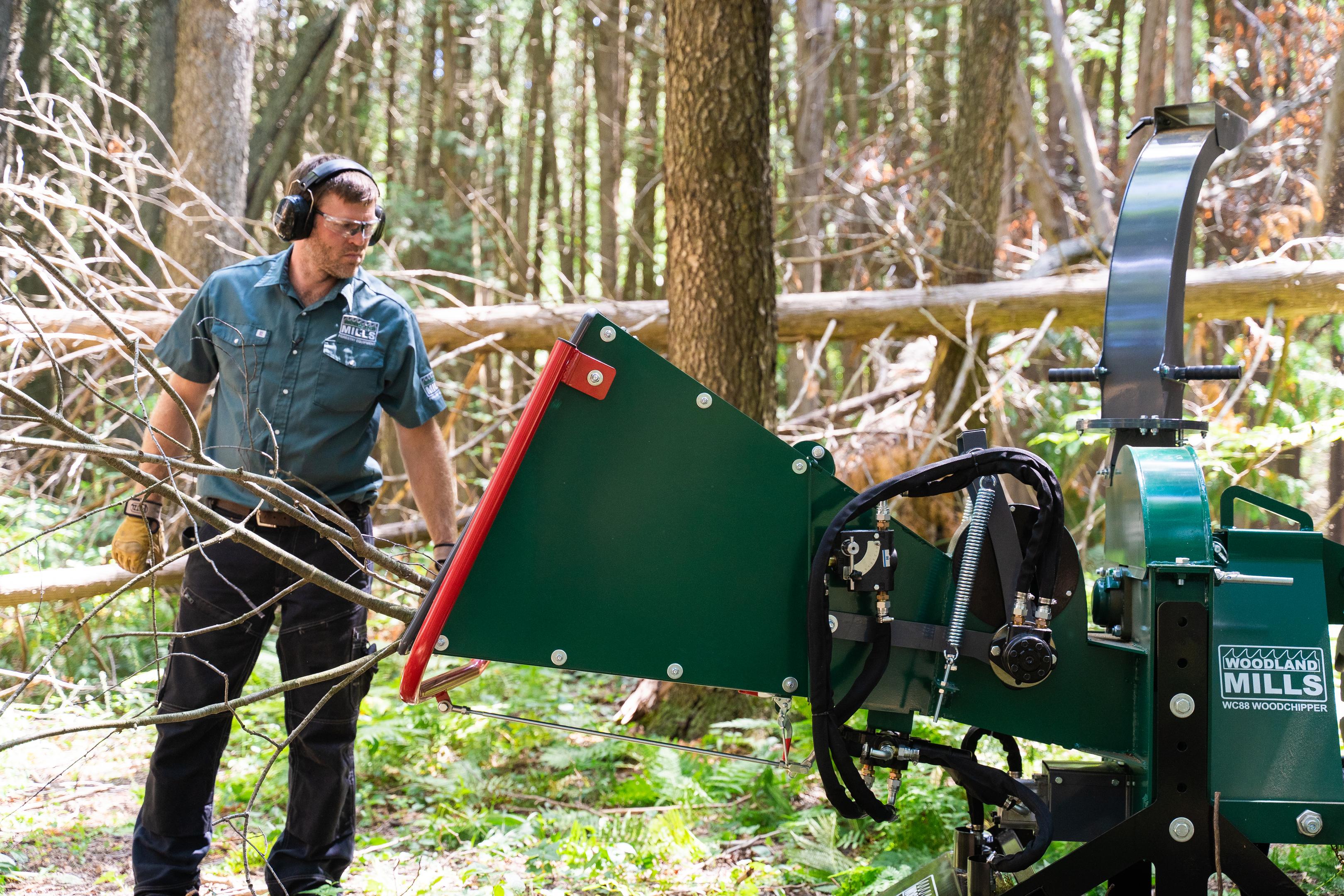
Hydraulic Infeed: Between the infeed chute and the flywheel housing are hydraulic-powered rollers which grip and draw material in to the flywheel. This helps ease the effort for the user, since the rollers pull in material automatically. Models like the TF46 PRO use this infeed method.
-
Gravity-Assist Infeed: This method uses a combination of a steep angled chute and operator effort to pull material straight to the flywheel. This economical infeed method is simpler than hydraulics, but does require more manual effort and material prepping. Models like the TFG55 PTO use this method.
-
Power Source
-
-
Electric Wood Chippers: These residential-focused chippers typically handle small branches, around 1.5 to 2 inches in diameter. While these chippers run more quietly, they're usually not built for large quantities or for larger branches you'd find on most rural properties.
-
Gas Wood Chippers: These wood chipper models don't require an external power source, and instead are designed to run independently. Gas chippers can easily be put on a trailer or hauled behind an ATV to chip brush in the depths of your land, since these models are built for versatility.
-
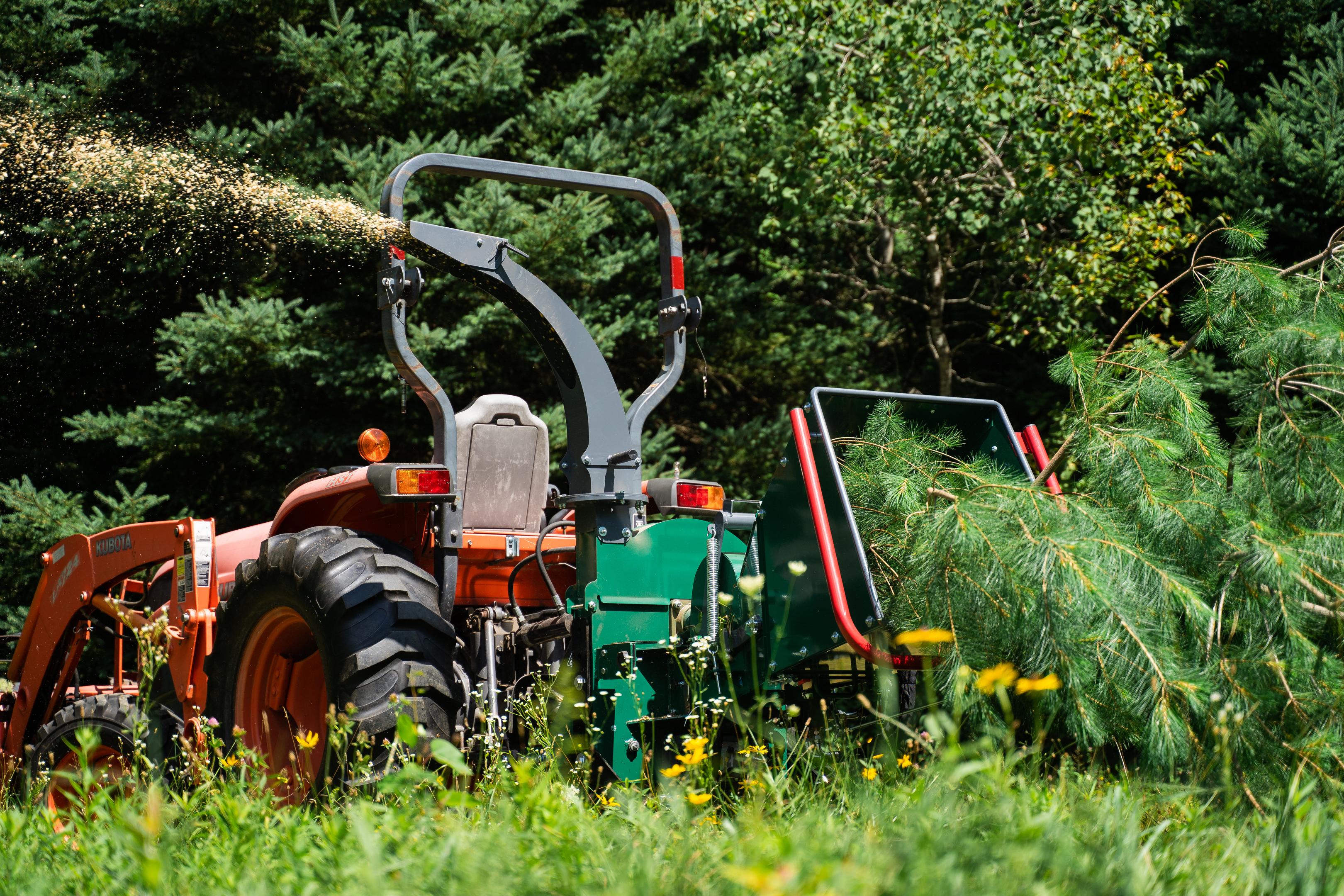
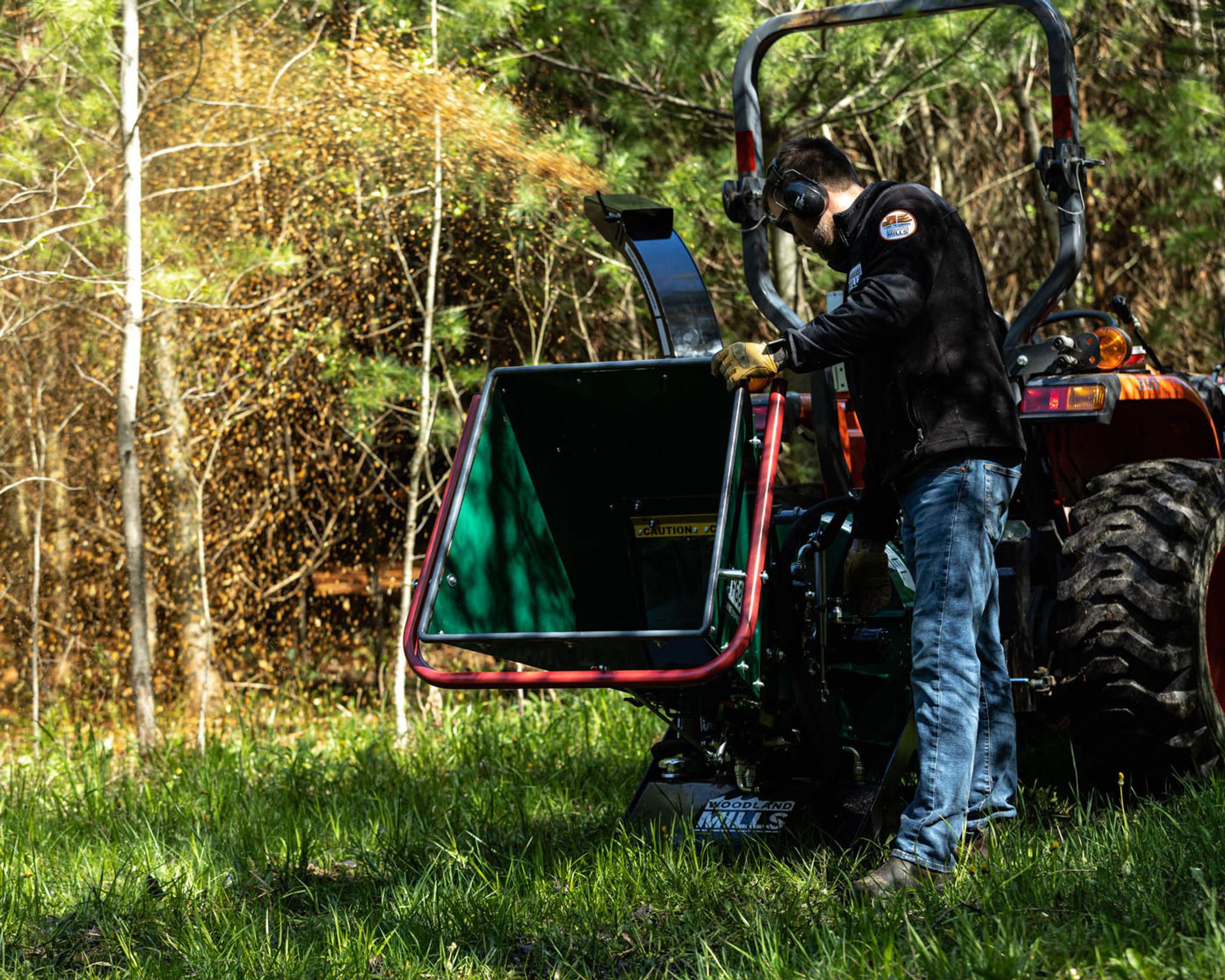
PTO Wood Chippers: These models are powered by your tractor's Power Take Off (PTO), and are excellent for landowners who already own a tractor. You only have to maintain a single engine, plus the more powerful your tractor, the higher capacity a chipper you can use with it, though even subcompact tractors are compatible with smaller PTO chipper models.
-
Flywheel
-
-
Single Flywheel: On a typical wood chipper, a single flywheel will be equipped with blades for chipping material, and paddles on the back to direct chips to the discharge chute and out of the housing. This efficient form of chipping technology has been used for decades, but green, leafy material is best chipped alongside heavier, dryer material to prevent jamming.
-
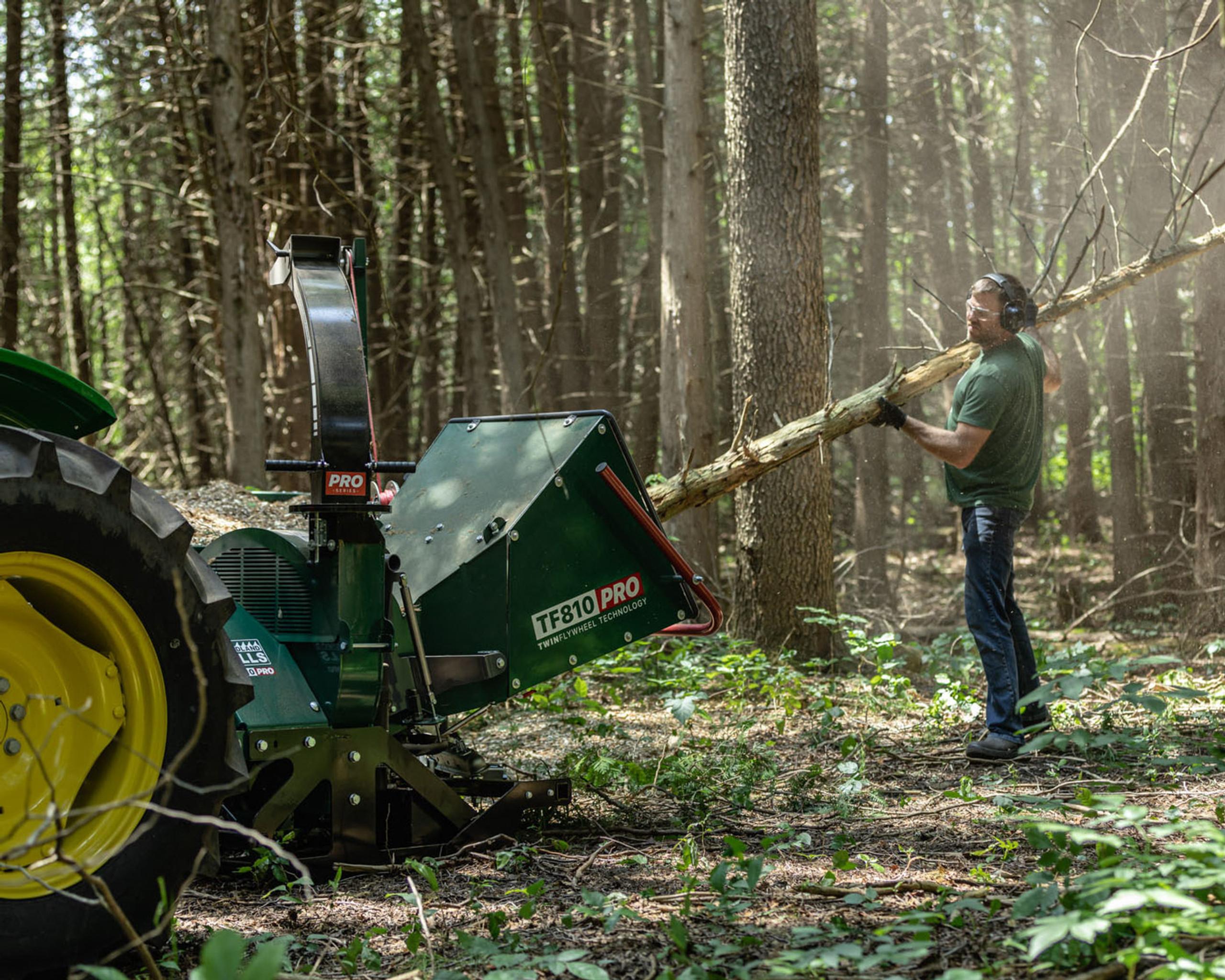
Twin Flywheel: This Woodland Mills exclusive technology utilizes two flywheels, the first that chips the wood, and a second that spins at twice the rate for improved airflow. This system improves consistency and helps chip green, leafy material and wet wood without needing to mix in dryer branches.
-
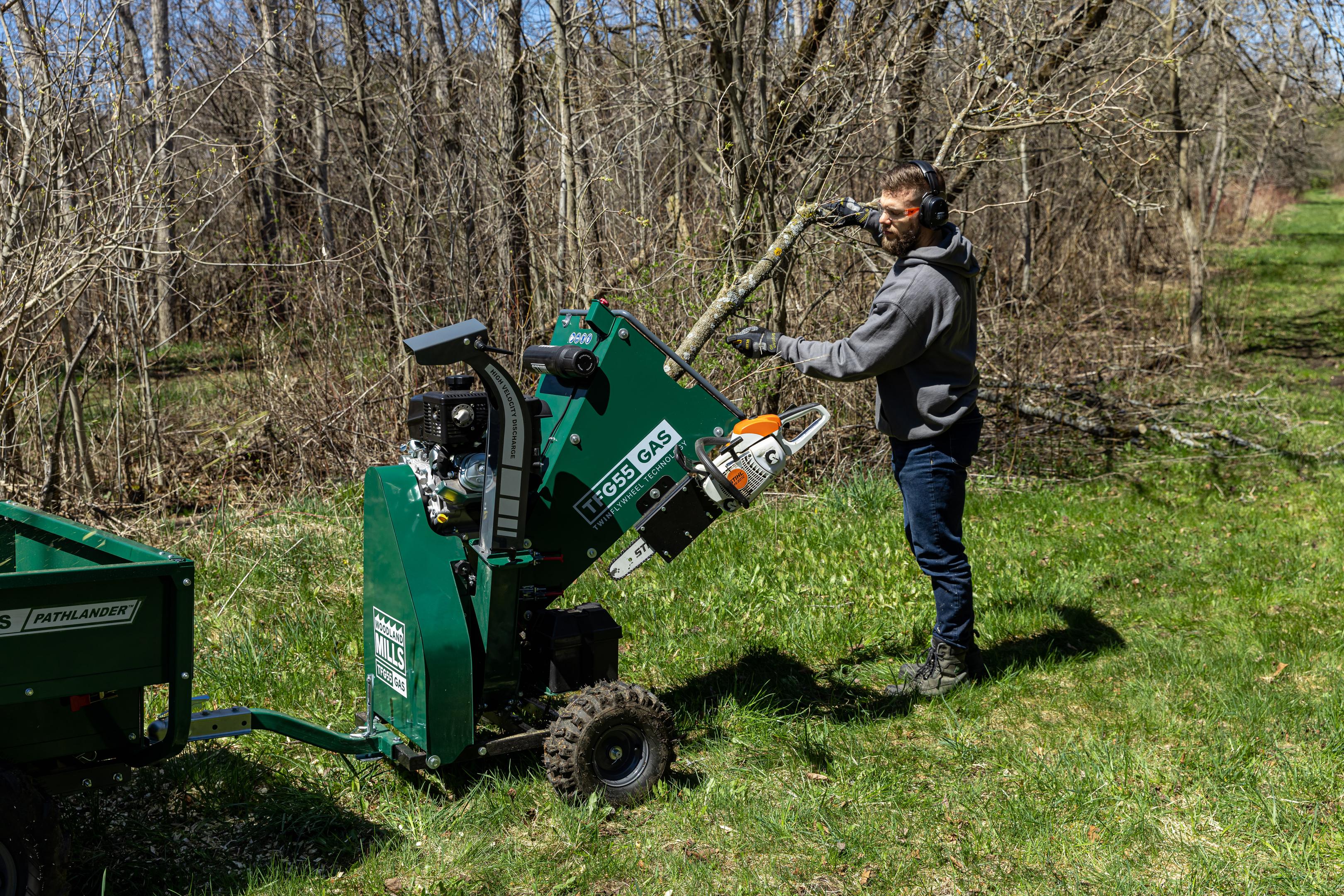
If you're looking to buy a simple machine that doesn't require a tractor, then a gas wood chipper like the TFG55 GAS would best for you. If you want to chip green, leafy material then a PRO wood chipper with Twin Flywheel will work best, but you can pick a single flywheel chipper if you don't mind preparing your materials in advance. It's all about cost vs capacity and the time you want to spend prepping branches
What type of wood chipper do you need for your land?
So what type of wood chipper do you need?
When doing PTO wood chipping you should always match the model of chipper to your tractor. Check your tractor's owner's manual or the manufacturer's website to confirm the PTO output of your tractor as this can differ from the total horsepower of your tractor's engine. Then match PTO output with a compatible PTO wood chipper model that makes the most of its horsepower.
With that in mind let's examine the needs of your land and see which chipper model is best for chipping branches on your land.
What type of wood chipper do I need for chipping light, small branches occasionally on a residential property?
If you want to do a smaller volume of chipping, and don't own a tractor, you may want to consider a smaller gas-powered wood chipper. These models are lighter, smaller and easier to store. Just roll them out of your garage or shed in the spring when it's time to chip, move them around the house over uneven ground, then store it away for the winter. Lightweight smaller wood chippers with Twin Flywheel are great for branches with leaves, twigs, and other small debris rather than branch-heavy chipping.
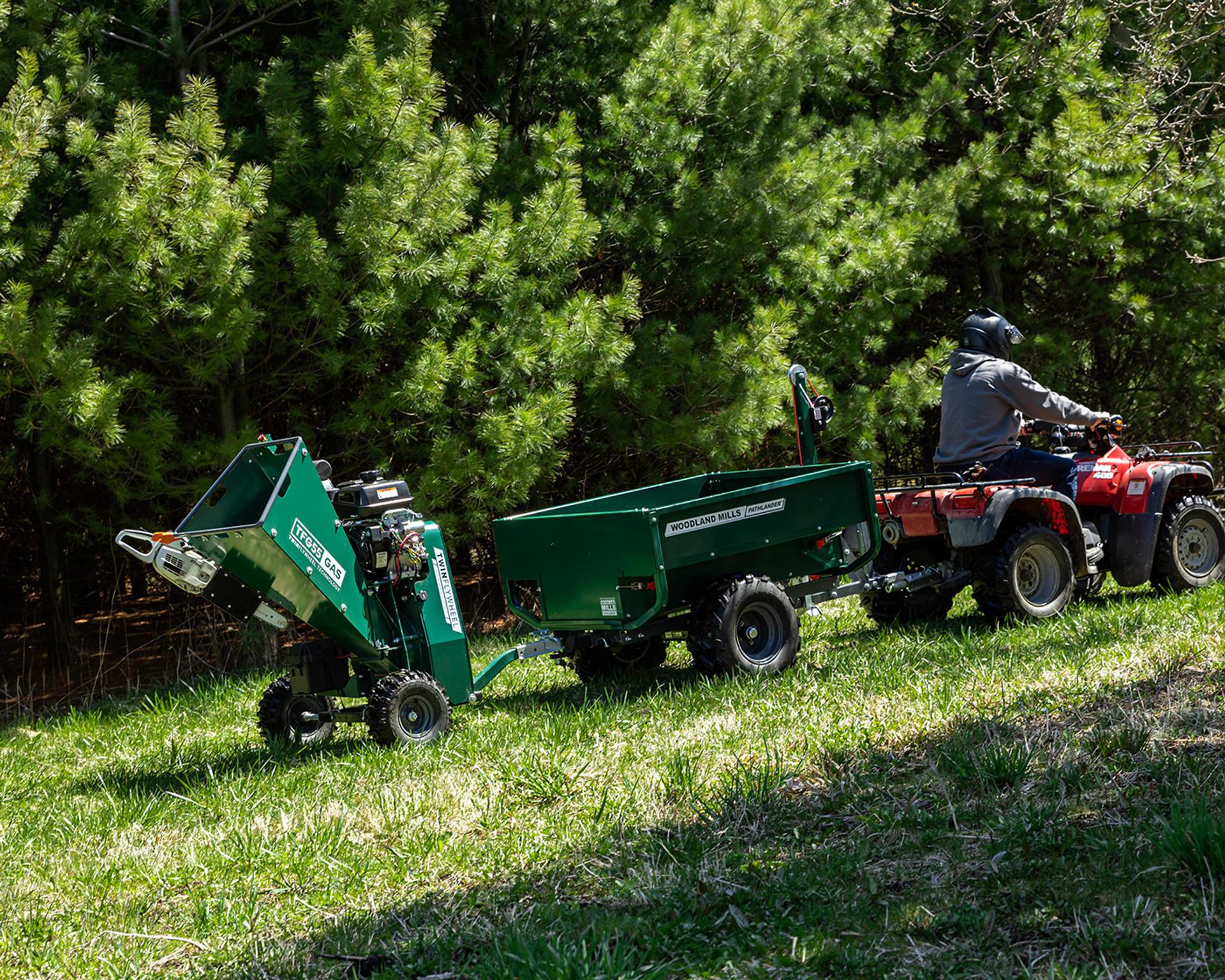
We would recommend a model like the TFG55 GAS, which can handle branches up to 3" in diameter. This is a great model for small scale land needs or those who want a model that can be easily hauled on an ATV or in the back of a truck bed for easy traversal.
What model would chipper would you recommend for a rural landowner with a subcompact or compact tractor who wants to chip up to 6" diameter branches?
For those who want a higher capacity wood chipper and are looking for a model that fits in their budget, consider a PTO model that is compatible with your tractor. Larger landowners usually have bigger tractors, capable of attaching powerful chippers, but even compact tractor owners will have some choice of which model works best for them.
A great option is the WC68, a wood chipper capable of chipping thick branches up to 6" in diameter. It's compatible with a broad range of tractor types, and if you want to chip green, leafy material you can consider upgrading to the TF68 PRO too.
These are great models that offer an excellent blend of capacity, size and price.
I need a high capacity PTO wood chipper capable of chipping large branches from old growth forest, what model should I get?
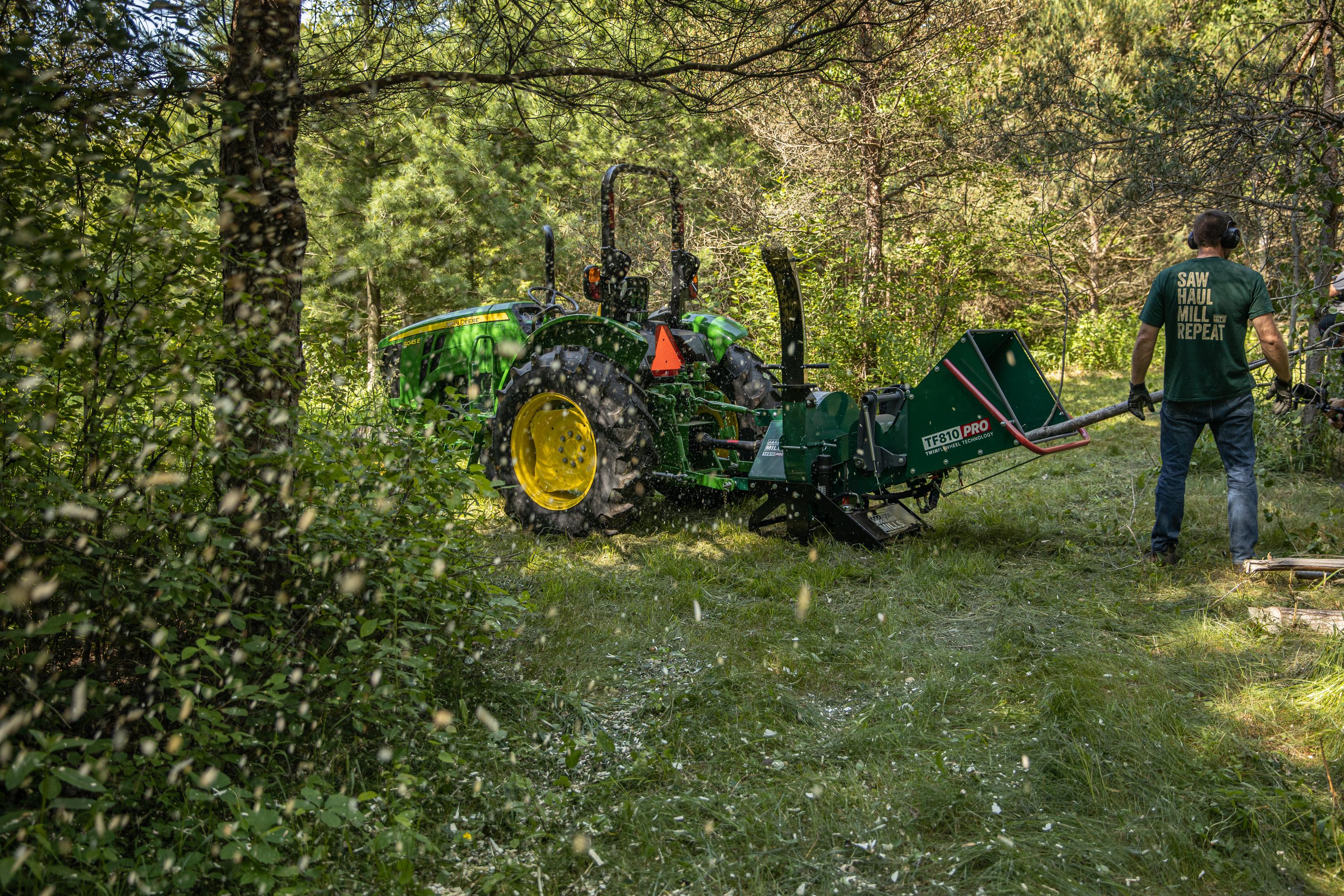
When you need to turn big branches into a pile of wood chips, you need a heavy duty wood chipper that can handle it. We recommend the TF810 PRO, a chipper model capable of handling branches up to 8" in diameter.
Equipped with Twin Flywheel for easy reduction of green, freshly pruned branches, this chipper model is excellent for larger tractor owners. Check the PTO compatibility and ensure your tractor has enough lift capacity, because the TF810 PRO is designed to make the most of a medium-to-large sized tractor.
This is great for clearing trails for easy access to your land, and for when you want a more powerful chipper to make use of your tractor's engine power.
Summary: What do I need to know about buying a simple, easy wood chipper?
The simplest, most cost effective chipper for you will typically be either a gas-powered wood chipper or a PTO model that meets the minimum compatibility requirements for your tractor.
But remember that the simplest wood chipper isn't always the best one for your lands needs. See the average size of branches on your land, and ensure you're getting a model that can sufficiently chip them.
If you're using a tractor and are intending to buy a PTO wood chipper, we recommend getting a model that makes the most of your PTO capacity and engine power, since that gives you more capacity and greater ability to chip larger branches.
Hopefully these steps have given you an idea of which chipper model is best for you.
FAQ: Frequently Asked Questions
Q: Why should I get a gas-powered or PTO wood chipper over an electric model?
A: Electric wood chippers are great for specific uses, such as for small branches, low volume chipping and in residential areas where noise might be a concern. But for routine chipping, or for branches that you'd find on most rural land that are more than a few inches in diameter, a heavier duty wood chipper will often suit your needs better.
Q: Can I use a leaf mulcher or leaf shredder for chipping branches?
A: No, most leaf mulchers and leaf shredders are specifically designed to shred soft yard debris, and tree branches can clog or damage these devices instead of being properly chipped. They’re especially useful for fall cleanup when you’re dealing with leaves, weeds, and small twigs rather than woody branches. If you need a machine that can chip green, leafy material, a great option would be a PRO wood chipper that utilizes Twin Flywheel technology to consistently chip and throw this softer, wetter material.
Q: Do I have to throw my wood chips in a pile or can I use a collection bag or trailer?
A: Yes, the discharge chute on all Woodland Mills wood chippers is adjustable and can be oriented in any direction to throw chips wherever you want, such as an aerated bag. Many landowners position their ATV trailers to pick up chips after branches are chewed and then dump them wherever they're needed. Consider how you want to use your wood chips for mulch or compost, or for easier disposal, when making your purchase.
Q: Why would I want a small wood chipper for personal use when I could use a larger, industrial wood chipper?
A: Many landowners prefer to buy their own equipment outright if the cost makes sense, and this will depend on how often you intend to chip wood for home improvement or outdoor cleanup projects. There are many inexpensive chipper models that pay for themselves over renting a machine even just a handful of times.
Another factor is that commercial, industrial wood chippers are complex and built for speed, capacity and continuous use. Many models utilize heavy chipper drums and multi-knife rotating discs, and some use more elaborate feed systems than a simple chipper. These chipper can also end up weighing hundreds of pounds, with a stockier build that makes them more difficult to navigate your land. If you try to overfeed branches at the machine’s maximum diameter, you can also cause a jam.
These machines tend to be built for landscaping companies or tree care services and well exceed the needs, and budget, of most rural landowners and most homeowners shopping for simpler power tools.
SHOP WOOD CHIPPERS
WC46 4" PTO
The WC46 chipper has a chipping diameter up to 4". It's designed for tractors with 15-30 HP at PTO and features an auto-hydraulic infeed system and 360-degree swivel discharge.
WC68 6" PTO
The WC68 chipper has a chipping diameter up to 6". It's designed for tractors with 20-50 HP at PTO and features an auto-hydraulic infeed system and 360-degree swivel discharge.
WC88 8" PTO
The WC88 chipper has a chipping diameter up to 8". It's designed for tractors with 35-100+ HP at PTO and features heavy-duty construction and an auto-hydraulic infeed system.
TF810 PRO PTO
The TF810 PRO chipper features our patented Twin Flywheel Technology. Designed for tractors with 35-100+ HP at PTO, it has a chipping diameter up to 8" and auto-hydraulic infeed system.
Join the Woodland Mills Community Facebook group. Search advice and insights from over 65,000 knowledgeable, supportive members.
- Pre-purchase considerations
- Sawmill set-up support
- Project inspiration photos and videos
- Community troubleshooting support