


"What Size of Wood Chipper Do I Need?" – Let's Find Out
Learn which models are right for your property so you have the right wood chipper for your chipping needs
What size of wood chipper do you need?
That's going to depend on what type of wood chipper you need, whether you're going to go with a gas-powered model or one driven by a tractor's PTO. Both options have different sizes available, from 4" models great for doing small property cleanup to 8" machines great for heavy limbs and larger branches.
There are many different types of wood chippers, each with their own advantages and disadvantages, so the right choice depends on your property, the kind of fallen branches and debris you deal with, and how often you plan to chip. For property owners, landowners, property managers, hobby sawyers, small farm operators, and tree care professionals, the right machine can make cleanup faster and easier while reducing brush piles and branch debris more efficiently.
This guide walks through the main chipper types by power source and design, what to look for when comparing models, and which size range from 4" to 8" best fits your workload. Whether you're handling seasonal pruning, routine cleanup, or heavier tree work, you'll have a clearer way to choose a chipper that matches your property needs before you buy.
Why do you need a wood chipper?
Wood chippers are useful for landowners, property managers and tree care professionals who want to reduce the volume of tree branches and remove wood debris from a property.
While tree branches and yard debris will naturally decay over time, wood chippers take this material and instantly reduce it to a manageable pile of wood chips. It can even turn thicker branches that might sit for a long time and turn them into a resource you can use in your garden or for landscaping.
If you have a growing collection of tree debris on your land, you do routine tree pruning or you want to improve the overall look of your land, a wood chipper can be a useful tool.
What can I use wood chips for?
Wood chips have a lot of potential uses, such as becoming mulch for your garden, bedding for playgrounds, the base of a footpath through your property, and much, much more.
You can also burn wood chips, using them as a valuable source of bio-fuel.
What are the different kinds of wood chippers?
So what are the different types of wood chippers you may want to consider for your property maintenance. Here are some handy explanations to get you started:
Power Source
-
-
PTO-Powered Wood Chippers: These chippers attach to a tractor's PTO via a PTO shaft, and utilize the tractor's engine to power the device. These machines are very efficient, making the most of your tractor's power without needing their own power source, and you only have to maintain a single engine.
-
Gas Powered Wood Chippers: These chippers have their own engine, so they don't require a tractor to run. These models are great for landowners who want to haul a chipper behind an ATV or truck, or for those who don't own a tractor. Gas-powered chippers require regular maintenance, like oil changes and fuel, so that's something to consider.
-
Electric Wood Chippers: These are smaller models with lower capacities that aren't well suited for routine, heavy duty branch cleanup. Great for residential landowners with small properties but these models typically handle branches only up to 2-3 inches thick and don't have the power many landowners need from their property maintenance equipment.
-
Infeed Method
-
-
Hydraulic Infeed: These wood chippers use hydraulic-powered infeed rollers to pull branches into the flywheel. It reduces the amount of effort required by the operator, and allows for seamless, quick chipping of many branches.
-
Gravity Infeed: This system uses a sloped infeed chute to feed branches directly to the flywheel. Gravity feed chippers are more cost effective than hydraulic infeed models, but require more effort and prepwork for the operator.
-
Flywheel Type
-
-
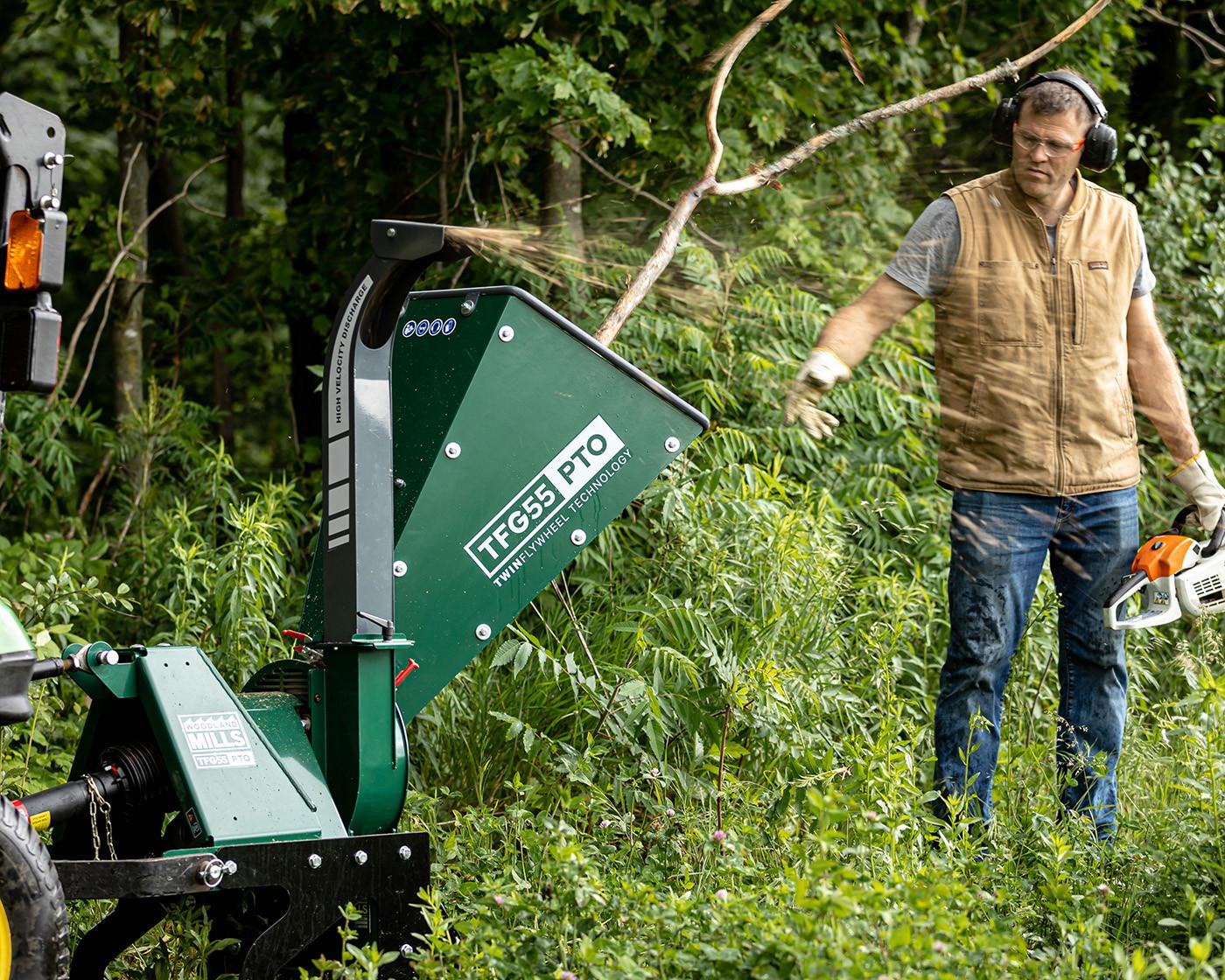
Single Flywheel: On these chippers, one flywheel is equipped with blades for chipping branches, and paddles on the back to control airflow and send chips out the discharge chute. This system works best for dry, heavy materials.
-
Twin Flywheel: Excusive to Woodland Mills wood chippers, models that utilize twin flywheel split the actions of chipping and throwing between two flywheels. One spins at the normal rate for chipping, while the other spins at twice the speed to effectively deliver material through the flywheel housing to the discharge chute. This helps with chipping light, green, leafy materials without needing to mix in drier, heavier materials.
-
Should I get a gas-powered wood chipper or a PTO wood chipper?
If you own a tractor you may want to opt for a PTO-powered chipper like the WC46. These models rely on your engine's horsepower, and require you to just maintain a single engine. These models also come in a variety of sizes to take advantage of larger horsepower outputs for larger tractors, and smaller models for compact or subcompact tractor models.
If you don't own a tractor, or want to hitch a wood chipper to an ATV to take it places where your tractor can't navigate, then a gas-powered chipper like the TFG55 GAS may be your preference. These models don't require you to own any other equipment, and may be easier for landowners with smaller setups or those who want improved portability.
What should I look for when shopping for a wood chipper?
If you're choosing a PTO model then the primary factor in selecting the size of wood chipper will be the size of your tractor's engine. Matching the PTO output of your tractor, as well as your tractor's lift capacity, to a compatible model will give you the best opportunity to mill the largest branches possible.
Other factors to consider include capacity. Larger wood chippers designed for landowners can chip material up to 8 inches in diameter, so compare the maximum diameter to the thickest branch you expect to chip regularly. For better efficiency, choose a machine with capacity 1–2 inches larger than that branch and size it to handle 80% to 90% of your everyday debris.
-
-
If you own a tractor you may want to go with a PTO-powered chipper to simplify your equipment maintenance, but if you don't then a gas-powered chipper is light and easy to maneuver.
-
Think about maintenance as well. Durable chippers have strong blades and sturdy frames, reversible blades extend the working life of chippers, and models with easy-access designs simplify routine service.
-
If you plan on chipping fresh, green materials, consider a Twin Flywheel wood chipper that's designed to handle those materials consistently.
-
Also keep in mind that hardwoods put more strain on a wood chipper than softwoods and may require higher horsepower.
What size of wood chipper is best for you?
So what size of wood chipper do you need so you have the proper capacity for your tree branches? Here are some common capacities you may want to consider:
For Gas-Powered Chippers
5" Wood Chippers
With a wood chipper that features capacity for small-to-medium branch sizes, you're looking at a chipper great for small property cleanup tasks. This is great for minor storm cleanup of residential properties, where you have smaller trees with lighter branches. For more serious property cleanup tasks you may want to consider a larger chipper, but these models work great for smaller landowners with lighter chipping jobs.
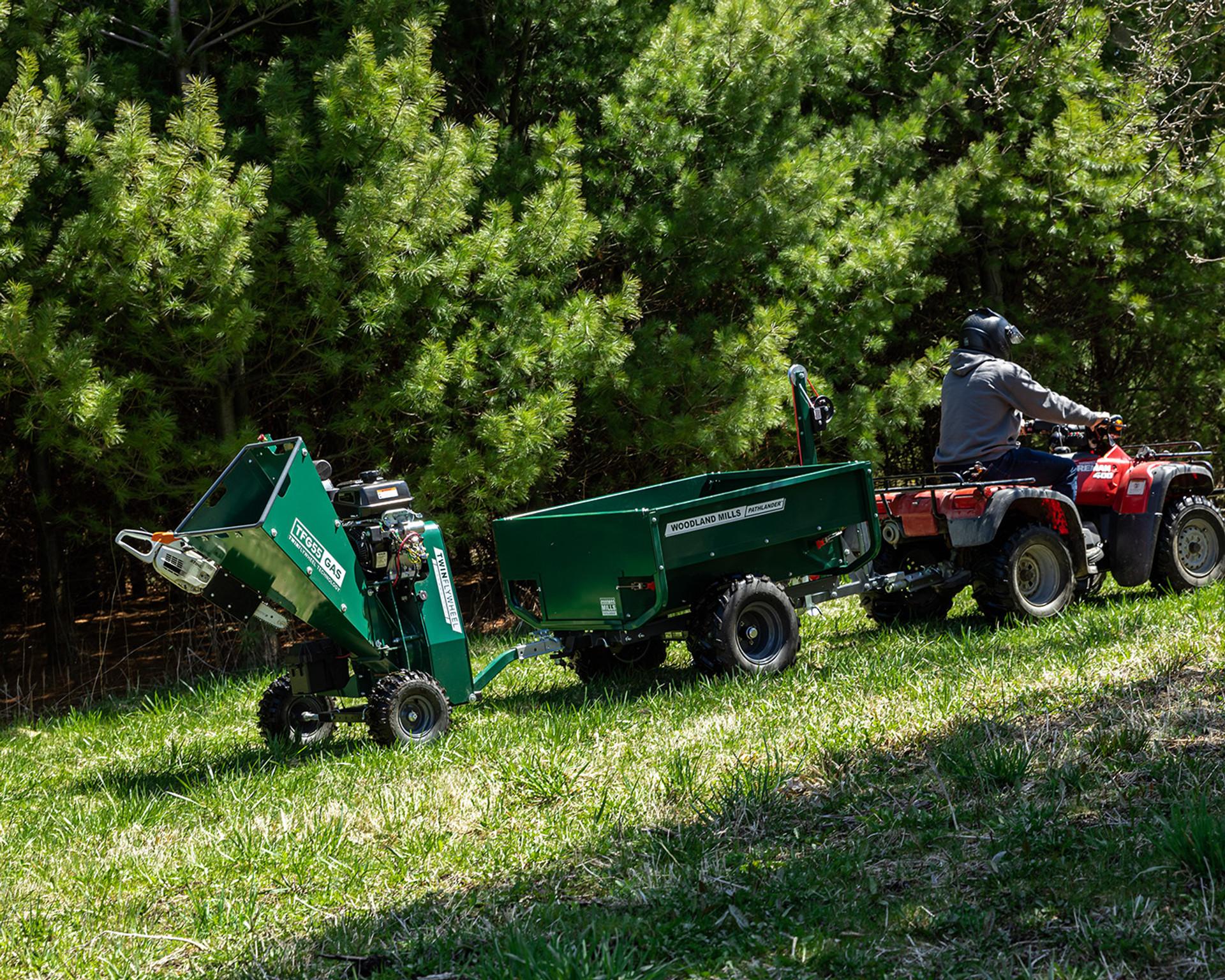
Recommended Models: The Woodland Mills TFG55 GAS
For PTO-Powered Chippers
4" Wood Chippers
A great entry level choice, these tend to be smaller models that require less horsepower to run and are a typical fit for medium yards and properties. Great for landowners with subcompact tractors that still want to own a wood chipper to do property cleanup tasks. With a 4" wood chipper you're able to chip light brush, and hydraulic infeed rollers will help send material straight to the flywheel for a smoother experience while handling small branches and routine yard waste more efficiently than lighter options.
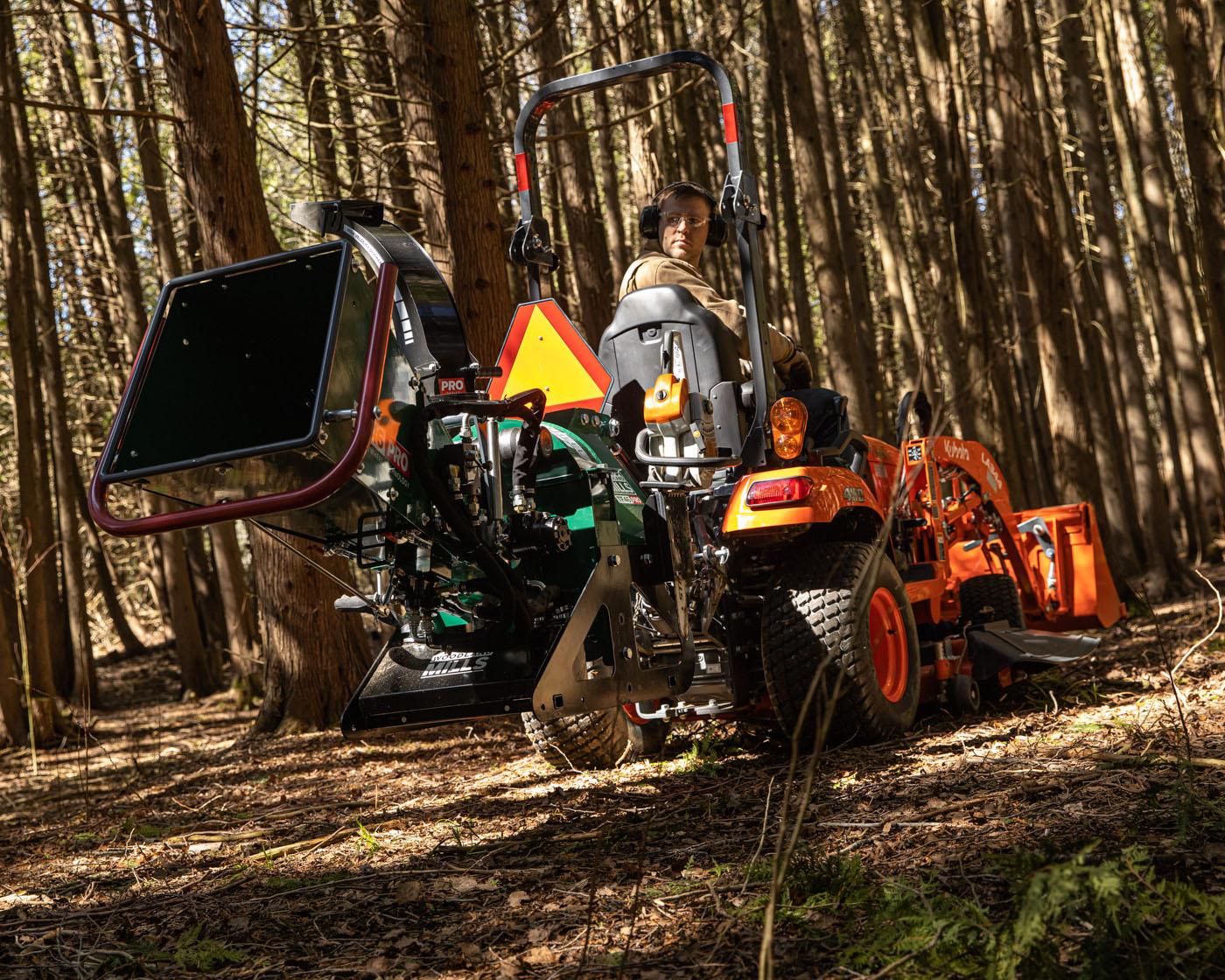
Recommended Models: The Woodland Mills WC46 and TF46 PRO
5" Wood Chippers
With a 5" capacity wood chipper you're in the territory of light-to-mid-sized branches, and this class may start to handle tougher branches depending on species and moisture content. Best suited for light to moderate branch cleanup jobs, these chippers are great for owners of compact or subcompact tractors who want to chip tree debris and are looking at cost effective models that are easy to afford.
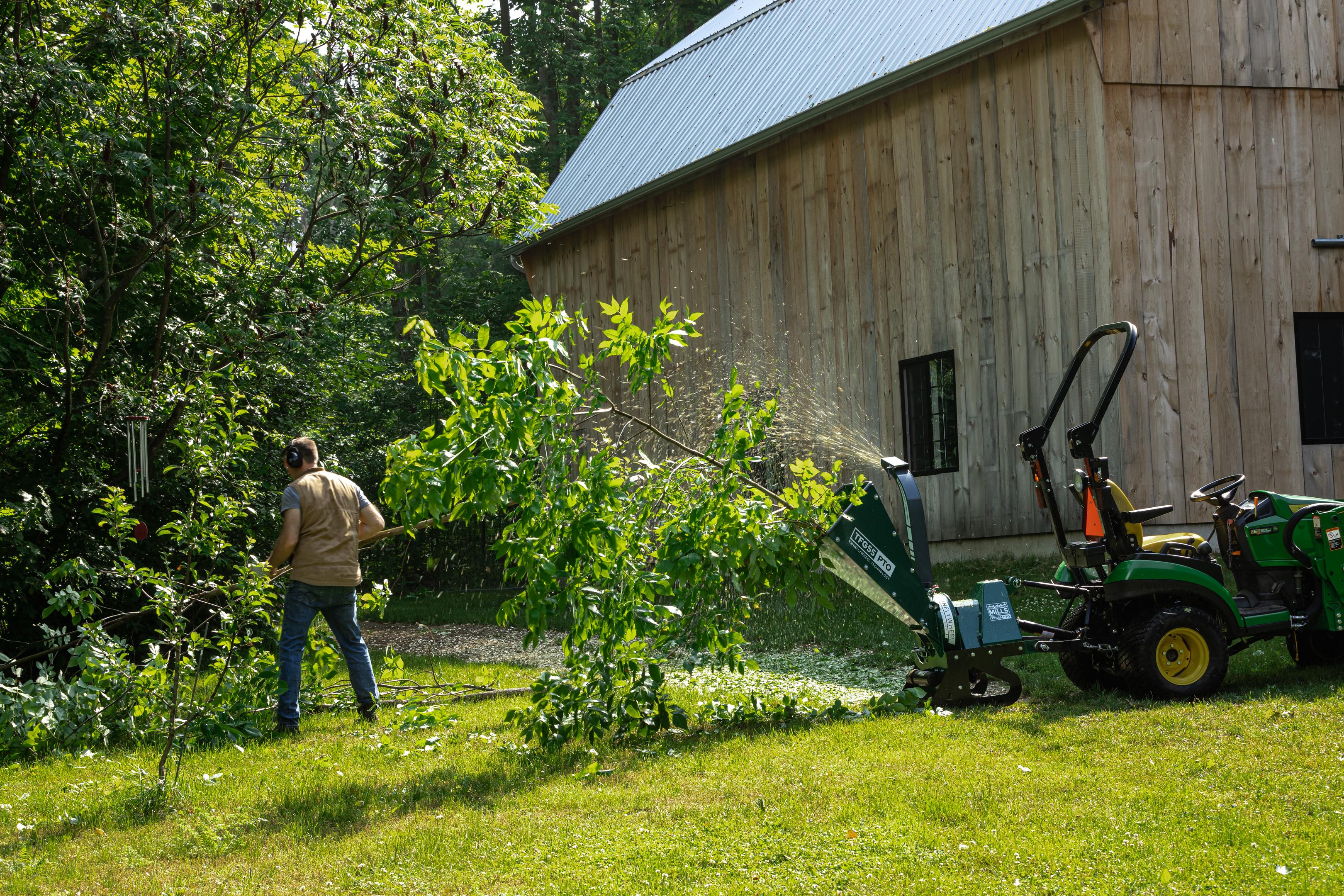
Recommended Models: The Woodland Mills TFG55 PTO
6" Wood Chippers
Designed for mid-sized tractors and able to chip branches up to 6" in diameter, these larger chippers are capable, heavy duty machines suited to larger trees and heavier cleanup demands while processing a wider variety of materials. Equipped with hydraulic infeed rollers, that helps deliver larger, wider branches straight to the flywheel for efficient workflow, and this is often where better ability to throw chips starts to matter. Also available in PRO models with patented Twin Flywheel technology to more effectively handle lightweight, leafy materials.
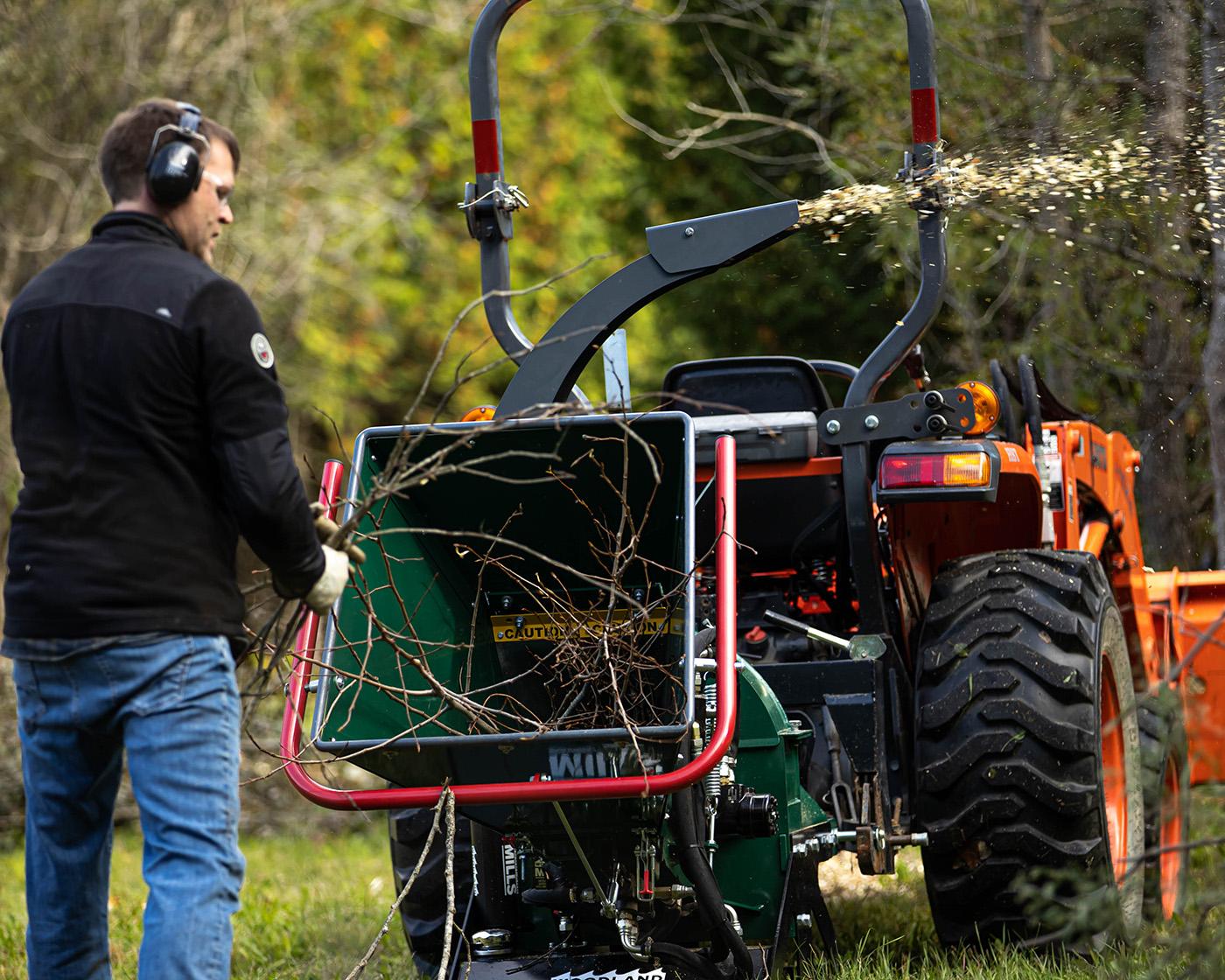
Recommended Models: The Woodland Mills WC68 and TF68 PRO
8" Wood Chippers
These are serious machines built to handle thicker branches, or even entire small trees. An 8" diameter capacity gives you a lot of room to work with, and these PTO-driven models can make the most of your tractor's engine power up to 100 HP and beyond. Consider these models if you have serious chipping needs, and also think about whether the PRO model featuring patented Twin Flywheel technology is right for your needs.
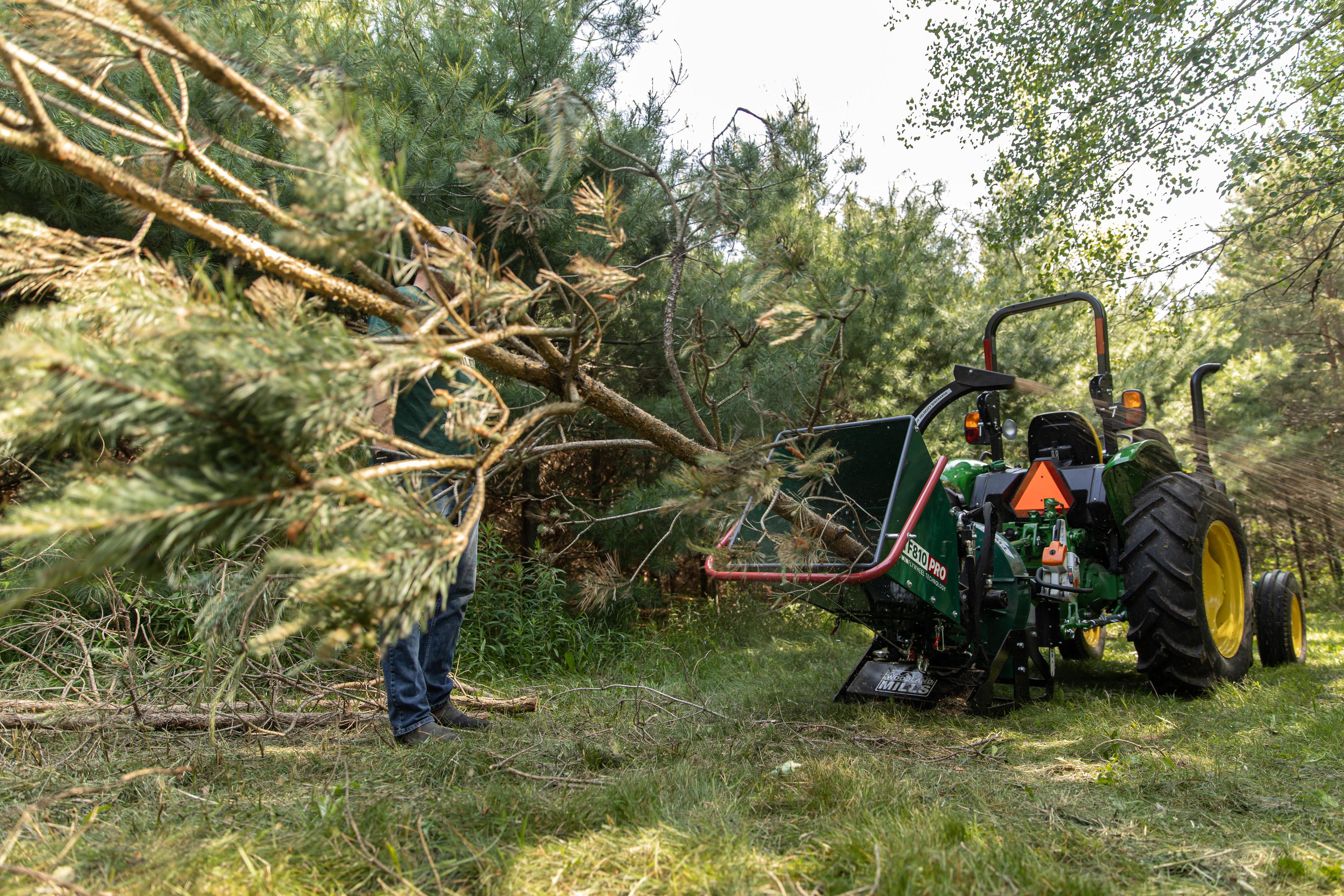
Recommended Models: The Woodland Mills WC88 and TF810 PRO
In Summary: What's the right wood chipper for you?
What's the right chipper for your needs? What wood chipper size is best suited to your land?
If you are looking at a gas-powered wood chipper then you can base your decision on price and size. For PTO chippers, focus first on compatibility with your tractor, and which model is able to make best use of your horsepower output.
Consider the size of branches you have on your land and the maximum capacity you will need. The right wood chipper size for you is one that best handles the branches you have on your property.
If you need a light machine to handle garden waste, consider a smaller chipper like the WC46. If you have larger branches and need to chip fresh, green materials routinely, consider a higher capacity model like the TF810 PRO.
FAQ: Frequently Asked Questions
Q: Why would I get PTO wood chipper instead of a gas-powered one?
A: PTO (power take off) wood chippers are great for landowners with tractors because you only have to maintain a single engine. It simplifies the engine maintenance process because you only have to re-fuel and add oil to your tractor's engine, plus many tractor engines offer higher capacity HP outputs than you can get from commercially available gas-powered chippers. Not to mention it's easier to reduce costs since you're not wasting fuel running two machines at the same time.
Q: What are the advantages of owning a bigger machine?
A: A larger wood chipper can handle thicker branches and is capable of much more serious yard work. This is great for rural landowners with old growth that have much larger branches. For smaller landowners with lighter trees, you may only need a smaller capacity chipper capable of chipping smaller branches. Look at what's on your land and think about your wood chipping needs before deciding on a size.
Q: Why are gas or PTO wood chippers preferable to electric chippers?
A: Electric wood chippers have their uses, but they tend to be for lighter tasks and are well suited for high density residential environments where you can't make a lot of noise. An electric chipper is best for small cleanup jobs, while a chipper/shredder hybrid is usually the better fit if most of the debris is leaves and twigs. They're light and not as noisy as gas powered wood chippers or tractors, making them great for doing small chipping tasks without upsetting the neighbors. But because they rely on electricity they don't feature high capacities, making them ill suited for serious, routine land maintenance tasks.
Q: Why would I need a feature like Twin Flywheel for my wood chipper?
A: Twin Flywheel wood chippers feature improved air flow, able to more consistently chip green, leafy material without needing to mix in dry, heavier branches. This makes them optimal when you're chipping freshly cut branches, and don't want to leave your branch piles to sit out and dry, or have to bother finding dryer branches to mix in. It's a great feature that helps save time, both on individual chipping jobs and for the long term health of your property, since you can trim or cleanup branches and chip them right away.
SHOP WOOD CHIPPERS
WC46 4" PTO
The WC46 chipper has a chipping diameter up to 4". It's designed for tractors with 15-30 HP at PTO and features an auto-hydraulic infeed system and 360-degree swivel discharge.
WC68 6" PTO
The WC68 chipper has a chipping diameter up to 6". It's designed for tractors with 20-50 HP at PTO and features an auto-hydraulic infeed system and 360-degree swivel discharge.
WC88 8" PTO
The WC88 chipper has a chipping diameter up to 8". It's designed for tractors with 35-100+ HP at PTO and features heavy-duty construction and an auto-hydraulic infeed system.
TF810 PRO PTO
The TF810 PRO chipper features our patented Twin Flywheel Technology. Designed for tractors with 35-100+ HP at PTO, it has a chipping diameter up to 8" and auto-hydraulic infeed system.
Join the Woodland Mills Community Facebook group. Search advice and insights from over 65,000 knowledgeable, supportive members.
- Pre-purchase considerations
- Sawmill set-up support
- Project inspiration photos and videos
- Community troubleshooting support